SAN DIEGO, CALIFORNIA — Federal authorities have dismantled an intricate, years-long international wildlife trafficking ring operating across the United States-Mexico border, leading to the arrest of two primary suspects and shedding light on the lucrative, highly destructive black market trade of exotic and protected reptiles.
According to the U.S. Department of Justice (DOJ), Georgina Bribiesca Chavez of Tijuana, Mexico, and Salvador Pelayo of Chula Vista, California, are facing a battery of wildlife trafficking charges. The arrests are the culmination of a rigorous, 18-month undercover operation spearheaded by the U.S. Fish and Wildlife Service (USFWS), in close coordination with U.S. Customs and Border Protection (CBP) and federal prosecutors.
The criminal enterprise allegedly specialized in smuggling highly prized, vulnerable, and endangered reptiles—including venomous vipers, crocodilians, and rare arboreal lizards—hidden in compartments of vehicles across the international boundary. Investigators allege the operation generated tens of thousands of dollars in illicit profits by catering to an underground network of exotic pet collectors and buyers within the United States.
However, the human greed driving the operation came at a devastating biological cost. Authorities report that multiple animals perished due to severe neglect and the dangerous conditions of their transport, underscoring the lethal realities of the illegal wildlife trade.
Main Facts of the Case
The federal indictment and subsequent DOJ press releases paint a grim picture of a sophisticated smuggling network operating with blatant disregard for animal welfare and international conservation laws.
The operation came to a dramatic head in August 2026, when CBP officers stopped Chavez at a border point of entry. Chavez was immediately detained due to an active, outstanding federal arrest warrant linked to the ongoing wild-life trafficking investigation.
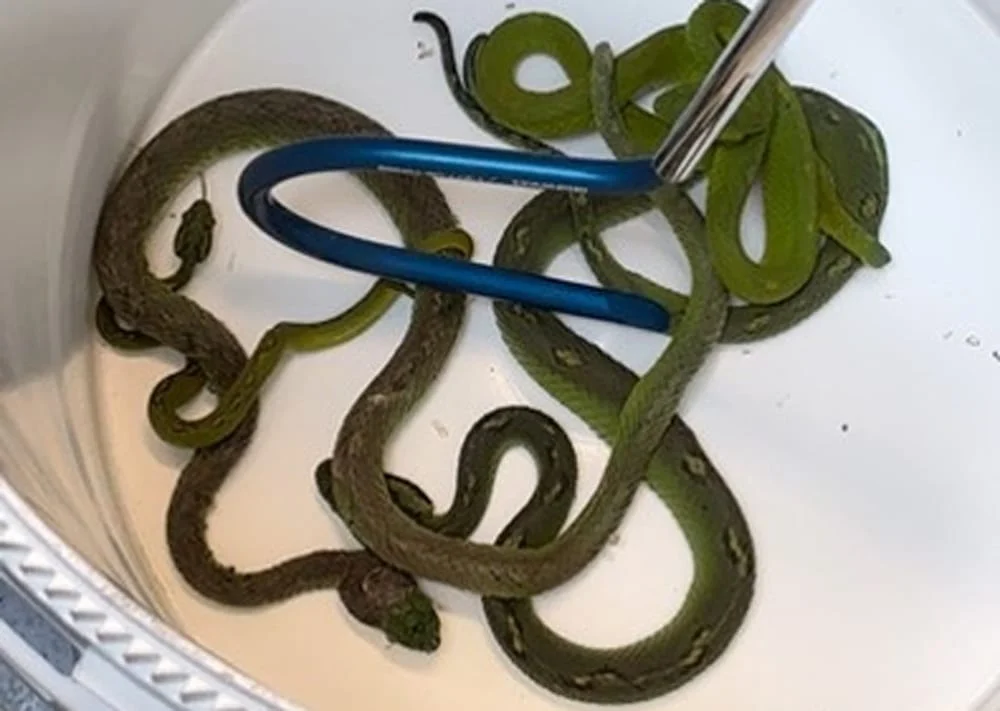
Following her apprehension, officers impounded her vehicle. During a subsequent search, authorities discovered a hidden, factory-made concealed compartment inside the car. Inside this compartment, inspectors found several sealed pillowcases. Noting suspicious movement from within one of the fabric bags, border personnel wisely escalated the situation, transferring the sealed containers directly to the safety of the San Diego Zoo for professional extraction and examination.
Zoo wildlife experts opened the pillowcases to reveal a staggering collection of smuggled biodiversity:
- Four yellow-blotched palm pit vipers (Bothriechis aurifer), a striking and venomous species native to the cloud forests of Central America and southern Mexico.
- Three caimans, small crocodilians native to Central and South America.
- One baby crocodile.
- More than 60 abronia lizards (alligator lizards of the genus Abronia), arboreal reptiles highly prized in the international pet trade for their jewel-like metallic scales.
Many of the seized reptiles are strictly protected under international treaties, such as the Convention on International Trade in Endangered Species of Wild Fauna and Flora (CITES), due to rapidly declining wild populations caused by habitat loss and over-collection.
Compounding the cruelty of the operation, the DOJ highlighted that Chavez completely failed to notify border patrol officers that live animals were concealed inside her vehicle at the time of her arrest. Consequently, the vehicle—with the sealed pillowcases trapped inside the hidden compartment—sat unattended in a hot impound lot in San Ysidro, California, for an entire day.
By the time zoo personnel could intervene and provide emergency veterinary care, three of the caimans had succumbed to heatstroke and dehydration. Fortunately, the remaining reptiles, including the venomous vipers and the dozens of abronia lizards, were stabilized and remain under the specialized care of the San Diego Zoo.
Chronology of the Investigation
The dismantling of this cross-border trafficking syndicate was no accident; it was the result of a meticulous, multi-year counter-trafficking campaign executed by federal wildlife inspectors and undercover agents.
The Inception (2023)
According to federal court documents, Chavez and Pelayo allegedly formed their illicit partnership in 2023. Their business model was straightforward yet deeply destructive: source wild-caught or illegally acquired reptiles from Mexico, smuggle them past customs checkpoints into California, and offload them to eager buyers across the United States for exorbitant markups.
The Undercover Operation Begins (Early 2025)
Recognizing the growing scale of the operation, the U.S. Fish and Wildlife Service launched an undercover investigation approximately 18 months prior to the recent arrests. Undercover federal agents infiltrated the buyers’ network, slowly working their way closer to the core of the supply chain operated by Pelayo and Chavez.
The Spring 2025 Sting
In March 2025, the investigation yielded its first major transactional evidence. Undercover federal agents arranged a purchase of four Mexican box turtles directly from Pelayo and his associates in Mexico.
Investigators tracked the logistics of the deal: Chavez allegedly acted as the mule, physically transporting the live turtles across the international border into the United States. Once the delivery was successfully executed, Chavez collected $2,600 in cash from the undercover operatives for the smuggled reptiles.
The turtles were immediately seized by authorities and transferred to the Oakland Zoo for emergency evaluation and rehabilitation. However, the physical toll of the smuggling process had already done irreparable damage. Despite the best efforts of veterinary staff, all four Mexican box turtles perished by May 2025 as a result of the stress, improper captive conditions, and diseases contracted during transit.
The Arrest of Salvador Pelayo (July 2026)
As the web of evidence tightened around the conspirators, federal magistrates issued warrants for their capture. Salvador Pelayo was the first to be taken into custody, arrested in Chula Vista, California, in July 2026, on multiple felony counts related to wildlife trafficking and conspiracy.
The Arrest of Georgina Bribiesca Chavez (August 2026)
The operation reached its climax on August 10, 2026, when Georgina Bribiesca Chavez was intercepted and arrested at the border entry point. The following day, August 11, the search of her vehicle revealed the hidden compartment and the cache of vipers, caimans, crocodiles, and abronia lizards, sealing the case against her.
Supporting Data and Scale of the Black Market
The illegal wildlife trade is widely recognized by international law enforcement agencies as one of the most lucrative illicit markets in the world, often ranking alongside narcotics, weapons, and human trafficking. The case of Chavez and Pelayo highlights the immense financial incentives that drive individuals to risk federal prison time.
- Tens of Thousands in Profit: Federal prosecutors note that the defendants generated tens of thousands of dollars in illicit revenue over the course of their operation. Exotic reptiles can command astronomical prices on the black market; rare arboreal abronia lizards, for instance, can fetch hundreds or even thousands of dollars per specimen from collectors willing to bypass legal, captive-bred channels.
- Bidirectional Smuggling: While the primary focus of the investigation was the importation of Mexican and Central American species into the United States, investigators revealed that the pipeline flowed both ways. The syndicate was also implicated in smuggling native North American reptiles—such as Eastern box turtles—out of the United States and into Mexico to satisfy foreign buyers.
- Tragic Mortality Rates: The cost of this trade is paid in animal lives. Out of a small sample of documented transactions in this case, the mortality rate among seized animals was staggering. All four Mexican box turtles sold in March 2025 died within weeks, and three of the three caimans seized in August 2026 perished due to heat exposure while Chavez’s car sat impounded. Wildlife experts note that mortality rates during transit often exceed 70% in the illegal reptile trade due to extreme dehydration, lack of temperature regulation, and intentional concealment.
Official Responses and Perspectives
Federal agencies have expressed profound outrage not only over the criminal nature of the enterprise, but also the callous disregard shown for the living creatures involved.
In an official statement accompanying the announcement of the indictments, the U.S. Department of Justice emphasized the severity of the crimes. Representatives from the U.S. Fish and Wildlife Service reiterated that wildlife trafficking is not a victimless crime; it directly threatens global biodiversity and accelerates the extinction trajectories of fragile species.
Conservation groups and zoological institutions that stepped in to handle the victims of the smuggling ring have also voiced their concerns. Personnel at both the San Diego Zoo and the Oakland Zoo highlighted the immense strain that emergency intake operations place on wildlife sanctuaries. Caring for confiscated, traumatized, and often sick wild animals requires specialized quarantine protocols, expensive medications, and round-the-clock husbandry by trained professionals—resources that are perpetually stretched thin across the conservation community.
Legal experts tracking the case note that Chavez and Pelayo face severe federal penalties. Violations of the Lacey Act—the primary federal law prohibiting the trade in wildlife, fish, and plants illegally taken, possessed, transported, or sold—carry substantial prison sentences, significant financial restitution requirements for the care of surviving animals, and steep asset forfeiture penalties.
Broader Implications for Border Security and Conservation
The takedown of the Chavez-Pelayo trafficking ring carries deep implications for both national border security and global conservation efforts.
1. The Intersection of Border Enforcement and Wildlife Protection
While border security agencies traditionally focus their efforts on intercepting narcotics, weapons, and undocumented human migration, this case demonstrates that transnational criminal organizations view the U.S.-Mexico border as porous to a wide array of contraband. The use of specialized, factory-concealed vehicle compartments illustrates a high degree of criminal sophistication, suggesting that wildlife smugglers employ the same tradecraft used by drug cartels.
Law enforcement analysts emphasize that increased collaboration between CBP and wildlife-specific agencies like the USFWS is essential to detecting and disrupting these hidden supply chains.
2. The Threat to Biodiversity Hotspots
Regions like Mexico and Central America represent some of the most biodiverse ecosystems on earth, serving as natural habitats for unique endemic species found nowhere else on the planet—such as the yellow-blotched palm pit viper and various species of arboria lizards. Unchecked poaching for the international pet trade strips these ecosystems of their foundational fauna, disrupting delicate ecological balances and pushing vulnerable species past the brink of extinction.
3. Public Awareness and the Exotic Pet Trade
Federal prosecutors and conservationists hope that high-profile prosecutions like this one will serve as a stark warning to prospective buyers of exotic pets. Much of the demand that fuels multi-million-dollar smuggling rings originates with consumers who purchase animals online or through unregulated channels without verifying their legal origin. Authorities stress that consumers have a moral and legal obligation to ensure that any exotic pet they purchase is captive-bred and legally imported with all necessary CITES permits.
As the legal proceedings against Georgina Bribiesca Chavez and Salvador Pelayo advance through the federal court system, the surviving animals—including the venomous vipers and resilient lizards now safely housed at the San Diego Zoo—stand as silent witnesses to the dark underbelly of the illegal wildlife trade, and a testament to the ongoing federal battle to protect global biodiversity from exploitation.