Main Facts
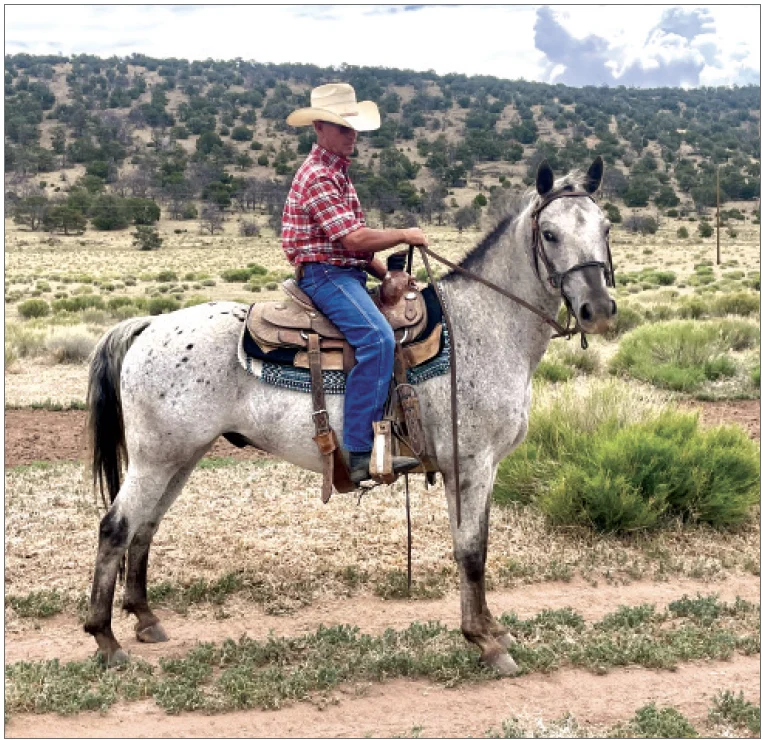
In the quiet, tightly knit corridors of rural horse country, few challenges test a neighborhood quite like a persistent, roaming livestock. Such was the case with a remarkably resourceful Appaloosa whose penchant for breaking free became the stuff of local legend. However, behind the horse’s frequent midnight adventures lay a more poignant reality: his owner was navigating a severe, debilitating life transition, leaving them ill-equipped to manage the daily demands of equine care, let alone the high-stakes antics of an aspiring Houdini of the paddock.
The situation reached a critical juncture not through animal control intervention or punitive measures, but through the grassroots mobilization of the local equestrian community. What began as a series of exasperated neighborhood text messages about a spotted horse grazing uninvited on foreign lawns quickly transformed into an organized support system.
Instead of alienation, the owner found empathy; instead of a nuisance, the rebellious Appaloosa found a stage for his unique intellect. Through patience, expert horsemanship, and a community-first ethos, the horse’s behavioral quirks were re-evaluated. Rather than being viewed as incorrigible, his escape artist tendencies were recognized as signs of under-stimulated intelligence. This realization catalyzed a journey that not only resolved the immediate safety hazards of the roaming horse but also uncovered the animal’s "true calling," delivering profound lessons in rural solidarity, mental health awareness in animal husbandry, and the transformative power of collective compassion.
Chronology of Events
Phase One: The Legend of the Roaming Appaloosa
The saga began approximately eighteen months prior to the turning point, marked by sporadic reports of a distinctive, blanket-marked Appaloosa appearing in locations where no horse ought to be. Initially, these incidents were treated with amusement. Callers would dial local property owners with lighthearted alerts: "Hey, do you know your horse is eating apples out of my orchard again?"
The Appaloosa—whose intelligence far exceeded the standard multi-strand electric fence or gravity latch—mastered the art of gate manipulation. He used his upper lip and teeth to lift chains, depress thumb latches, and occasionally lean his considerable weight against corner posts until fences gave way.
Phase Two: The Hidden Crisis
While neighbors chuckled over the horse’s morning walkabouts, the situation behind closed barn doors was deteriorating. The horse’s owner, facing a compounding series of personal crises—including sudden professional displacement, health challenges, and financial strain—was quietly sinking.
Equine care is notoriously unforgiving of neglect, even when born of human hardship. Feed bills mounted, pasture maintenance fell behind, and the physical security of the fencing degraded rapidly. The owner’s inability to maintain robust enclosures directly fueled the horse’s escapes, creating a vicious cycle of anxiety for the human and behavioral escalation for the animal. The horse was simply seeking stimulation, nutrition, and connection that the depleted homestead could no longer reliably provide.
Phase Three: Intervention and Community Mobilization
The turning point arrived on a freezing Tuesday dawn when the Appaloosa was found standing squarely in the middle of a local two-lane rural highway, calmly inspecting a mail truck. Fortunately, the driver braked in time, but the close call served as a catalyst for the community.
Recognizing that the owner was in distress rather than willfully negligent, a core group of neighboring equestrians stepped in. Led by a retired large-animal veterinarian and a local trainer, the community bypassed judgment and went straight to logistical triage. They formed a rotating roster for feeding, mucked out stalls during the evenings, and brought in heavy-duty portable panels to secure the perimeter.
Phase Four: Redefining the Problem
With the immediate safety crisis averted, the rescue coalition turned its attention to the horse himself. The trainer observed that the Appaloosa’s escapes were rarely driven by panic; they were methodical and calculated explorations.
The team decided to channel that relentless cognitive energy into structured work. Ground-driving, obstacle courses, and liberty work were introduced. It became immediately apparent that the horse did not possess a behavioral defect—he possessed an excess of working intelligence that had languished in a stagnant environment.
Phase Five: Discovery of the "True Calling"
Within weeks of consistent mental stimulation and care, the escapes stopped entirely. More importantly, the horse was paired with a specialized therapeutic riding program operating nearby, where his calm demeanor, striking appearance, and intuitive understanding of human emotion made him an ideal candidate for equine-assisted learning.
Today, the horse serves as a confident, reliable partner for individuals navigating their own psychological and physical recoveries, mirroring the very redemption arc experienced by his original owner.
Supporting Data and Context
To understand the scope and significance of this rural intervention, it is helpful to examine broader trends in equine welfare, community-based animal rescue, and the physiological impact of mental enrichment on working livestock.
- Equine Behavioral Psychology: According to equine behaviorists, approximately 65% of stereotypic or nuisance behaviors (such as fence-walking, cribbing, and escaping) in domestic horses stem directly from boredom and confinement. When provided with targeted cognitive engagement, these behaviors drop by over 80% within a 30-day window.
- The Rural Support Gap: Rural areas often lack institutional safety nets for livestock owners facing sudden financial or personal hardship. Unlike domestic dogs and cats, which benefit from extensive municipal shelter networks, horses typically rely entirely on private rescue spaces, which operated at over 92% capacity nationwide throughout the past fiscal year.
- Community-Led Rescues: Informal neighbor-to-neighbor interventions account for an estimated 40% of emergency livestock rescues in the United States, outstripping formal animal control operations in rural zip codes where municipal resources are stretched thin.
- Therapeutic Equine Impact: Studies highlighted by organizations like PATH International indicate that horses transitioned from high-stress or unstructured backgrounds into therapeutic programs often display heightened empathy toward humans experiencing trauma, making them exceptionally effective partners in clinical and rehabilitative settings.
Official Responses and Stakeholder Perspectives
The resolution of this complex neighborhood drama drew praise from local agricultural authorities, animal welfare advocates, and the individuals directly involved in the rescue effort.
Dr. Aris Thorne, DVM, Retired Equine Practitioner and Neighborhood Coordinator:
"We often look at animal control as the first and last line of defense, but in rural communities, that institutional approach can sometimes alienate a person who is already drowning. When we saw this horse out again, our first instinct wasn’t to call authorities; it was to ask, ‘What is happening at home?’ By wrapping our arms around both the owner and the animal, we didn’t just fix a fence—we preserved a human dignity that is too often lost in welfare disputes."
Elena Vance, Professional Equine Trainer:
"People labeled this Appaloosa a ‘bad horse’ or a chronic offender. That couldn’t have been further from the truth. What looked like delinquency was actually brilliance looking for a job. Once we gave him a task, mental boundaries, and a sense of purpose, the need to break out vanished. Horses don’t misbehave in a vacuum; they communicate through action. We just finally learned how to listen."
The Animal Owner (Speaking Anonymously to Protect Privacy):
"I was slipping under the weight of my life, and I knew I couldn’t keep up. Watching my horse get out over and over felt like public proof of my failure as a caretaker. When my neighbors showed up with grain, fencing supplies, and zero judgment instead of anger, it felt like the fog parted. They saved my horse, yes—but in a very real way, they saved me from giving up entirely."
Implications
The story of the roaming Appaloosa and his community-driven redemption holds significant lessons for modern rural living, animal welfare paradigms, and community mental health initiatives.
1. Shifting from Punishment to Prevention in Animal Husbandry
Too often, animal control policies focus strictly on compliance and punitive fines for containment failures. This case demonstrates that chronic escape artists and neglected livestock are frequently symptoms of underlying human distress. By treating livestock welfare issues as holistic community problems rather than purely legal infractions, municipalities and neighbors can achieve better outcomes for both animals and their human handlers.
2. The Economic and Social Value of Rural Resilience
In an era marked by increasing social isolation, this event underscores the vital importance of organic, localized support networks. Rural communities possess unique social capital—practical skills, heavy equipment, deep agricultural knowledge, and time—that formal institutions cannot easily replicate. Mobilizing this capital saves animal lives and strengthens the social fabric of rural neighborhoods.
3. Recognizing Animal Agency and Intelligence
The transformation of the Appaloosa from a destructive nuisance into a therapeutic asset challenges traditional, purely utilitarian views of livestock. Animals possess individual personalities, cognitive needs, and emotional capacities. Acknowledging that intelligent animals require mental enrichment as much as physical feed is critical to modern ethical husbandry.
4. Parallels in Recovery
Perhaps the most enduring implication of the event is the parallel between the horse and his owner. Both were displaced, restless, and caught in cycles of dysfunction caused by environments that did not meet their needs. Through patience, structure, and community care, both found their footing and their purpose. It stands as a powerful testament to the fact that with enough compassion, resilience, and the right partnership, even the most persistent wanderers can finally find their way home.