BEND, Oregon — State agricultural authorities have confirmed a new cluster of pigeon fever infections among equines in Central and Southeastern Oregon. The Oregon Department of Agriculture (ODA) verified five new cases of the bacterial disease, impacting three horses in Deschutes County and two in Harney County.
In response to the confirmed diagnoses, state health officials have placed all affected equines under official quarantine to curb potential transmission. The outbreak highlights ongoing regional vulnerabilities to vector-borne and environmental pathogens during the transitional seasonal months, prompting renewed calls for biosecurity vigilance among livestock owners across the Pacific Northwest.
Main Facts
Pigeon fever—scientifically known as Corynebacterium pseudotuberculosis infection, and occasionally referred to as dryland distemper—is a persistent and painful bacterial disease primarily affecting horses and, less frequently, cattle and small ruminants. The ODA’s confirmation of these five cases underscores the infectious nature of the bacteria within regional livestock populations.
The hallmark clinical presentation of pigeon fever involves the formation of large, pus-filled abscesses. While these lesions can develop anywhere on an animal’s body, they most frequently manifest on the pectoral muscles of the chest and along the ventral midline under the belly. In more severe internal or ulcerative forms, the bacteria can cause internal abscesses, limb infections (ulcerative lymphangitis), and persistent fever, leading to significant morbidity if left untreated.
Transmission typically occurs when the Corynebacterium pseudotuberculosis bacterium enters the body through compromised skin barriers. This can happen via minor abrasions, cuts, insect bites, or direct contact with contaminated soil, bedding, or equipment. The bacterium itself is remarkably resilient in the environment, capable of surviving in dry soil and manure for extended periods, making pastures and dry lots persistent reservoirs of infection.
Following the laboratory confirmation of the Deschutes and Harney County cases, regulatory veterinarians acted swiftly. All five infected horses have been isolated and placed under official state quarantine orders, restricting their movement off the affected premises to prevent the spread of the pathogen to neighboring herds and boarding facilities.
Chronology
While the ODA’s public bulletin was issued recently, the timeline of detection and intervention reflects standard protocols for managing regulated equine infectious diseases in Oregon:
- Late Summer to Early Fall (Risk Window): Historical epidemiological data indicates that the seasonal window for Corynebacterium pseudotuberculosis infections begins to peak. Warm, dry conditions combined with high populations of mechanical vectors create an ideal environment for the bacteria to thrive and spread.
- Initial Clinical Presentation and Veterinary Examination: Owners in Deschutes and Harney counties noticed swelling, stiffness, and characteristic abscesses on their animals. Local attending veterinarians were called to examine the horses, flush and treat localized lesions, and collect diagnostic samples.
- Laboratory Confirmation: Diagnostic swabs and aspirations were sent to accredited veterinary diagnostic laboratories, where bacterial cultures confirmed the presence of Corynebacterium pseudotuberculosis.
- State Notification and Quarantine Enforcement: Upon receiving positive diagnostic confirmations, the attending veterinarians reported the findings to the Oregon Department of Agriculture. State animal health officials immediately initiated quarantine protocols, restricting animal movements on the designated properties in Deschutes and Harney counties.
- Ongoing Monitoring: State and local animal health regulators continue to monitor the quarantined premises, advising owners on rigorous sanitation procedures while awaiting the complete resolution of clinical symptoms.
Supporting Data and Epidemiological Context
Understanding the dynamics of Corynebacterium pseudotuberculosis requires looking at how environmental factors, vector populations, and geography converge.
Environmental Resilience and Transmission Vectors
Corynebacterium pseudotuberculosis is a facultative intracellular, gram-positive bacterium. One of its most challenging characteristics for livestock managers is its persistence in the environment. Studies on the organism show that it can remain viable in soil for months, particularly in dry, dusty conditions common to the intermountain West during late summer and autumn.
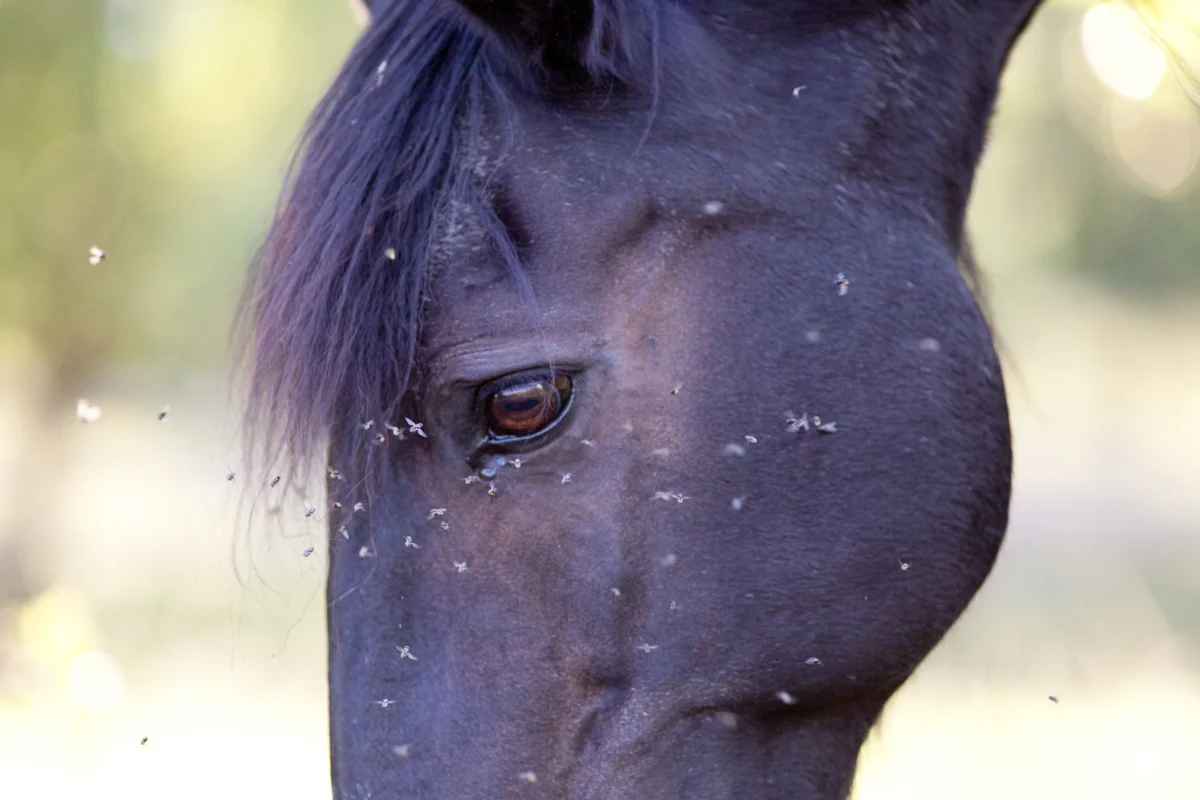
Insects play a significant role in the mechanical transmission of the disease. Biting flies—most notably the horn fly (Haematobia irritans), stable fly (Stomoxys calcitrans), and housefly (Musca domestica)—act as vectors. These insects feed on the discharge from open abscesses or infected soil and subsequently transfer the bacteria to the unbroken or micro-abraded skin of healthy horses. Consequently, regions experiencing heavy fly pressure during dry spells often see a corresponding spike in pigeon fever cases.
Regional Vulnerability in Oregon
Oregon’s varied topography creates distinct microclimates where pigeon fever can flare. Deschutes County, situated on the eastern slopes of the Cascade Range, features arid, sandy soils and warm summer temperatures—conditions that favor the environmental survival of Corynebacterium pseudotuberculosis. Similarly, Harney County, characterized by high-desert rangelands, provides an environment where dry dust and biting insects converge, increasing the likelihood of cutaneous exposure among horses grazing on native pastures or kept in dry lots.
Official Responses and Industry Guidance
In light of the new cases, agricultural agencies and equine health organizations have intensified educational outreach. The Equine Disease Communication Center (EDCC)—an independent nonprofit organization supported by industry donations that provides open access to infectious disease information—has collaborated with marketing programs like EDCC Health Watch to disseminate verified data regarding the Oregon outbreak.
State veterinarians emphasize that while pigeon fever is rarely fatal when managed properly, it demands prompt veterinary intervention and meticulous management.
Recommended Biosecurity and Management Practices
To mitigate the risk of an outbreak spreading within a facility or across regional herds, equine professionals recommend a comprehensive set of preventative measures:
- Strict Sanitation of Equipment: Grooming tools, tack, buckets, and stall cleaning implements should never be shared between horses without thorough washing and disinfection. The bacteria can easily hitchhike on equipment used across multiple animals.
- Manure and Waste Management: Regular removal and proper composting of manure reduce the breeding grounds for mechanical vectors like stable flies and houseflies. Dry lots should be kept clean and free of organic debris where bacteria might linger.
- Wound Care and Hygiene: Because the bacteria enter through broken skin, any cuts, scrapes, or minor wounds should be cleaned, disinfected, and protected promptly. Fly masks, sheets, and safe wound ointments can prevent insects from feeding on healing tissue.
- Fly Control Programs: Implementing aggressive vector control strategies—including feed-through larvicides, premise sprays, sticky traps, and the strategic use of equine-safe fly repellents—dramatically reduces the risk of insect-mediated transmission during peak season.
- Isolation of New Additions: Any horses newly introduced to a property should be monitored closely, ideally undergoing a brief quarantine period to ensure they are free of active lesions or systemic illness before mixing with established herds.
Veterinary authorities stress that if a horse owner observes unexplained swellings, pectoral abscesses, lethargy, or reluctance to move, they should immediately contact a licensed veterinarian rather than attempting to lance or treat the abscesses independently. Premature lancing without proper environmental containment can release millions of infectious bacteria into the surrounding soil and stalls, worsening the contagion.
Implications for Horse Owners and the Equine Industry
The confirmation of pigeon fever in Deschutes and Harney counties carries several immediate and long-term implications for horse owners, boarding facilities, and the broader agricultural economy in Oregon.
Economic and Operational Impact
For individual owners, a diagnosis of pigeon fever means unexpected veterinary expenses, diagnostic testing costs, and therapeutic interventions such as antimicrobial treatments, hydrotherapy, and localized wound care. Furthermore, the mandatory quarantine imposed by the ODA halts all movement of equines on and off the affected properties. For competitive riders, trainers, and breeding operations, a quarantine can disrupt show schedules, sales, and training timelines for weeks or months until the animals are cleared by regulatory officials.
Heightened Awareness and Vigilance
Outbreaks of this nature serve as a crucial reminder of the importance of everyday biosecurity. Many horse owners assume that infectious diseases only travel via direct nose-to-nose contact between animals. Pigeon fever shatters this misconception by demonstrating how environmental reservoirs—dust, soil, and insects—can serve as silent vectors of disease. Consequently, regional boarding stables and equestrian event facilities across Oregon are tightening their intake protocols, auditing their fly-control measures, and educating boarders on early clinical signs.
Long-Term Outlook
As changing climate patterns extend dry, warm weather windows in the Pacific Northwest, the seasonal window for Corynebacterium pseudotuberculosis may widen, potentially leading to increased annual incidence rates. Continued surveillance by the Oregon Department of Agriculture, coupled with transparent reporting via networks like the EDCC, remains vital for protecting the health of the state’s equine population. Through proactive management, strict quarantine compliance, and rigorous hygiene standards, Oregon’s agricultural community can successfully contain the current cluster and safeguard livestock health moving forward.