
Introduction: The Mystery of the Unfocused Mind
In the realm of animal behavior, few questions have sparked as much intrigue and professional debate as the potential for Attention Deficit Hyperactivity Disorder (ADHD) in our canine companions. For decades, behaviorists and veterinarians have grappled with dogs that seem to exist in a state of perpetual, high-frequency electrical buzz—animals that possess immense intelligence but lack the neural "brakes" necessary to focus, regulate impulses, or retain training cues.
As we explore the intersection of human and canine cognition, we find that the experiences of the past—such as the case of an adolescent Old English Sheepdog named "Bear"—provide a critical foundation for modern veterinary science. While our understanding of neurodivergence in animals has evolved significantly, the fundamental questions remain: What is the biological reality of canine ADHD, and how can owners distinguish between a high-energy dog and one struggling with a genuine neurodevelopmental disorder?
The Evolution of Canine ADHD Research
Early Clinical Observations
Years ago, before the term "ADHD" was common in veterinary literature, practitioners were already observing dogs that defied traditional training methods. In one notable case, an adolescent Sheepdog exhibited classic symptoms: rapid learning of new cues followed by an inexplicable "forgetting" of those same commands, coupled with dangerous impulse control issues like leash and limb biting.

At that time, pioneering veterinarians in Illinois attempted to bridge the gap between human and animal psychiatry, experimenting with stimulants like Ritalin. While these early, anecdotal interventions yielded immediate and "astounding" results—allowing the dog to finally achieve a state of calm focus—the medical community has since cautioned against such off-label use. Today, Ritalin is no longer recommended for canine ADHD, as we now understand that stimulants can exacerbate symptoms or cause unpredictable side effects in dogs.
Contemporary Scientific Consensus
Fast-forward to the present day, and the scientific community has moved from speculative anecdotes to rigorous empirical research. Adam Miklosi’s laboratory in Hungary has led the charge for over two decades. Their 2006 study, which adapted pediatric ADHD diagnostic scales for canine use, paved the way for a more standardized understanding of the condition. Today, it is widely accepted in veterinary science that dogs can and do exhibit behaviors consistent with ADHD, characterized by:
- Persistent impulsivity: An inability to inhibit reactive behaviors.
- Inattentiveness: Difficulty maintaining focus on tasks or owners.
- Hyperactivity: Constant, non-productive movement.
- Aggression: Often stemming from frustration and an inability to regulate emotional responses.
Clinical Implications: Separating Energy from ADHD
A common pitfall for pet owners is conflating a "high-energy" dog with an "ADHD" dog. Boundless energy is a breed-specific trait, particularly in working lines like Border Collies or Vizslas. However, ADHD is not a measure of energy output; it is a measure of executive function.

Diagnostic Indicators
To determine if a dog may be struggling with ADHD, experts suggest that owners look for specific behavioral deficits:
- Contextual Frustration: Does the dog become disproportionately frustrated when prevented from reaching a goal?
- Consistency Gaps: Can the dog perform a task perfectly one moment and then seem entirely confused by the same command moments later in a similar setting?
- Attention Span: Is the dog capable of focusing for a duration appropriate for their age and developmental stage?
It is vital to consult with a board-certified veterinary behaviorist. According to resources from the National Institutes of Health (NIH), diagnosing ADHD requires a thorough examination of neurophysiology. Treatment is rarely a "quick fix" and often involves a holistic approach, including environmental enrichment, specialized training, and, in some cases, non-stimulant pharmacological support.
The Human-Canine Parallel
Interestingly, the study of canine ADHD has led many professionals to a mirror: themselves. Much like the human experience, where ADHD can result in "superpowers" of hyper-focus during creative or high-stakes work, the canine experience of neurodivergence is not inherently "broken"—it is simply wired differently. Recognizing this in our pets can lead to more empathy, better management strategies, and a deeper appreciation for the unique ways our dogs perceive the world.

Chronology of an Unexpected Week: From Advocacy to Environmental Disaster
While the scientific study of canine behavior continues to advance, life on the farm serves as a poignant reminder that we exist alongside forces of nature that are as unpredictable as a dog’s impulses.
The SoCal Expedition
The recent week began with a celebration of life: a trip to Southern California to honor a sister’s 80th birthday. These moments of connection—squeezing in family time with nieces and nephews and discussing the intricacies of canine cognition at a local Barnes and Noble—remind us of the importance of human social bonds.
The Storms at Home
However, the tranquility of the trip was shattered by reports from home. While in California, news of severe thunderstorms, high winds, and potential tornadoes back on the farm created a state of deep personal anxiety. The reality of life in rural areas is that one is often at the mercy of the elements.

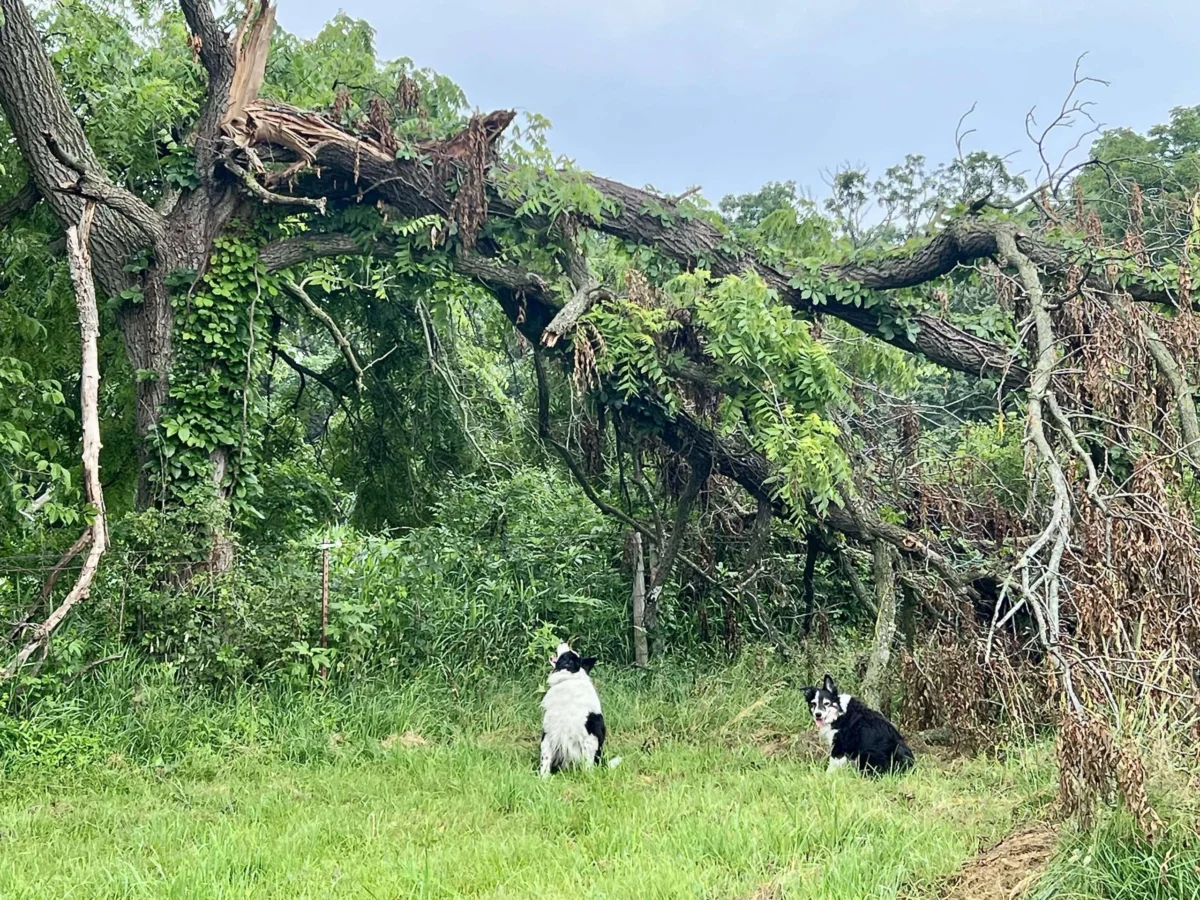
Upon return, the scope of the damage became clear: 70 mph winds had wreaked havoc on the landscape.
- Structural Damage: Blown-out garage windows and significant debris.
- Arboricultural Loss: The loss of a beloved weeping willow and multiple trees within the woods.
- Safety Hazards: Encountering "widow makers"—dangerous, precariously hung tree limbs that pose a lethal threat to those clearing debris.
This experience highlights the emotional toll of rural stewardship. The struggle to clear trails, the physical labor of the chainsaw, and the constant vigilance required to navigate fallen timber provide a stark contrast to the intellectual pursuit of studying dog behavior. It serves as a reminder that both our dogs and our homes require consistent, attentive management.
Supporting Data and Future Directions
The research into canine ADHD is far from complete. Current studies are beginning to explore the link between neurodevelopmental disorders and physical health, noting that individuals—both human and canine—with ADHD may exhibit higher reactivity to pain, increased instances of autoimmune issues, and higher rates of anxiety.

As we look toward the future, the integration of behavioral research with physiological data will be paramount. For the average dog owner, the message is clear: if your dog’s behavior seems "off," do not jump to conclusions. Instead, document the behavior, seek professional guidance, and remember that, just like the aftermath of a storm, with the right support and patience, one can clear the path forward.
Conclusion: Finding Balance Amidst the Chaos
Life, much like the study of animal behavior, is a mosaic of challenges and triumphs. We navigate the "widow makers" of life—the sudden storms, the health scares, and the behavioral mysteries of our pets—while simultaneously savoring the simple joys, such as a fresh harvest of berries and the comfort of a quiet home.
Whether you are navigating the complex neurobiology of an ADHD-affected dog or clearing a trail after a summer gale, the key is resilience. We do not choose the storms that come our way, but we can choose how we manage them. For those with dogs that struggle to focus, take heart: you are not alone, and there is a growing body of support and science to help you understand your companion. And for those currently facing the debris of life’s recent storms, may your recovery be swift, and may your future weeks hold more sweet berries than high-speed winds.

Recommended Resources
- NIH Research on Canine ADHD: [Link to NIH Study]
- The Stress Factor in Dogs: A comprehensive guide to understanding canine resilience.
- Professional Consultation: Always seek out a certified veterinary behaviorist when dealing with significant behavioral concerns.
If you recognize the signs of ADHD in your own dog—or perhaps in yourself—please share your experiences. Just remember to write them down before the next distraction pulls your attention away!