
March 30, 2026 | Analysis by Patricia McConnell, Ph.D.
In the annals of scientific discovery, the month of March—traditionally designated as Women’s History Month—serves as a poignant reminder of the figures who fundamentally altered our perception of the natural world. While the legendary “Trimates”—Jane Goodall, Dian Fossey, and Biruté Galdikas—rightfully hold their place in the pantheon of primatology for their pioneering fieldwork, their story is only the beginning of a larger, more nuanced shift in biological science.
To understand modern animal behavior, including the intricacies of canine training and social dynamics, we must look beyond the well-trodden paths of the great apes. We must turn our attention to the baboon, and specifically to two women who challenged the bedrock of evolutionary psychology: Dr. Jeanne Altmann and Dr. Shirley Strum.
The Myth of the Aggressive Hierarchy
For much of the 20th century, the dominant narrative in biology was one of "nature, red in tooth and claw." Influenced by the prevailing cultural attitudes of the mid-century, researchers—predominantly male—approached animal societies through a lens of rigid, male-dominated hierarchies. The focus was consistently on conflict, overt aggression, and the "survival of the fittest" in its most brutal, physical sense.
It was into this environment that Dr. Jeanne Altmann and Dr. Shirley Strum stepped. By applying rigorous new methodologies and refusing to ignore the "quieter" aspects of social life, they dismantled the male-centric bias that had clouded the study of primates for decades.

The Methodological Revolution: Altmann’s “Focal Sampling”
Dr. Jeanne Altmann’s contribution to science was not merely a set of observations, but a complete overhaul of how we observe. Prior to her work, the standard practice in the field was "ad libitum sampling"—a method that essentially allowed researchers to record whatever caught their eye.
The Problem with "Drama"
As Altmann astutely observed, human beings are naturally drawn to conflict. When researchers watched a troop of baboons, they tended to notice the dramatic, high-energy interactions: the baring of teeth, the physical confrontations, and the posturing of dominant males. Because the observers were looking for "the action," their data became skewed toward aggression.
The Solution: Focal Sampling
Altmann introduced "focal sampling," a systematic approach where a researcher tracks one specific individual for a set period, recording every interaction, regardless of whether it is dramatic or mundane.
The results were transformative. When the focus shifted from the "alpha male" to the individual, the picture changed entirely. Suddenly, the mothering behaviors, the subtle cues of cooperation, and the complex web of social support systems became just as significant as the outbursts of aggression. According to the International Encyclopedia of Primatology, Altmann’s methodology “profoundly changed the prevailing view of females more generally, and of mammalian females more specifically,” providing a foundational understanding of how maternal environment shapes the phenotypic development of offspring.
Shirley Strum and the Architecture of Cooperation
While Altmann revolutionized the how of research, Dr. Shirley Strum, who began her intensive study of baboons in 1972, revolutionized the what.

Moving Beyond Aggression
Strum’s work in Kenya was a direct challenge to the theory that baboon societies were structured primarily through force. She discovered that for baboons, survival was not solely a matter of who could fight the hardest. Instead, she found that cooperation, reciprocity, and long-term social alliances were equally, if not more, critical to the success of an individual.
The "Living Shield" and Other Strategies
One of the most compelling examples of Strum’s findings involved the strategic use of infants by male olive baboons. Strum documented instances where males would recruit infants and carry them on their bellies to act as a "living shield" during disputes. It was an ingenious social maneuver: in the complex social contract of a baboon troop, other members would not attack a male holding an infant.
This observation highlighted that baboons possessed a sophisticated, almost political understanding of their social environment. They were not merely reactive creatures governed by instinctual aggression; they were agents utilizing social strategies to ensure safety and access to resources.
A Mirror to Human Society
The implications of Strum’s research were profound. She demonstrated that in many ways, baboon societies mirror human social structures more closely than those of our closer relatives, the chimpanzees or gorillas. Friendships—real, measurable social bonds—were a cornerstone of baboon life. Males would form long-term relationships with females, protecting them from unwanted suitors and helping with the care of infants. In return, females provided grooming and social support.
This paradigm shift forced scientists to acknowledge that "dominance" is only one of many tools used to achieve social stability. The "red in tooth and claw" perspective, while convenient for a certain type of academic narrative, failed to account for the depth of empathy, care, and cooperation required for a complex society to function.

The 1970s: A Decade of Change
It is no coincidence that this monumental shift in understanding occurred during the 1970s—a period of intense social and intellectual transition. This was the same era in which Jane Goodall’s In the Shadow of Man brought primate behavior into the mainstream, despite criticism from peers who felt her practice of naming her subjects—rather than assigning them numbers—was "unscientific."
This was also a time of systemic limitation for women. Many of the scientists who paved the way for modern animal behavior were working in an era where they faced significant institutional barriers. As a personal reflection, I recall my own early years: when I married my husband, Doug McConnell, in 1968, I was legally unable to open a bank account under my own name. I was "Mrs. Douglas McConnell." The intellectual labor of these women was often dismissed or sidelined by a patriarchal academic structure that struggled to accept that the "soft" science of observation and social bonding was, in fact, the most rigorous science of all.
Implications for Modern Animal Training
The legacy of Altmann and Strum is felt today in the most practical of applications: the training of our domestic animals. For decades, dog training was heavily influenced by the same faulty "dominance" theories that plagued primatology. We were told to "be the alpha," to focus on dominance hierarchies, and to prioritize control over partnership.
Thanks to the foundations laid by these women, we have moved toward a more enlightened model. We now understand that animal behavior is rooted in cooperation, communication, and the reinforcement of positive social bonds. We are moving away from the "nature, red in tooth and claw" model toward one that is "light blue in heart and soul."
Reflections from the Field: The Farm
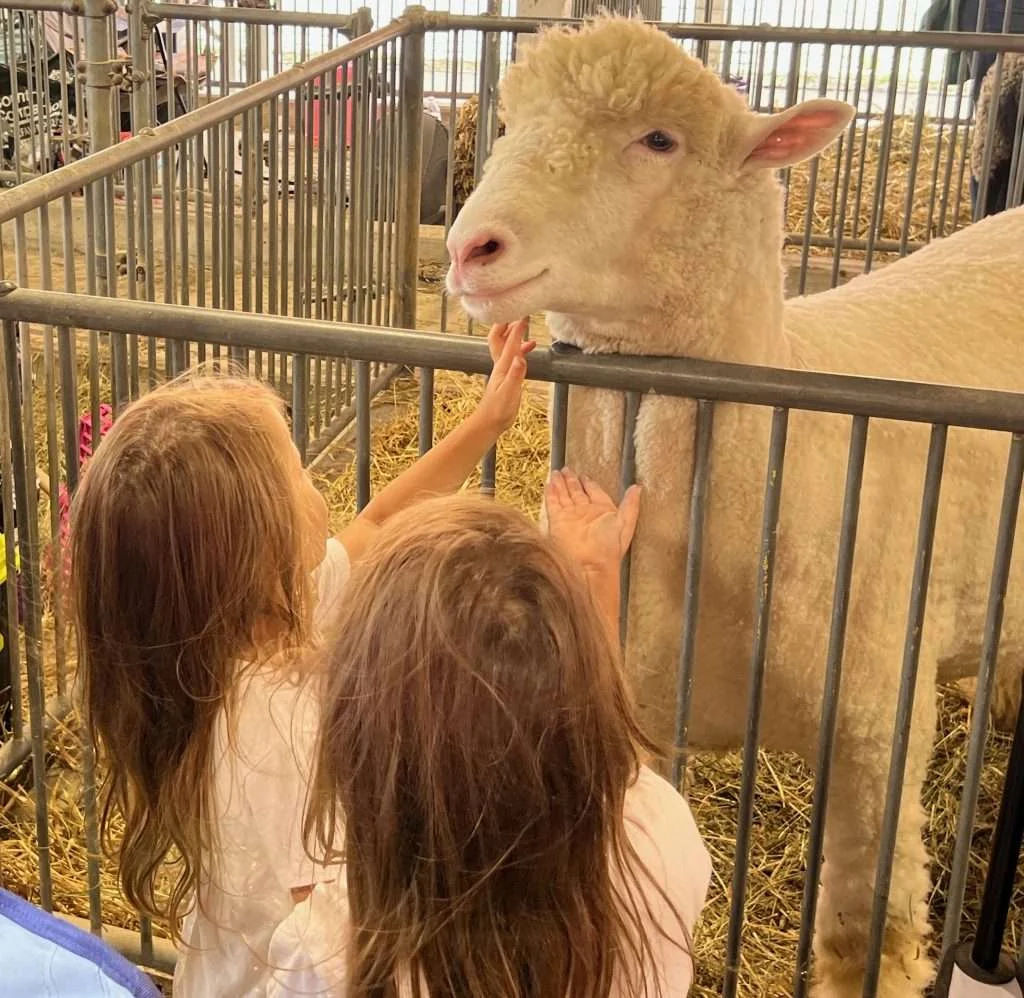
As I look at my own life on the farm today, the lessons of these women are on full display. After the annual shearing of the sheep, the flock undergoes a period of social re-negotiation. They must re-identify one another, and in this process, we see the very same dynamics Altmann and Strum documented.

There is the annual challenge between the ewes, the quiet protective friendships that form between unrelated animals, and the constant, subtle communication that governs the flock. It is a reminder that nature is not merely a struggle for dominance; it is a complex, cooperative endeavor.
As we celebrate these scientific pioneers, we are also reminded of the joy of the present—the sight of spring flowers, the companionship of our dogs, and the power of a new perspective. My recent work, Away to Me, has been a testament to this, exploring the deep, often unspoken bonds between species. The positive reception of the book is a heartening sign that the world is ready to move beyond the old, aggressive paradigms and embrace the complexity of the living world.
Conclusion
The history of science is not just a list of discoveries; it is a history of perspective. Dr. Jeanne Altmann and Dr. Shirley Strum did not just discover new behaviors in baboons; they provided the tools for us to see the world as it truly is: a place where cooperation is a strategy, where social bonds are survival mechanisms, and where the most powerful force in nature is not the strength of the claw, but the strength of the connection. As we move forward, let us carry this "light blue" perspective into our science, our training, and our daily lives.