Positive reinforcement is often touted as the gold standard of canine training, a simple equation of “action equals reward.” However, animal behaviorists are increasingly warning that the nuance of human-canine interaction is fraught with hidden pitfalls. Even the most well-intentioned owners frequently fall into the trap of "poisoning the cue"—a phenomenon where a behavior intended to reinforce a dog actually functions as a form of punishment, inadvertently decreasing the likelihood of that behavior occurring in the future.
Renowned animal behaviorist Dr. Patricia McConnell, in a recent reflection on her upcoming revised edition of The Puppy Primer, highlights the subtle, often misunderstood signals dogs use to communicate their discomfort. Her insights serve as a critical wake-up call for pet owners who assume that their physical expressions of affection are universally welcomed by their canine companions.
The Myth of the "Affectionate" Head Pat
One of the most pervasive misconceptions in dog training is the belief that head-patting is a universally rewarding experience. In obedience classes across the country, it is common to see owners enthusiastically patting the tops of their dogs’ heads as a reward for a successful recall.

"Dogs aren’t as fond of receiving head pats as we are of giving them," notes Dr. McConnell. "If you watch closely, you can see the dogs ducking down and turning their heads away as if they didn’t like it." While exceptions exist—particularly among the famously affectionate Golden Retriever breed—the standard reaction from a dog subjected to an unsolicited head pat is one of mild aversion.
When a human performs this gesture after a dog has come when called, they are inadvertently creating a negative association. Instead of the dog feeling reinforced for their compliance, they feel physically constrained or overwhelmed. Over time, this "poisoned cue" can lead to a dog becoming hesitant or reluctant to approach their owner, as they have learned that the reward for compliance is an unpleasant physical interaction.
Poisoning the Cue: A Deeper Look at Human Error
The concept of "poisoning a cue" refers to the process of teaching a negative association instead of a positive one. In technical behavioral terms, if an action results in an experience the dog finds aversive, it acts as punishment—something that decreases the frequency of the behavior.

This error is not limited to novice owners; even professionals can inadvertently poison cues through a lack of awareness. Common examples include:
- The "Collar Grab": Calling a dog to come, only to grasp their collar in a way that is physically uncomfortable or startling.
- The "Sit-and-Slap": Requiring a dog to sit, followed by an aggressive pat on the head that the dog would likely prefer to avoid.
- The "Nail Trim Surprise": Asking a dog to lie down, a command associated with rest, only to immediately begin a stressful grooming procedure.
The solution, according to experts, lies in sharpening our observation skills. Owners are encouraged to look for signs of genuine reinforcement: a dog that remains engaged, wags from the shoulders back, or shows joy and anticipation. Conversely, signs of aversion include a dog turning its head away, closing its mouth, going stiff, or attempting to leave the area.
A Call to Observational Mindfulness
To combat these unintended negative associations, Dr. McConnell has issued a challenge to pet owners: take a day to monitor your own reinforcement patterns. The goal is to focus on specific behaviors and observe how the dog responds to the subsequent interaction.

This is not a call for perfection, but for awareness. By jotting down observations—what you did, and how your dog responded—owners can begin to "mind-meld" with their pets. This simple act of documentation helps to move human behavior into better alignment with canine communication styles. Focusing on just one or two behaviors at a time makes the process manageable, allowing owners to pivot their strategy if they realize their current method is causing distress rather than delight.
Implications for Canine Welfare and Ethics
The implications of this research extend far beyond simple obedience training; they reach into the heart of animal welfare and the ethics of our relationship with domestic animals. As we continue to integrate dogs into our lives, the burden of communication remains squarely on the human.
When we ignore the signs of discomfort, we compromise the trust that is foundational to the human-dog bond. The "poisoning" of a name or a recall command is, in effect, a breakdown in communication. If a dog’s name becomes associated with frustration, physical discomfort, or fear, the word itself loses its power to signify a positive connection.

Professional trainers and behaviorists suggest that if a dog’s response to a cue is consistently avoidant, it is time for a new plan. This might involve changing the physical reward (using high-value treats instead of physical contact), adjusting the environment, or reconsidering the way the cue is delivered.
Upcoming Events and Community Engagement
As part of her commitment to public education, Dr. McConnell has announced a series of speaking engagements and events throughout the latter half of 2026. These events aim to foster deeper conversations about dog behavior, welfare, and the importance of ethical, science-based training methods.
2026 Summer and Fall Schedule:
- July 25, 2026: Minocqua (WI) Public Library. A public discussion on dog behavior and the update to The Puppy Primer.
- September 15, 2026: Bark Fest. A collaborative discussion with Cat Warren, Zazie Todd, and Kristi Benson.
- September 17, 2026: Hildebrand Memorial Library, Boscobel, WI.
- September 24, 2026: Barnes & Noble, Madison, WI.
- October 7-10, 2026: CANIS Conference, Schaumburg, IL. This conference will feature a "Story Circle" focused on meaningful connection and a panel discussion dedicated to welfare and ethics in the dog training industry.
- October 15-18, 2026: Wisconsin Book Festival, Madison, WI.
- November 14, 2026: Janesville-Beloit Kennel Club, Janesville, WI.
These sessions provide a venue for owners to ask questions and engage in the "mind-melding" process that Dr. McConnell advocates. As she notes, these interactions are often the most rewarding parts of her work, bridging the gap between professional expertise and the daily experiences of pet owners.

Life on the Farm: Lessons in Patience
Beyond the academic and professional sphere, the reality of life with dogs provides constant lessons in behavior. Recent updates from the farm underscore the importance of understanding individual canine personalities. From the patience required to work with law enforcement experts on new literary projects to the comical, often stoic resistance of dogs like Miss Maggie—who seemingly views photography with utter disdain—the daily routine is a masterclass in observation.
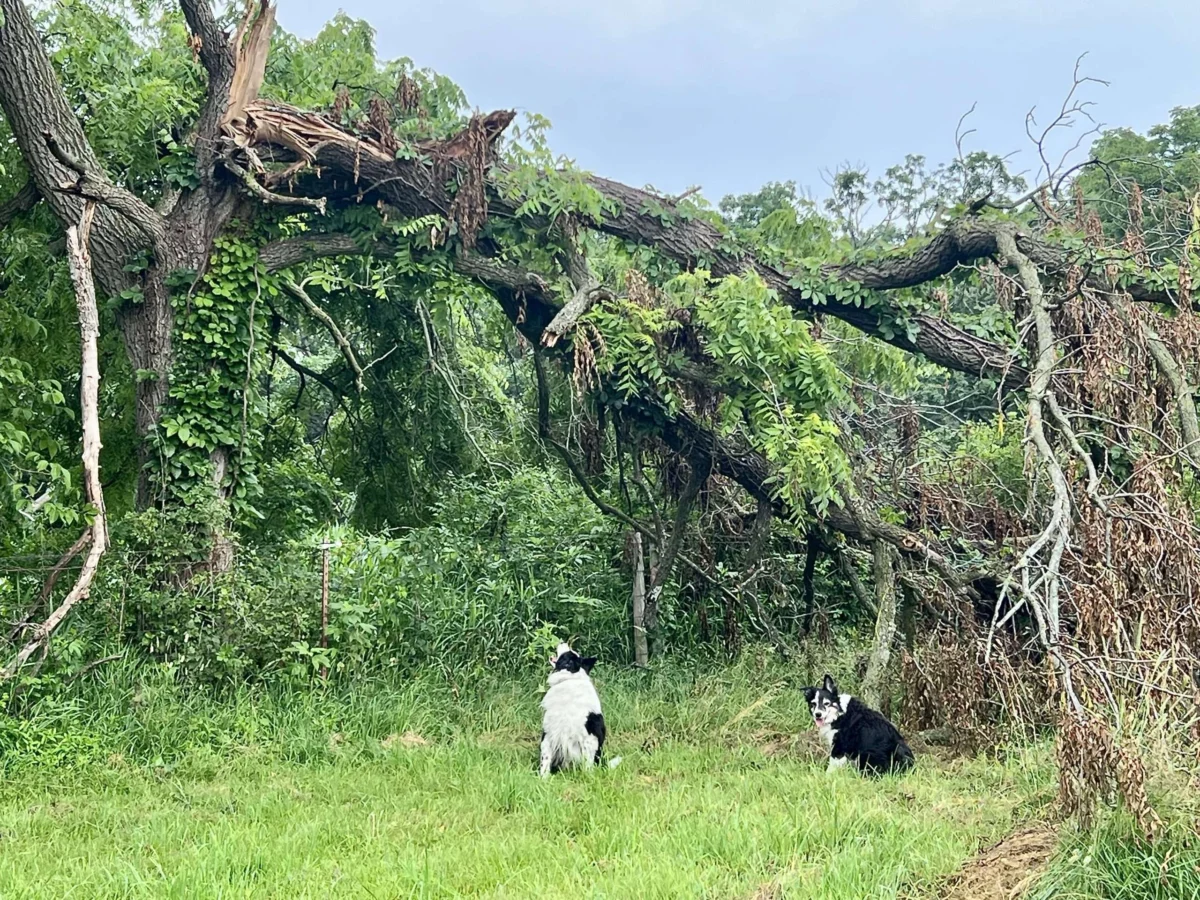
The recent environmental challenges, including severe storms, have also served as a reminder that dogs are sensitive to their surroundings. When a tree needs professional removal, or when the landscape changes, the dog’s reaction to these stressors is a primary indicator of their overall well-being.
Conclusion: A New Standard of Interaction
The transition to a more mindful way of interacting with our dogs is not just a training tip; it is a shift in perspective. By acknowledging that our own behaviors can be the cause of our dogs’ reluctance, we open the door to a more harmonious relationship.

Whether it is by replacing a heavy-handed pat with a gentle verbal affirmation or by simply observing our dog’s body language before assuming they are "enjoying" a training session, we can foster a deeper level of mutual respect. As we move through the summer months, the goal is simple: remain present, observe closely, and ensure that our interactions are as rewarding for the dog as they are for us.
For those interested in following this journey, updates on events and insights into animal behavior will continue to be shared, albeit on a modified schedule. With the dual focus of updating foundational training texts and continuing the exploration of canine psychology, the path forward is one of continuous learning and increased empathy for the animals that share our lives. May your next interaction with your dog be one of genuine connection—and, as always, may you always be aware of the signals your dog is sending.