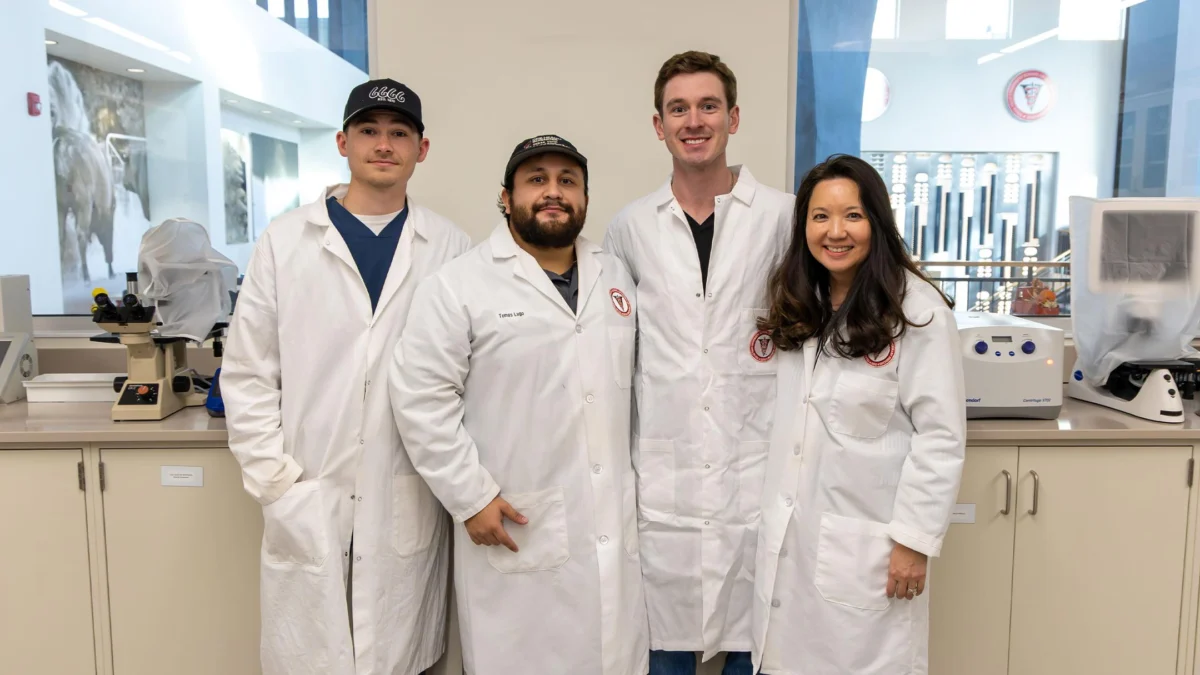
In an academic environment defined by the rigors of clinical training, two fourth-year students at the Texas Tech University School of Veterinary Medicine have transcended the traditional classroom experience. Through hundreds of hours of intensive laboratory research, Kayden Tanner and Marshall Mays have achieved a milestone rarely reached by undergraduates: publication in prestigious, peer-reviewed international scientific journals.
Their contributions to the field—Tanner focusing on the genomics of a devastating equine disorder and Mays exploring novel oncological treatments for canine bone cancer—mark a significant leap forward in veterinary science. Under the mentorship of Dr. Thu Annelise Nguyen and postdoctoral fellow Tomas Lugo, these students have not only contributed vital data to the global veterinary community but have also laid the foundation for their future careers as veterinary surgeons.
The Research: Tackling Critical Veterinary Challenges
The scope of the students’ research reflects the diverse and complex nature of modern veterinary medicine. Each project addresses a high-stakes clinical problem that has long challenged practitioners.
Genomic Breakthroughs in Equine Health
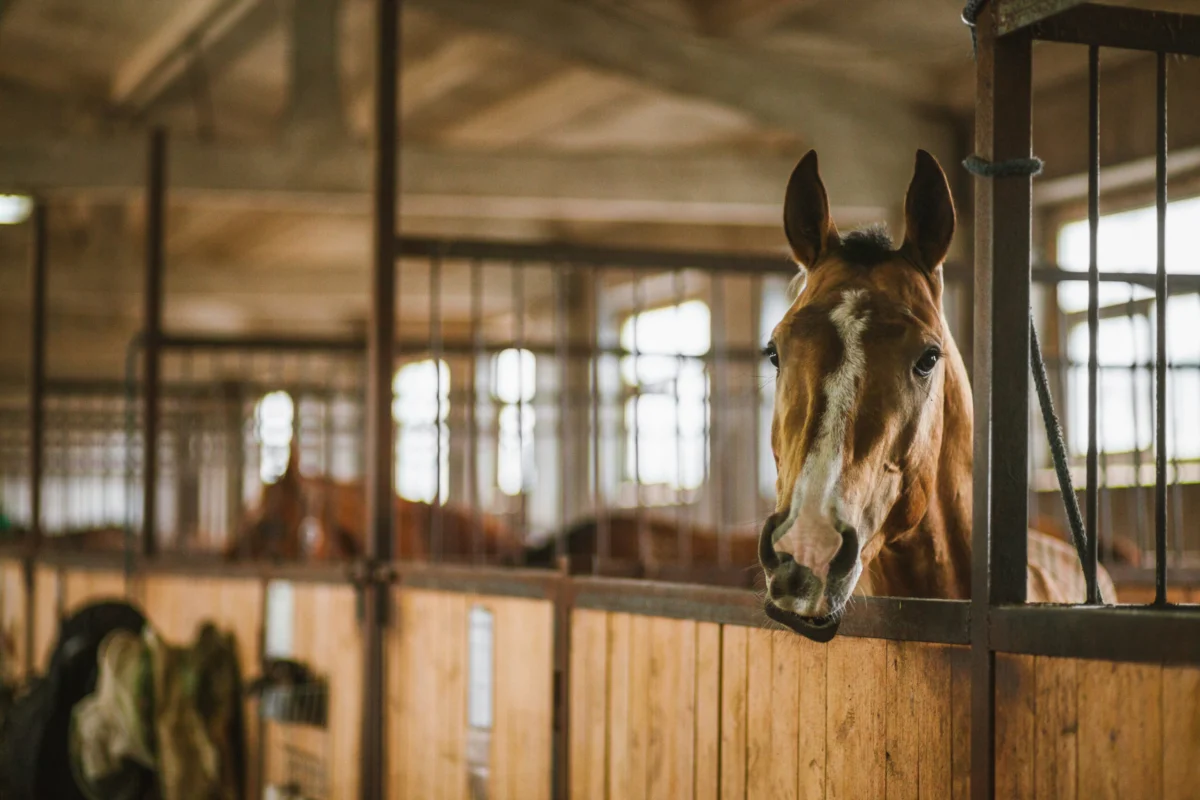
Kayden Tanner’s research, published in the journal Animals and selected as a feature article, tackles Multisystem Eosinophilic Epitheliotropic Disease (MEED). MEED is a rare, progressive, and highly aggressive condition that typically leads to a poor prognosis, with euthanasia often required within a year of diagnosis.
Tanner’s paper, titled "Genomics in Equine MEED: whole-genome sequencing and target mutation identification," represents a significant technical achievement. By sequencing the whole genome of the disease, Tanner has provided the scientific community with a public repository of data that was previously unavailable. His findings have shed light on the cellular mechanisms driving MEED, offering a beacon of hope for future therapeutic development. By demystifying the genetic architecture of such a severe illness, Tanner has provided a roadmap for researchers to potentially move from diagnosis toward intervention.
Advancing Canine Oncology
Marshall Mays focused his efforts on the fight against canine osteosarcoma, a common and often fatal form of bone cancer in dogs. His research, titled "Evaluating the synergistic effects of cisplatin and tamoxifen in canine osteosarcoma cells," was published in Frontiers in Veterinary Science.
Mays’ work explores a "One Health" approach, investigating how drug synergy—the combination of cisplatin and tamoxifen—might be leveraged to treat aggressive tumors more effectively. By analyzing these compounds in a laboratory setting, Mays has provided critical data regarding the potential for combined pharmaceutical protocols. This research holds profound implications for veterinary oncology, as it suggests a path toward more targeted, effective cancer therapies that could significantly improve the quality of life and survival rates for canine patients.
A Chronology of Dedication: The Road to Publication
The path from student observer to published researcher was not paved with ease. It required a level of commitment that went well beyond the standard curriculum. According to faculty, the journey was defined by a rigorous schedule that saw the students arriving at the laboratory as early as 6:00 a.m.
The intensity of their training peaked during the holiday season. While their peers were away on winter break, Tanner and Mays remained in the lab, demonstrating a professional maturity that surprised even their mentors. The transition from academic theory to hands-on experimentation was a deliberate, mentored process facilitated by Dr. Thu Annelise Nguyen, the associate dean for research and professor of toxicology, and her postdoctoral fellow, Tomas Lugo.
Lugo played a pivotal role in this evolution. Beyond providing traditional guidance, he developed the complex modeling and computational frameworks that underpinned the research. This contribution was so substantial that he was credited as the corresponding author on both papers—a rare achievement for a team that included undergraduate-level trainees.
Supporting Data and Collaborative Synergy
The success of these two projects serves as a testament to the power of the "One Health" model, which emphasizes the intersection of human, animal, and environmental health. The collaborative environment at the Texas Tech School of Veterinary Medicine allowed for a unique confluence of toxicology, genomics, and oncology.

The data generated by the students is already being utilized by researchers globally. By making his sequencing data public, Tanner has invited international collaboration, ensuring that the study of MEED is no longer limited by the siloed nature of previous veterinary investigations. Similarly, Mays’ data regarding the synergy of chemotherapy agents provides a new baseline for oncologists to build upon, potentially reducing the toxicity of treatments while increasing their efficacy.
Official Responses: Cultivating the Next Generation
For the faculty involved, this success is not merely a validation of the research itself, but a validation of their pedagogical philosophy.
"This is a big deal for veterinary scholars because they had never worked in science before," Dr. Nguyen stated. "For Tomas and me, it’s our job to do this. But for trainees to get this done in the time span they did is huge." Dr. Nguyen highlighted the dedication of her team, noting that the students’ transition from "quiet observers to inquisitive minds" was the most rewarding aspect of the project.
Tomas Lugo viewed the experience as a symbiotic growth opportunity. "It was really good seeing them mature over time, just like me," Lugo remarked. "I was more focused on one task, but after I gained more confidence, I was thinking about the bigger picture. So, it was a great learning experience for everyone."
For the students, the gratitude is profound. Tanner expressed deep appreciation for the mentorship provided, noting that Dr. Nguyen "threw us a bone when nobody else would" and that Lugo served as both a technical guide and a dependable friend throughout the grueling process.
The Implications: A New Standard for Veterinary Education
The impact of this research extends far beyond the journals in which it appears. For Tanner and Mays, these publications represent a significant competitive advantage as they apply for advanced surgical internships. In the highly competitive world of veterinary surgery, having peer-reviewed research on one’s curriculum vitae provides tangible evidence of analytical capability, persistence, and technical proficiency.
Furthermore, the success of this initiative has established a blueprint for the Texas Tech School of Veterinary Medicine. By integrating high-level research into the clinical training phase, the school is demonstrating that veterinary students are capable of contributing to the advancement of medicine while still in their formative years.
A Future-Facing Model
As the school continues its mission of serving rural and regional communities in Amarillo and beyond, the success of these students highlights the importance of fostering a research-oriented mindset. For Lugo, the project has also served as a professional milestone, confirming his readiness to eventually lead his own laboratory as a professor.
"My main goal is to make great opportunities not just for myself, but for the students," Lugo said.
By prioritizing mentorship and providing the resources necessary for student-led inquiry, the Texas Tech School of Veterinary Medicine is not just educating future surgeons; it is cultivating the future leaders of veterinary research. As Tanner and Mays prepare for their next steps, the scientific community awaits the further contributions that this new generation of veterinarian-scientists is sure to provide. The synergy of their early dedication and the institution’s commitment to academic rigor ensures that the future of veterinary science is in capable hands.