In the quiet corners of our homes, dog owners have long observed behaviors that defy simple explanation—the playful "keep-away" game, the rhythmic prancing with a stolen sock, or the sudden, exuberant bow. For years, these moments were categorized under the broad, often dismissive umbrella of "play." However, a growing body of anecdotal evidence and ethological discourse is challenging that narrative: Could our dogs actually be telling jokes?
The question of whether non-human animals possess a sense of humor is moving from the realm of charming folklore to the subject of serious scientific inquiry. By analyzing behavioral patterns, vocalizations, and the cognitive architecture of our canine companions, researchers are beginning to ask if "The Felony Trot"—a term coined by trainer Jess Erace to describe a dog’s purposeful, attention-seeking parade with a forbidden item—is, in fact, a deliberate humorous performance.
The Anatomy of a Canine Joke
To understand if a dog is "joking," we must first define the parameters. Merriam-Webster defines a joke as "something said or done to provoke laughter." While traditionally associated with human oral tradition, the definition does not explicitly require speech.

In a recent, widely discussed interview, dog trainer Jess Erace recounts a recurring scenario involving a dog who would enter a room during dinner, snatch a potholder, and strut past the dining table with a high-stepping gait. The result was consistent: the family would erupt in laughter, and the dog would repeat the performance, seemingly fueled by the social feedback.
"He understood what laughter was," Erace notes. "He knew everybody had their attention on him, and he was happy about it."
This behavior satisfies the fundamental requirements of a joke:

- Intent: The dog selects a specific, "illegal" object.
- Performance: The dog utilizes a exaggerated physical display (the "Felony Trot").
- Outcome: The dog seeks a specific social response (laughter and engagement).
Historical Context: From Darwin to the Present
This is not a modern obsession. Charles Darwin, in his seminal 1872 work The Descent of Man, documented similar observations, suggesting that dogs possess a sense of humor distinct from mere play. Darwin described a dog that would carry a stick a short distance, drop it, wait for its master to approach, and then snatch it away at the last second, "evidently enjoying the practical joke."
This historical perspective aligns with the modern ethological view that humor serves as a social lubricant. If a dog is capable of manipulating its environment to solicit laughter, it implies a high level of theory of mind—the ability to understand that others have thoughts, intentions, and emotional responses that differ from their own.
The Science of the "Dog Laugh"
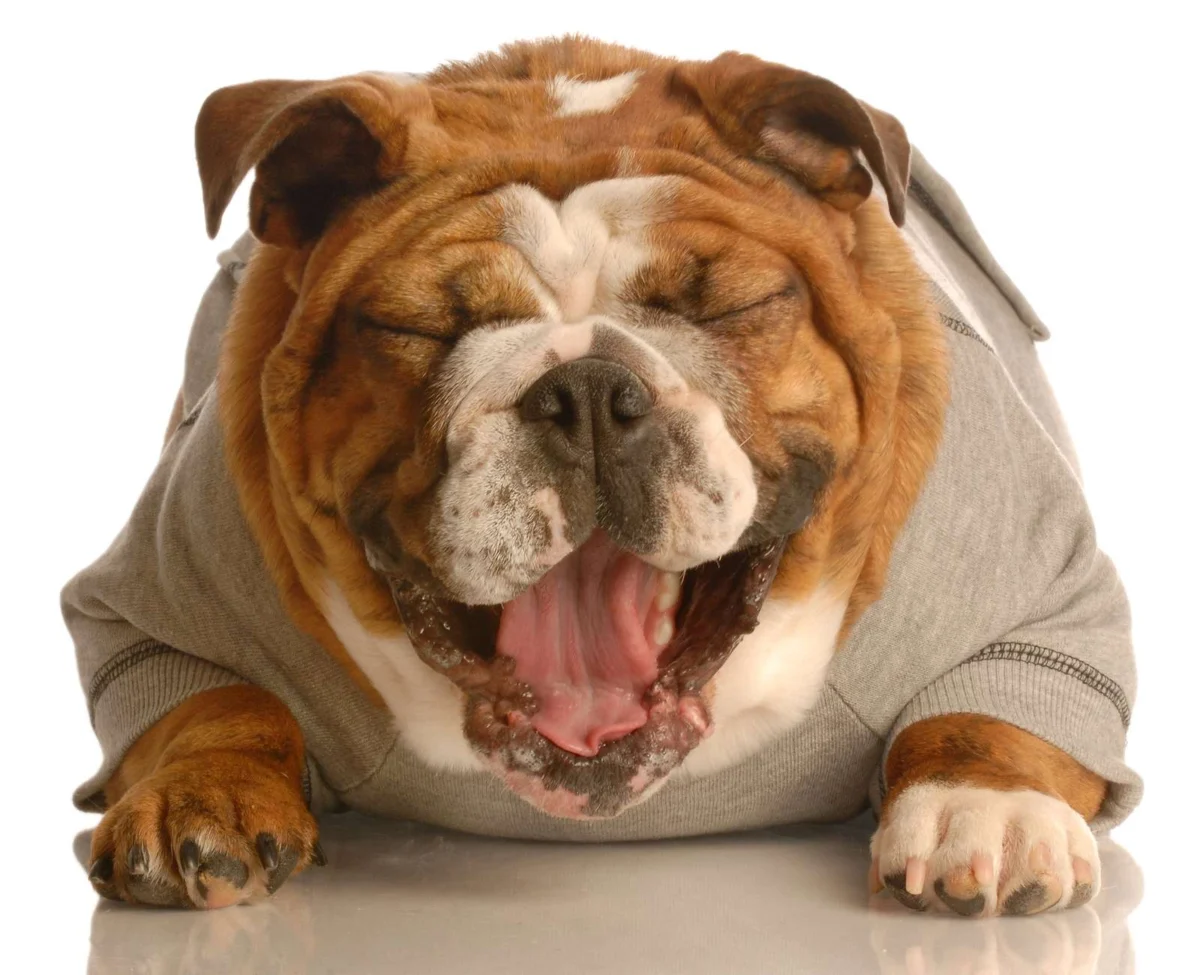
If dogs can tell jokes, do they also laugh? While they lack the vocal cords to produce human-like laughter, they possess a distinct, breathy exhalation that many researchers believe functions as a "play face" or a "laugh."

Ethological Observations
Nobel Prize-winning ethnologist Konrad Lorenz noted that during play, dogs often exhibit slightly opened jaws, a tongue exposed, and a mouth stretched wide—a visual mimicry of a smile. This is often accompanied by rapid, rhythmic panting.
Patricia Simonet, a leading voice in this field, identified specific, short exhalations in dogs during play. When these sounds were recorded and played back to shelter dogs, the results were profound: the dogs exhibited signs of joy and decreased anxiety. Stanley Coren, a professor of psychology and expert in canine behavior, attempted to replicate these findings. His research suggests that a specific sound—a breathy "hhuh-hhah" with rounded lips—can effectively trigger a positive, alert, and engaged response in dogs, potentially signaling a shared understanding of playfulness.
The Challenge of Interpretation
Despite these findings, the scientific community remains cautious. How do we distinguish between "amusement" and mere physiological arousal?

As an ethologist, the primary challenge lies in the "anthropomorphic trap"—the tendency to project human emotions onto animal behavior. To rigorously determine if a dog is "joking," we must look for specific markers:
- Context: The animal must be in a state of high social comfort, not under stress or fear.
- Posture: The body should be loose, the tail wagging in a broad, fluid arc, and the mouth slightly open (the "play face").
- Side-Eye: Often interpreted as a sign of mischief, the "side-eye" gaze, combined with a stiffened but bouncy gait, suggests an awareness that they are breaking a rule while inviting the owner to participate in the charade.
Implications for the Human-Animal Bond
The implications of this research are significant. If our dogs are capable of humor, it suggests that our relationships with them are far more complex and collaborative than previously assumed. It moves the dog from a subordinate role to a co-creator of social meaning.
However, we must maintain a reality check. Many behaviors we perceive as jokes, such as a child (or puppy) offering a toy only to pull it back, may be rooted in developmental stages or a desire for connection rather than a calculated comedic timing. The "joke," therefore, may not be the act itself, but the game that the human and the dog build together around that act.

Life at the Farm: A Personal Reflection
While we continue to decode the complexities of canine psychology, life on the farm provides a grounding reminder of the simple joys that sustain us. As fall settles in, the landscape is shifting from the vibrant green of summer to the rich, earthy tones of the coming winter.
A Period of Care and Recovery
Life, however, is not without its challenges. My own dog, Maggie, has recently faced a series of health hurdles. Following a concerning incident with a plant ingestion, her recovery has been slow, involving kidney and liver complications. Watching a previously vibrant, zesty dog face the vulnerabilities of age is a reminder of the fragility of our companions.
Despite these trials, there is immense joy to be found. Whether it is the planting of butterfly weeds to support the monarch butterfly population or the simple, quiet walks in the woods, these moments of connection with nature and our animals are essential.

The Resilience of Joy
Last week, while working sheep on a nearby farm, I was struck by the sheer presence of an ancient oak tree—a silent, towering witness to the passing of seasons. It served as a poignant reminder that while we may worry about the future and fret over the health of those we love, there is a profound, enduring beauty in the present moment.
Conclusion
Whether or not our dogs are "telling jokes" in the human sense of the word, the evidence suggests that they are sophisticated social actors capable of engaging with us in ways that bring joy, laughter, and a sense of shared purpose. As we continue to study the intricacies of the canine mind, let us not forget the most important lesson they teach us: that joy is often found not in grand gestures, but in the small, playful, and occasionally mischievous moments of everyday life.
If you have observed your own dog participating in a "Felony Trot" or what you suspect to be a sense of humor, I encourage you to document it. These observations are the bedrock of our understanding, and they remind us that even when the world feels heavy, there is always, somewhere, a dog waiting to make us laugh.