
In the realm of animal behavior, few topics have sparked as much curiosity—and controversy—as the potential for dogs to suffer from Attention-Deficit/Hyperactivity Disorder (ADHD). For decades, behaviorists and veterinarians have wrestled with the challenge of distinguishing between a high-energy, poorly socialized puppy and a dog struggling with genuine neurobiological dysregulation. As science advances, we are beginning to peel back the layers of the canine brain, revealing that our four-legged companions may share more than just our homes; they may share our most complex cognitive challenges.
Main Facts: The Intersection of Human and Canine Psychology
At its core, ADHD in humans is not merely a "lack of focus." It is a complex neurodevelopmental condition characterized by deficits in executive function, specifically in the areas of impulse control, emotional regulation, and sustained attention. When applied to dogs, the diagnostic criteria shift slightly but remain grounded in these same biological principles.
Researchers, including teams from the Adam Miklosi lab in Hungary, have spent over two decades investigating whether canine behavior mirrors the human diagnostic criteria for ADHD. Their findings suggest that when dogs exhibit persistent, age-inappropriate levels of impulsivity, extreme difficulty with sustained attention, and chronic hyperactivity, it is not simply a matter of "bad training." Instead, these behaviors often point toward an underlying physiological difference in how the brain processes stimuli.

It is critical to distinguish between a "high-energy" dog and a neurodivergent one. An active dog is often simply a dog with a job to do. An ADHD dog, by contrast, is often one who is perpetually unable to disengage from environmental triggers, exhibits extreme frustration when denied an outcome, and displays a "forgetfulness" that defies standard reinforcement-based training protocols.
Chronology: A Case Study in Evolution
The journey toward understanding canine ADHD has been non-linear. Many years ago, in the early days of applied behaviorism, experts were often left guessing when presented with animals that did not respond to conventional conditioning.
One notable early case involved an adolescent Old English Sheepdog named "Bear." Bear’s behavior was erratic: he would learn a new cue with lightning speed, only to lose all retention of it minutes later. He was prone to biting at leashes, legs, and hands—not out of aggression, but out of an apparent inability to regulate his internal "electricity."

At the time, anecdotal reports were circulating about veterinarians successfully treating similar dogs with stimulants like Ritalin. Though that practice has since been abandoned due to safety concerns and a lack of clinical evidence, the experiment provided a pivotal moment in canine behavioral history. Upon receiving a controlled dose, the transformation was stark: the "buzzing" energy vanished, replaced by an ability to focus that had been previously non-existent. It was a clear indicator that the issue was not behavioral in the traditional sense, but neurological.
Supporting Data and Scientific Inquiry
Modern science has largely moved away from the trial-and-error medicine of the 1990s, shifting instead toward standardized psychometric tools. In 2006, researchers published foundational studies utilizing modified versions of pediatric ADHD rating scales to assess canine subjects. These studies shifted the focus from subjective opinion to measurable data points:
- Impulsivity: The inability to pause or wait for a cue.
- Attention Span: The duration of engagement before the dog becomes distracted by background noise or movement.
- Emotional Reactivity: The intensity of the dog’s response to frustration.
Current research is also drawing parallels between canine ADHD and other systemic issues. In humans, ADHD is frequently co-morbid with heightened sensitivity to pain, autoimmune responses, and chronic anxiety. Emerging evidence suggests a similar pattern in dogs, implying that a diagnosis of ADHD may be a gateway to understanding a wider array of physical and psychological health factors.

Official Responses and Clinical Perspectives
While the scientific community largely accepts that dogs can exhibit ADHD-like symptoms, "official" diagnosis remains a nuanced process. Veterinarians and veterinary behaviorists emphasize that any assessment must rule out other medical conditions—such as thyroid imbalances, dietary sensitivities, or environmental stressors—before labeling a dog as neurodivergent.
The National Institutes of Health (NIH) and other reputable veterinary journals now provide comprehensive frameworks for owners. These resources highlight that treatment is rarely about "curing" the dog, but rather about managing the environment to facilitate success. This includes:
- Environmental Enrichment: Reducing triggers that cause over-stimulation.
- Cognitive Exercises: Engaging the dog in activities that reward focus rather than just movement.
- Professional Consultation: Working with certified behaviorists to develop tailored management plans.
The Personal Dimension: Reflecting on the Human-Dog Connection
It is perhaps unsurprising that many dog trainers and behaviorists who work with ADHD dogs eventually recognize the same symptoms in themselves. The ability to "hyper-focus" on a specific task—a common trait in both humans and dogs with ADHD—is a double-edged sword. It allows for deep, creative work and intense bond-building, but it also creates significant challenges in navigating the "messiness" of daily life, whether that is a disorganized desk or a disorganized training schedule.

This shared experience underscores the profound connection between human and dog. When a handler understands their own brain, they are often better equipped to understand their dog’s, moving from a place of frustration to a place of empathy and strategic support.
Implications: Navigating Dangers and Finding Resilience
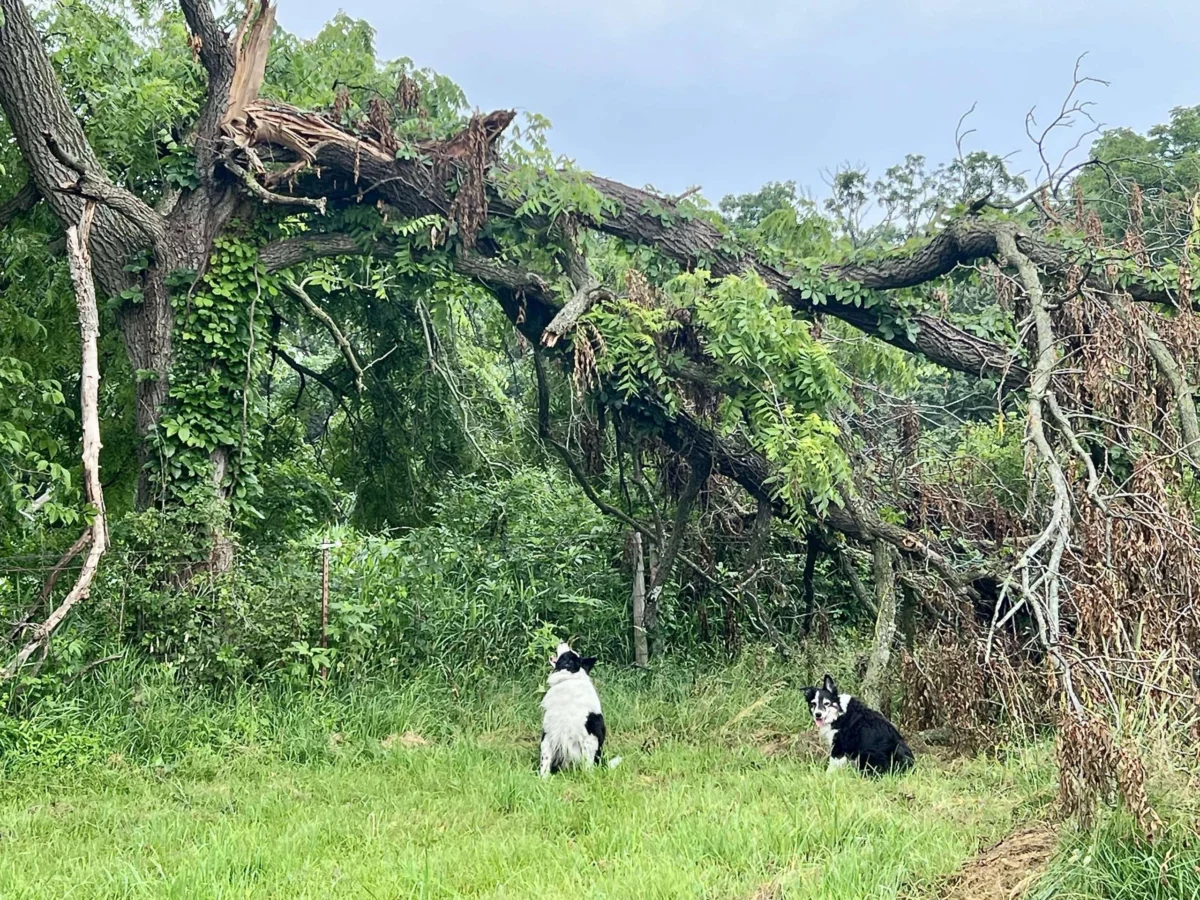
The intersection of life, science, and the unexpected is never clearer than on the domestic front. Just as a dog’s behavior can be volatile and unpredictable, so too can the physical environment. Recent severe weather events—such as the high winds and tornadoes that recently impacted parts of the country—serve as a metaphor for the unpredictability of managing a complex, neurodivergent household.
When a 70 mph wind brings down a "widow maker" tree limb or destroys a structure, the response requires the same qualities needed to manage an ADHD dog: calm, focus, and the ability to adapt to a rapidly changing, often chaotic, environment.

Lessons from the Woods
Walking through a storm-damaged forest provides a unique perspective on resilience. Much like a dog struggling with a blocked path, one must often scramble, climb, and pivot to find a way forward. While it is tempting to want to "carry" the dog—or the human—over every obstacle, the most effective path forward is teaching them how to navigate the terrain themselves.
Conclusion: A Balanced Perspective
ADHD in dogs is a complex, multifaceted reality that requires patience, professional guidance, and a deep understanding of neurobiology. Whether it is a dog learning to navigate a fallen trail or a human learning to manage their own scattered focus, the goal remains the same: to foster an environment where resilience is nurtured and the "buzz" of life is directed toward productive, joyful ends.
As we continue to explore the mysteries of the canine mind, let us remember that what we perceive as "disorder" is often just a different way of experiencing the world. By shifting our perspective, we can better support our companions—and perhaps, find a bit more clarity for ourselves along the way. May your future weeks be filled with more peaceful moments and rewarding harvests than sudden, overwhelming storms.