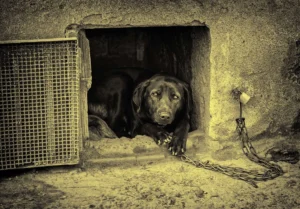

Introduction: The Siege at Blue Mounds
On Saturday, April 18, 2026, the quiet landscape outside of Blue Mounds, Wisconsin, became the epicenter of a volatile confrontation between animal rights activists and the security apparatus of Ridglan Farms. The facility, which serves as both a breeding ground for research-grade beagles and an on-site laboratory, has long been a lightning rod for controversy. Approximately 1,000 demonstrators gathered at the site, driven by a singular, urgent goal: the liberation of nearly 1,900 beagles housed within the facility’s walls.
The protest, which escalated into an attempted break-in, underscored a widening chasm between current legal standards for animal research and the evolving societal expectations regarding the treatment of sentient beings. As tensions flared, reports of excessive force by security personnel against protesters began to emerge, further complicating a narrative already steeped in allegations of systemic abuse.
Chronology: A History of Allegations and Legal Standoffs
The unrest on April 18 did not emerge in a vacuum; it is the culmination of years of documented grievances. The conflict can be traced through a timeline of mounting evidence and failed oversight:
- Documented Neglect: Over the past several years, state and federal inspections of Ridglan Farms have consistently flagged critical failures. Reports from the Wisconsin Department of Agriculture, Trade and Consumer Protection (DATCP) have detailed squalid conditions, including poor air quality, inadequate sanitation—specifically cages saturated with excrement—and the presence of dogs suffering from untreated physical injuries.
- The Whistleblower Evidence: The most damning evidence emerged through video footage provided by a former employee. These recordings, which were later subject to expert analysis, offered a harrowing glimpse into the daily existence of the beagles: solitary confinement in barren, wire-bottomed cages, and the prevalence of “stereotypies”—frantic, repetitive movements indicating severe psychological breakdown.
- The Courtroom Battle: Following the release of this footage, the advocacy group Dane4Dogs petitioned the Wisconsin Attorney General to appoint a special prosecutor. After repeated refusals, the group successfully took the matter to court, leading to the appointment of special prosecutor Tim Gruemke.
- The Settlement: In October 2025, a controversial deal was struck. The owners of Ridglan Farms agreed to surrender their “seller’s license” by July 1, 2026, in exchange for the dropping of felony animal cruelty charges. While this signaled a victory for critics, it left a massive loophole: the facility was permitted to continue its on-site research operations indefinitely, leaving the fate of the 1,900 dogs hanging in the balance.
The Expert Perspective: A Failure of Welfare
Dr. Patricia McConnell, a renowned applied animal behaviorist, has been central to the effort to bring the reality of Ridglan Farms to the public consciousness. Having reviewed the whistleblower tapes, Dr. McConnell’s testimony to the court painted a bleak picture of the animals’ state of mind.
"The dogs are being held in barren, small cages in solitary confinement, preventing them from having any meaningful interactions or relationships," Dr. McConnell stated in her January 2026 deposition. She highlighted that these dogs are deprived of basic species-specific behaviors, forced to sleep, urinate, and defecate in the same restricted space. The presence of “hysterical” behaviors, such as endless spinning, serves as a clinical marker of an animal that has been pushed beyond its threshold of stress and pain.

For experts like Dr. McConnell and Mark Bekoff, the situation is a damning indictment of the industry’s failure to recognize the neurobiological reality of dogs. Decades of research have established that dogs possess complex emotional lives and a profound capacity for suffering, rendering the "warehouse" model of laboratory animal management fundamentally incompatible with modern ethics.
The Legal Framework: The Animal Welfare Act (AWA) Under Fire
The core of the issue lies in the archaic standards set by the Animal Welfare Act (AWA) and enforced by the USDA. Critics argue that the AWA is not only insufficient but serves as a shield for facilities like Ridglan Farms.
The Six-Inch Rule
Under current AWA regulations, a dog’s cage is required to be only six inches larger than the animal itself on all sides. This standard, which has been criticized as woefully inadequate for long-term confinement, allows for the permanent housing of highly social creatures in solitary, wire-floored environments.
Regulatory Gaps
The AWA fails to mandate meaningful exercise or social interaction. Furthermore, researchers are often granted exemptions to even these minimal standards if they claim such interactions would "interfere with the experiment." This creates a regulatory vacuum where the physical and psychological health of the animal is consistently prioritized below the convenience of the study.
Marc Bekoff has pointed out that the USDA’s own Office of Inspector General found that 80% of accredited lab animal breeders failed to correct previous non-compliance issues. This systemic failure of oversight suggests that the problem is not merely a few "bad actors," but a broken mechanism of accountability across the entire sector.

Official Responses and Industry Stance
Ridglan Farms maintains a public-facing stance of total denial. Their official website asserts that "no credible evidence of animal abuse, cruelty, mistreatment or neglect at Ridglan Farms has ever been presented or substantiated." This claim stands in stark contrast to the findings of state inspectors and the expert testimony of professionals who have reviewed the evidence.
Meanwhile, the American Veterinary Medical Association (AVMA) promotes a stance that encourages the minimization of pain and stress, calling for "thoughtful consideration for species-typical biology." However, as activists point out, there is a yawning gap between these professional ideals and the reality of the 1,900 beagles currently trapped in a cycle of confinement.
Implications: A Call for Systemic Reform
The events at Blue Mounds are a microcosm of a larger, national debate. The "Envigo model"—referring to the 2022 closure of a Virginia-based facility where thousands of beagles were rescued and rehomed following similar charges of neglect—has become the blueprint for activists.
The primary arguments for the continuation of such facilities—that they are necessary for the development of canine-specific medications—are increasingly being challenged. Critics argue that even if research is deemed necessary, it should be conducted under conditions that respect the animal’s biological needs, rather than in an environment that introduces "confounding factors" like extreme stress and physiological deterioration.
The Ethical Imperative
The moral weight of the situation is clear: the bond between humans and dogs is a biological and historical constant. By treating these animals as disposable tools of industry, institutions like Ridglan Farms violate that bond. The refusal by the facility to accept offers to purchase and rehome the dogs suggests that the priority remains the bottom line rather than the welfare of the animals.

Conclusion: The Path Forward
As July 1, 2026, approaches—the date when Ridglan’s seller’s license expires—the eyes of the animal welfare community remain fixed on Wisconsin. The fate of these beagles is not just a matter of local policy; it is a test of whether the United States can reconcile its scientific research industry with its values as a society that claims to love and respect dogs.
The call to action is clear: the facility must be shuttered, and the dogs must be transitioned into homes. Until such time, the "black stain" on the conscience of the industry will only grow deeper. As we learn more about the emotional lives of our canine companions, the standard for their treatment must rise accordingly. We know better, and as the saying goes, it is time we do better. The beagles of Ridglan Farms, like all sentient creatures, deserve more than a wire cage and a life of suffering; they deserve a chance to come home.