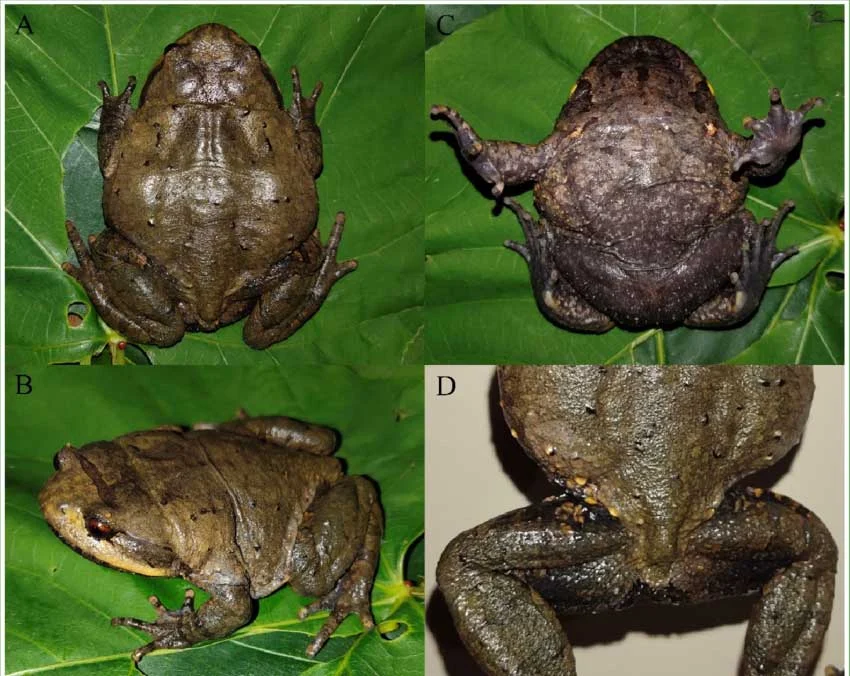
GUANGXI, CHINA — Herpetologists have officially described a brand-new species of amphibian belonging to the genus Brachytarsophrys, commonly known as Asian spadefoot toads or short-legged toads. Discovered deep within the lush subtropical landscapes of the Guangxi Zhuang Autonomous Region, the newly identified species—scientifically named Brachytarsophrys jinxiuensis—adds a fascinating new chapter to China’s rich biological tapestry.
This discovery, detailed in a newly published scientific paper, underscores the ecological significance of southern China’s forest ecosystems, which continue to yield novel vertebrate species as researchers deploy advanced genetic sequencing and rigorous field methodologies.
Main Facts: Unveiling Brachytarsophrys jinxiuensis
The discovery of Brachytarsophrys jinxiuensis marks a significant milestone in Asian herpetology. Published in the academic study titled "A new species of the genus Brachytarsophrys Tian & Hu, 1983 (Anura: Megophryidae) from Guangxi, China," the description brings the total number of recognized species within the Brachytarsophrys genus to 12.
Key Physical Characteristics
Brachytarsophrys jinxiuensis can be distinguished from its closest evolutionary relatives (congeners) by a unique combination of morphological traits:
- Compact Stature: The frog features a relatively small body size compared to other members of the genus.
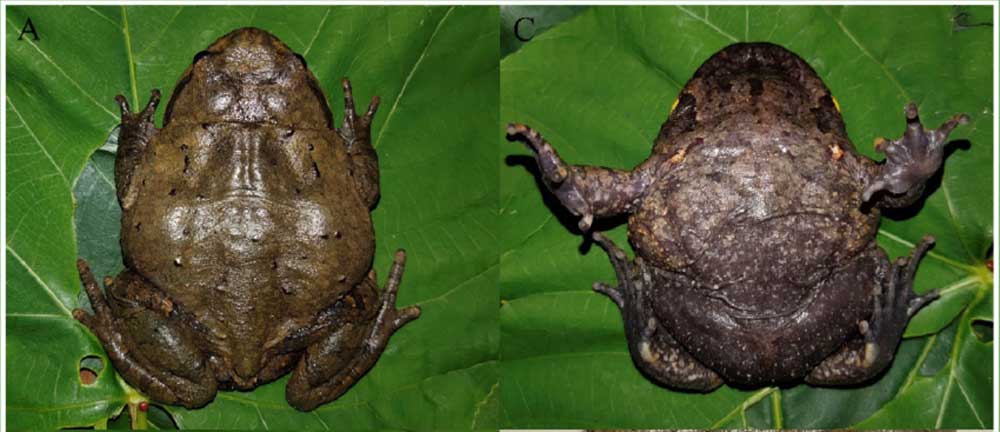
- Distinct Skin Texture: Its dorsal skin is largely smooth but punctuated by several prominent tubercles (warty bumps) scattered across the back and the crotch region.
- Proportions: It boasts a noticeably elongated snout paired with relatively small, piercing eyes.
- Striking Coloration: Perhaps most visually arresting are its vivid blood-red irises, accented by a reddish-brown lower iris, and short, striking orange pectoral glands situated on its chest.
- Sexual Dimorphism: Adult males feature a nuptial pad on their first finger, a common reproductive adaptation used during amplexus to secure females.
Genetic and Taxonomic Significance
Beyond its physical appearance, genetic data firmly establishes Brachytarsophrys jinxiuensis as a distinct lineage. Researchers observed a 4.2% to 15.7% genetic divergence in mitochondrial DNA, alongside a 3.3% to 15.2% divergence specifically within the COI (cytochrome c oxidase subunit I) and cytb (cytochrome b) genes when compared to other species in the genus.
Geographically, this discovery makes Brachytarsophrys jinxiuensis the third species of its genus found specifically within the Guangxi Zhuang Autonomous Region, while solidifying China’s status as a global hotspot for the clade, housing 10 of the 12 known species. True to taxonomic convention, the specific epithet jinxiuensis is derived from Jinxiu County in Guangxi, where the holotype specimen (cataloged as KIZ2019035) was first encountered.
Chronology of Discovery: From Fieldwork to Formal Description
The path from discovering an unknown amphibian in the wild to publishing a peer-reviewed taxonomic description is a meticulous multi-year journey involving grueling fieldwork, laboratory analysis, and anatomical comparison.
Phase One: The Expedition and Initial Collection
The journey of Brachytarsophrys jinxiuensis began in the field during targeted herpetological surveys across the rugged terrain of Guangxi. Herpetologists Shuo Liu, Mian Hou, and Dingqi Rao—alongside field collaborators—ventured into the humid, forested mountain streams of the region. It was during these nocturnal surveys that the researchers collected the holotype specimen (KIZ2019035), immediately recognizing that its external morphology did not neatly match any previously cataloged species of Brachytarsophrys.
Phase Two: Morphological and Osteological Analysis
Following field collection, the specimen underwent comprehensive morphological evaluation. Scientists measured dozens of metric characters—ranging from snout-vent length and head width to tibia length and eye diameter—using digital calipers. They documented the unique coloration of the living animal, capturing high-resolution photographs of the dorsal, ventral, and lateral profiles, as well as close-ups of the crotch region and pectoral glands.
Phase Three: Molecular Phylogenetics
To confirm that morphological differences translated to genetic isolation, the research team extracted DNA from tissue samples. By sequencing mitochondrial genes such as COI and cytb, the team constructed phylogenetic trees. The molecular clock and distance metrics confirmed that the genetic divergence easily exceeded the threshold required to delineate a new species, proving that B. jinxiuensis had been evolutionarily isolated from its sister taxa for millions of years.
Phase Four: Peer Review and Publication
With all lines of evidence converging—distinct morphology, unique ecological micro-habitat usage, and undeniable genetic separation—the research team drafted the formal taxonomic description. The paper was subsequently submitted, peer-reviewed, and made accessible to the global scientific community via ResearchGate, cementing the species in scientific nomenclature.
Supporting Data: Understanding the Genus Brachytarsophrys
To fully appreciate the weight of discovering Brachytarsophrys jinxiuensis, one must examine the broader family and genus to which it belongs.
The Megophryidae Family
The family Megophryidae, commonly referred to as Asian spadefoot toads or horned toads, comprises a diverse group of frogs distributed throughout tropical and subtropical Asia. Known for their incredible camouflage, cryptic coloration, and leaf-like skin flaps over their eyes, megophryids are primarily forest-dwelling amphibians strongly tied to fast-flowing mountain streams where their aquatic larvae (tadpoles) develop.
Genus Breakdown and Biogeography
The genus Brachytarsophrys currently stands at 12 species. These amphibians are typically stout-bodied, robust inhabitants of forest leaf litter and rocky stream banks.
| Metric / Feature | Data Overview |
|---|---|
| Total Known Species | 12 species globally |
| Species Found in China | 10 species |
| Species Found in Guangxi | 3 species (including B. jinxiuensis) |
| Genetic Divergence (Overall) | 4.2% – 15.7% |
| Genetic Divergence (COI/cytb genes) | 3.3% – 15.2% |
| Key Diagnostic Markers | Blood-red irises, orange pectoral glands, smooth skin with prominent tubercles |
The concentration of Brachytarsophrys species in China—and specifically in southern provinces like Guangxi, Yunnan, and Guangdong—highlights how regional topography, characterized by isolated mountain ranges separated by deep valleys (sky islands), drives speciation through geographic isolation.
Official Responses and Scientific Significance
The announcement of Brachytarsophrys jinxiuensis has drawn praise and commentary from the broader international herpetological and conservation communities, who view the find as both a triumph for taxonomy and a reminder of how much of Earth’s biodiversity remains undocumented.
Insights from the Research Team
While researchers Shuo Liu, Mian Hou, and Dingqi Rao focused heavily on the rigorous data required for the formal description, experts in the field have emphasized the cooperative nature of modern taxonomy. Combining classical field observations with cutting-edge molecular genetics has transformed how new vertebrates are discovered.
"The identification of distinct regional endemics like Brachytarsophrys jinxiuensis proves that China’s subtropical protected areas are acting as cradles of speciation," noted an independent wildlife biologist not involved in the study. "When you combine detailed osteological checks with mitochondrial barcoding, hidden diversity that was once lumped into single species complexes is finally coming to light."
Institutional and Conservation Reactions
Conservation organizations have welcomed the paper, noting that naming and describing a species is the vital first step toward protecting it. Without a formal scientific description, localized populations cannot be assessed for extinction risk on the International Union for Conservation of Nature (IUCN) Red List, nor can they receive targeted legal protections from local forestry and environmental bureaus.
Implications for Conservation and Future Research
The discovery of Brachytarsophrys jinxiuensis carries profound implications for conservation biology, ecological monitoring, and the future of wildlife protection in southern China.
1. Highlighting Undiscovered Biodiversity in Subtropical China
Guangxi Zhuang Autonomous Region is renowned for its dramatic karst landscapes, dense subtropical rainforests, and high levels of endemism. However, these habitats face ongoing pressures from agricultural expansion, infrastructure development, and localized habitat fragmentation. The discovery of a stream-dependent toad with a restricted geographic range suggests that many other micro-endemic amphibians and reptiles may still lurk in unexplored mountain valleys.
2. Amphibians as Ecological Indicators
Amphibians are universally recognized as frontline bioindicators of environmental health. Because they possess permeable skin and rely on both aquatic and terrestrial habitats throughout their life cycles, they are acutely sensitive to shifts in water quality, climate change, and fungal pathogens like Batrachochytrium dendrobatidis (chytrid fungus). Monitoring populations of Brachytarsophrys jinxiuensis will give conservationists a baseline to measure the ecological integrity of Guangxi’s forest streams over the coming decades.
3. Immediate Conservation Priorities
Given that B. jinxiuensis appears restricted to specific mountainous watersheds within Jinxiu County, conservationists stress that its habitat must be closely monitored. Key measures moving forward should include:
- Population Surveys: Assessing total population size, breeding habits, and seasonal movement patterns.
- Habitat Protection: Ensuring that logging, damming, or tourism developments do not disrupt the pristine mountain streams required by its tadpoles.
- IUCN Red List Assessment: Formally evaluating the species to determine if it warrants a threatened status (such as Vulnerable or Endangered) due to its limited known range.
Conclusion
The formal description of Brachytarsophrys jinxiuensis is more than just the addition of a new name to a biological catalog; it is a testament to the complex, hyper-diverse ecosystems hidden within China’s mountainous terrain. As scientists continue to explore, sequence, and protect these fragile habitats, each new frog, toad, and reptile discovered serves as a powerful reminder of the natural wonders waiting to be understood—and the urgent responsibility we bear to protect them.