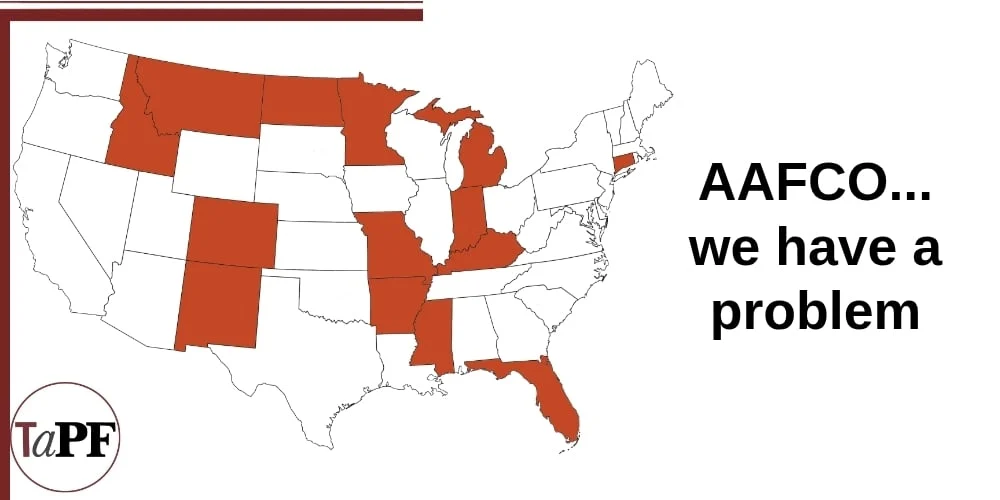
In the complex ecosystem of pet food regulation, the Association of American Feed Control Officials (AAFCO) serves as the primary architect for ingredient definitions used across the United States. However, a significant legal discrepancy has emerged, suggesting that the very foundation of these definitions may be on shaky ground. An investigation has revealed that 14 U.S. states have established laws governing animal feed that directly conflict with the standards set by AAFCO.
This regulatory friction creates a precarious scenario: should these definitions be challenged in a court of law, many of the most common ingredients in pet food—such as meat meals and animal by-products—could be declared invalid. If that were to happen, these ingredients would effectively lose their legal standing in those states, potentially rendering thousands of popular pet food products illegal overnight.
The Core Conflict: Definitions vs. State Statutes
At the heart of the issue is the discrepancy between AAFCO’s "Animal Product" definitions and the specific statutory requirements for animal feed in states including Arkansas, Colorado, Connecticut, Florida, Idaho, Indiana, Kentucky, Michigan, Minnesota, Mississippi, Missouri, Montana, New Mexico, and North Dakota.
The Missouri Case Study
Missouri serves as a prime example of the regulatory gap. Under Missouri state law (Section 266.180), a commercial feed is classified as "adulterated" if it is derived from a diseased animal or an animal that died through means other than standard slaughter. Furthermore, the statute explicitly prohibits the inclusion of "filthy, putrid, or decomposed substance" in feed.
Conversely, AAFCO’s definitions for ingredients like poultry by-product meal, meat meal, and animal digest do not explicitly mandate that the raw materials be sourced from slaughtered, healthy animals. Instead, AAFCO definitions often rely on the vague catch-all phrase: "It shall be suitable for use in animal food." AAFCO further defines "suitable" as conforming to the Federal Food, Drug, and Cosmetic Act—a standard that often allows for agency-level exceptions.
Critics argue that this lack of specificity in AAFCO definitions creates a "loophole" that permits the use of non-slaughtered, potentially diseased, or decomposed animal tissues—substances that are explicitly banned by the legislative statutes of the 14 identified states.
Chronology of Regulatory Oversight
The history of this oversight is as puzzling as it is concerning. For years, representatives from these 14 states have participated in AAFCO committees, served on the Pet Food and Ingredient Definitions (PFID) committee, and even occupied leadership roles within the organization.
Despite their active roles in crafting and approving these definitions, the conflict between their own state laws and the AAFCO standards remained unaddressed. The silence from these regulators suggests a systemic failure to reconcile national model definitions with existing state-level consumer protection laws.
Key Timeline Highlights:
- Establishment of State Laws: Many of the statutes in question were enacted decades ago to protect livestock and public health by preventing the entry of diseased or decomposed animal matter into the food chain.
- AAFCO Definition Evolution: Over the years, AAFCO has revised its definitions to accommodate modern manufacturing processes, often prioritizing industry flexibility over the stringent, slaughter-based requirements found in older state codes.
- The Regulatory Gap: As AAFCO definitions became more permissive, the delta between the "national standard" and the "state law" widened, yet no formal efforts were made to harmonize the two.
- The Current Challenge: Advocates have now formally requested that AAFCO address this discrepancy before a legal challenge forces a sudden, disruptive shift in the pet food industry.
The Implications: A Potential Legal "House of Cards"
The implications of this legal mismatch are profound. In states like Missouri, administrative law is clear: "No department, agency, commission or board rule shall be valid in the event that the rule is in conflict with state law."
If a citizen or an industry competitor were to bring a lawsuit challenging the presence of certain by-products in pet food, a court could reasonably conclude that the AAFCO definitions are invalid under state law. The downstream effects of such a ruling would be catastrophic for the pet food industry:

- Invalidation of Ingredients: If an ingredient’s definition is struck down, it is effectively removed from the "permitted" list in that state.
- Market Withdrawal: Manufacturers would be forced to pull products from shelves in 14 states if those products contain ingredients that no longer have a valid legal definition.
- Supply Chain Disruption: Pet food manufacturers rely on consistent, standardized ingredients. A localized ban would necessitate the formulation of "state-specific" recipes, a logistical nightmare for national brands.
- Consumer Trust Erosion: The uncertainty surrounding the safety and legality of pet food ingredients could lead to a massive loss of consumer confidence in the regulatory system.
Supporting Data: Why "Suitable for Use" Isn’t Enough
The term "suitable for use in animal food" is a pillar of AAFCO’s regulatory framework, but legal experts argue it is too nebulous to withstand judicial scrutiny. By relying on federal acts that provide for "appropriate state or federal agency" exceptions, AAFCO has essentially outsourced its definition of "safe" to a bureaucratic gray area.
In contrast, state laws are often rigid. They dictate that animal feed must not contain "filthy, putrid, or decomposed" material. By failing to include these specific prohibitions in their definitions, AAFCO has left a gap that allows manufacturers to source materials from rendering facilities that process "4D" animals (dead, dying, diseased, or disabled). While the rendering industry argues that heat processing renders these materials safe, the state laws in question often explicitly reject such materials regardless of the processing method.
Calls for Reform and Official Responses
Pet food consumer advocate Susan Thixton, through the Association for Truth in Pet Food, has issued a formal demand to AAFCO. The request is clear: AAFCO must immediately initiate a revision of its Animal Product definitions to ensure they align with the laws of the 14 identified states.
The Proposed Path Forward:
- Mandatory Sourcing Requirements: Definitions must be updated to require that all animal-based ingredients be derived from animals that have undergone ante-mortem and post-mortem inspection.
- Disease-Free Certification: Ingredients must be explicitly defined as coming from healthy, non-diseased animals.
- Purity Standards: AAFCO must adopt explicit language prohibiting the inclusion of filthy or decomposed substances, mirroring the statutes of the states in question.
As of this writing, AAFCO has not issued a formal public response to the specific demands. However, the organization is under increasing pressure to act. Failure to align these definitions will leave the pet food industry vulnerable to litigation that could be prevented through proactive regulatory reform.
Conclusion: A Critical Crossroads for Pet Food Regulation
The situation facing the pet food industry is a classic example of regulatory inertia. For years, the industry and regulators have operated under the assumption that AAFCO definitions were the final word on legality. The reality, however, is that state law—the law of the land in each jurisdiction—reigns supreme.
The 14 states identified in this investigation have the legislative power to enforce their own standards, and their current laws are fundamentally at odds with the status quo in the pet food aisle. By failing to update its definitions, AAFCO is not merely maintaining an outdated system; it is inviting a legal challenge that could disrupt the entire pet food market.
For pet owners, the situation highlights the importance of transparency and the need for a more robust regulatory framework. As the Association for Truth in Pet Food continues to push for these changes, the industry must decide whether to continue relying on ambiguous definitions or to embrace a higher standard of transparency and safety—one that respects the existing laws designed to protect the animals we serve.
As the debate unfolds, the pet food industry and its consumers will be watching closely to see if AAFCO chooses to harmonize its definitions with the law or wait for a judge to force its hand. In either case, the status quo is no longer sustainable.