Choosing a first parrot is a significant life decision that often leaves prospective owners feeling overwhelmed by the sheer variety of species available. Among the most striking and popular candidates is the Eclectus parrot (Eclectus roratus), a bird renowned for its vibrant plumage and gentle disposition. However, beneath the aesthetic appeal lies a complex, highly intelligent creature that demands a specific standard of care. This guide explores whether the Eclectus is a suitable choice for a novice, examining the behavioral, social, and environmental realities of avian ownership.
Main Facts: The Nature of the Eclectus
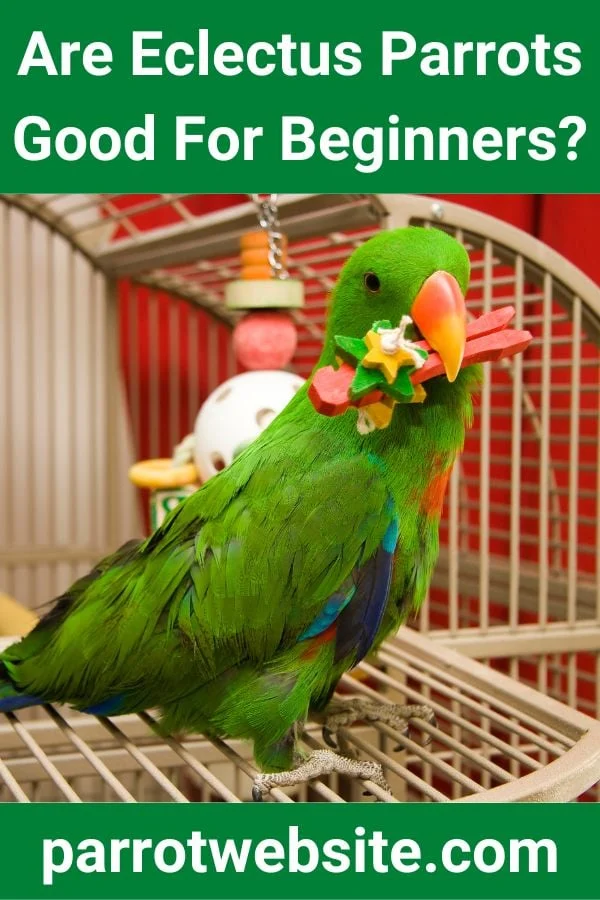
Eclectus parrots are unique in the avian world, primarily due to their extreme sexual dimorphism. Males typically display vibrant emerald-green feathers with bright red and blue highlights, while females boast deep, rich reds paired with royal blue or purple underwings.
For the first-time owner, the primary "fact" to internalize is that parrots are not domesticated in the same sense as dogs or cats. While a canine has been selectively bred for millennia to coexist with humans, a parrot—regardless of species—remains a wild animal at its core. They require "taming" rather than merely training. Despite this, the Eclectus is frequently categorized as one of the most docile and "beginner-friendly" parrots, provided the owner is committed to meeting their advanced psychological and dietary needs.
Chronology of Care: From Hatchling to Household Companion
Understanding the lifecycle of an Eclectus is essential for prospective owners. The journey begins long before the bird arrives at your home:
- The Fledgling Phase: The most critical window for an Eclectus occurs during its first few months of life. It is during this period that the bird must be socialized by a reputable breeder. Without this early, consistent handling, the parrot may develop "wild" behaviors that become difficult to mitigate later in life.
- The Integration Phase: Upon bringing the bird home, owners should expect an adjustment period. This is when the foundation of trust is built. It is not a time for intense training, but rather for quiet observation and gentle reinforcement of safety.
- The Maturation Phase: As the bird reaches sexual maturity (usually between 2 and 4 years of age), owners may notice subtle shifts in personality. Consistent, firm, yet kind handling during these years ensures that the bird remains a well-adjusted member of the household.
Supporting Data: Why Environment Dictates Behavior
The perception of an "easy" pet is often a reflection of the environment provided. Data regarding avian behavior consistently points to two major factors for the Eclectus: noise tolerance and social stimulation.
The Myth of the "Quiet" Parrot
While Eclectus parrots are generally quieter than species like the Macaw or the Cockatoo, they are by no means silent. They possess a distinctive, resonant honking vocalization. In a quiet, suburban home, this sound can be piercing. Owners who prioritize a low-decibel environment should be aware that "quieter" is a relative term.
Dietary Requirements
Eclectus parrots have a specialized digestive tract that is longer than that of many other parrots. Consequently, they require a diet heavily supplemented with fresh, fibrous vegetables and fruits. A diet lacking in proper nutrition is the leading cause of behavioral issues in the species, often manifesting as plucking, lethargy, or unprovoked aggression.
Official Perspectives: Expert Consensus on Ownership
Avian experts generally agree that the success of a first-time owner rests on their research and lifestyle. The following points represent the professional consensus regarding the suitability of the Eclectus for novices:
- The Social Necessity: Eclectus parrots are intensely social. In the wild, they operate within complex flock structures. In captivity, the owner is the flock. Leaving an Eclectus alone for eight to ten hours a day is fundamentally incompatible with the species’ psychological well-being.
- The "Reputable Breeder" Mandate: The importance of sourcing from an expert cannot be overstated. A breeder who focuses on "parent-raised" or "properly socialized" chicks provides the owner with a head start. Conversely, a bird that has been improperly handled will likely exhibit behavioral challenges that a beginner may find insurmountable.
- Household Dynamics: Experts advise against placing an Eclectus in a high-traffic, chaotic home. They thrive in environments with one or two primary caregivers. While they can coexist with children, it requires strict supervision to ensure the child respects the bird’s boundaries, as the Eclectus is sensitive to sudden movements and loud, unpredictable noises.
Implications: The Long-Term Commitment
Owning an Eclectus is a long-term commitment that often spans 30 to 50 years. This reality has profound implications for a first-time owner:
The "One vs. Two" Dilemma
A common question is whether one should purchase a pair. While a bonded pair can provide each other with companionship—thereby reducing the owner’s burden of constant interaction—there is a caveat: you cannot simply introduce two adult parrots and expect them to bond. They must be raised together from a young age. If you choose to keep a single bird, you must be prepared to dedicate several hours daily to active engagement, training, and play.
Behavioral Resilience
If an Eclectus is neglected, it will manifest its distress through aggression, biting, or self-mutilation. Unlike a dog that might be trained to sit or stay, an unhappy parrot is a reactive, unpredictable creature. The implication for the owner is clear: you are not just a pet owner, but a primary caregiver for a highly intelligent creature with the emotional capacity of a toddler.
Conclusion: Are They Right for You?
Are Eclectus parrots good for a first-time owner? The answer is a conditional "yes."
If you are a person who values quiet companionship, has the time to prepare fresh meals, can commit to several hours of daily social interaction, and has done the due diligence to find a reputable breeder, the Eclectus is an incredibly rewarding companion. They are affectionate, intelligent, and capable of forming deep, lifelong bonds.
However, if you are looking for a "low-maintenance" pet that can be left alone while you work long hours, or if you live in a loud, chaotic household, the Eclectus is likely not the right fit. The "difficulty" of a parrot is rarely inherent to the bird itself; it is a measure of how well the owner’s lifestyle aligns with the complex, social, and emotional needs of the animal.
Before making the leap, spend time with the species. Visit an avian shelter or a breeder. Observe their behavior, listen to their vocalizations, and ask yourself if you are ready to adjust your life to accommodate their needs. When the environment is right, the Eclectus is arguably one of the most magnificent pets one can have, but it is a privilege that demands respect, patience, and a lifetime of dedication.