Losing a long-term avian companion is a profound experience, often leaving a void that feels impossible to fill. For those who have shared their lives with a parrot, the silence in the home can be deafening. As many grieving bird owners contemplate bringing a new feathered friend into their lives, a common question arises: Can a new bird provide the same physical intimacy and warmth as the last?
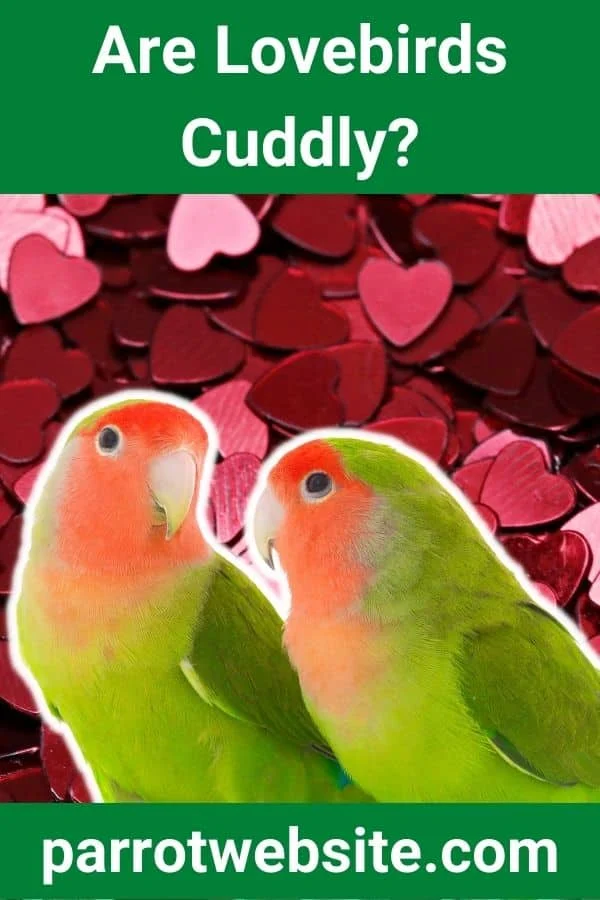
For many, the search for a new companion leads to the vibrant, charismatic, and aptly named lovebird (Agapornis). Known for their diminutive size and oversized personalities, lovebirds are a popular choice for both novice and experienced bird keepers. However, before committing to a new pet, it is essential to understand the complex social dynamics of these birds. Are they truly the cuddly companions many seek, or is their reputation for affection misunderstood?
Main Facts: Understanding the Lovebird Temperament
At the core of the lovebird’s reputation is their innate, high-octane social intelligence. These birds are not merely decorative pets; they are complex creatures that thrive on interaction. When evaluating whether a lovebird is right for your home, several biological and environmental factors must be considered.
The Role of Early Development
The single most significant determinant of a lovebird’s "cuddliness" is its upbringing. Ornithologists and reputable breeders emphasize that hand-raised birds are fundamentally different from those raised by their parents. A hand-raised lovebird has been socialized to view human hands as sources of comfort and security rather than threats. Conversely, parent-raised birds, while often healthier in terms of natural instincts, may view humans with suspicion or indifference, making the goal of a "cuddle buddy" much harder to achieve.
Social Hierarchies and Bonding
Lovebirds are famous for their pair-bonding behavior. In the wild, these birds mate for life, forming intense, exclusive attachments. When kept in captivity, this instinct remains powerful. If a lovebird is kept as part of a pair, it will almost always prioritize its feathered partner over its human keeper. This is a critical point for prospective owners: a pair of lovebirds will be happiest, but they are unlikely to seek out human physical touch as their primary social outlet.
Chronology: The Journey of the Human-Bird Bond
The development of a trusting relationship with a lovebird is not instantaneous; it is a process that requires patience, consistency, and a deep understanding of avian psychology.
Phase One: The Introduction (Weeks 1–4)
Upon bringing a lovebird home, the first few weeks should be dedicated to environmental acclimation. A bird that is nervous or overwhelmed will never exhibit its true, affectionate nature. During this time, the owner’s role is to be a non-threatening presence, talking softly and providing treats to establish positive associations.
Phase Two: Building Trust (Months 1–3)
As the bird grows comfortable, the focus shifts to physical proximity. This is the period where the "cuddle" factor begins to manifest. A bird that initiates contact—flying to your shoulder, perching on your finger, or leaning into your touch—is a bird that has successfully transitioned from viewing you as a stranger to viewing you as a member of its "flock."
Phase Three: The Established Relationship (Ongoing)
Once the bond is formed, the lovebird will begin to exhibit specific behaviors that indicate comfort. This includes preening your hair or skin, chattering when you enter the room, and seeking out high-touch interactions. However, it is crucial to recognize that this bond must be maintained through daily interaction. Neglect or long periods of isolation can cause a bird to regress into a more skittish state.
Supporting Data: Why "Hand-Raised" Matters
The importance of the breeding source cannot be overstated. A professional study of avian behavioral psychology reveals that birds exposed to human contact during their critical developmental window—roughly the first six to eight weeks of life—develop significantly higher thresholds for stress when interacting with humans.
Furthermore, data on gender-based temperament suggests a nuanced picture. While there is no definitive scientific consensus, many breeders report that male lovebirds tend to be slightly more "mellow" and prone to seeking human interaction, potentially as an extension of their courtship behaviors in the wild. Females, conversely, are often more assertive and may be more territorial, particularly if they are nesting. Regardless of gender, however, the consensus remains that a properly socialized bird of either sex can be an incredibly affectionate companion.
Official Responses: Guidance from Avian Experts
Leading avian veterinarians and animal welfare organizations offer clear guidelines for those considering lovebirds:
- Prioritize Source: Always purchase from a reputable breeder who provides documentation of hand-rearing. Avoid "wild-caught" birds, which are unethical and rarely adapt to the affectionate behaviors expected of a pet.
- Respect Autonomy: Even the most affectionate lovebird will have "off" days. Experts warn against forcing physical contact. If a bird is biting, retreating, or fluffing its feathers aggressively, it is a clear sign that the animal requires space. Forcing the issue can lead to a long-term erosion of trust.
- The "Pair" Dilemma: The American Federation of Aviculture often notes that while individual birds can be more affectionate, keeping a single lovebird requires the human to act as the "flock." This means the owner must be prepared to spend several hours a day interacting with the bird to prevent loneliness and psychological distress.
Implications: The Reality of Life with a Lovebird
The decision to adopt a lovebird carries long-term implications for the owner’s lifestyle. Unlike a cat or a dog, a lovebird’s demand for interaction is not just physical; it is mental. They require stimulation, training, and consistent socialization.
The Trade-off of Affection
If your primary goal is a bird that will sit in your pocket or snuggle in your hand, you must be prepared to earn that privilege. You are essentially asking a wild-descended animal to overwrite its survival instincts in favor of a domestic bond. When this succeeds, the result is deeply rewarding. A lovebird that nibbles gently at your ear or falls asleep tucked against your neck is a testament to the strength of the human-animal bond.
Environmental Considerations
Owners must also consider the environment. Lovebirds are sensitive to aerosols, non-stick cookware fumes, and household chemicals. Furthermore, a "cuddly" bird requires a bird-safe home where it can be allowed out of its cage for supervised exercise. Without this, the bird will become frustrated, and its potential for affection will be stifled by boredom and confinement.
Long-Term Commitment
Finally, it is important to remember that lovebirds can live for 10 to 15 years. This is a significant commitment. While they are smaller than larger parrots like Macaws or Cockatoos, they require the same level of emotional investment.
Conclusion: Are They Right for You?
In conclusion, are lovebirds cuddly? The answer is a resounding "yes," provided you acknowledge that you are entering into a social contract with a sentient, complex creature. They are not plush toys; they are dynamic, intelligent, and emotional beings.
If you are looking to replace the bond you lost with your previous parrot, a lovebird can certainly fill that space—but only if you approach the relationship with patience. They will not be cuddly because you demand it; they will be cuddly because you have cultivated an environment of safety, trust, and mutual respect.
By understanding the importance of hand-rearing, respecting their individual boundaries, and providing a stimulating environment, you can enjoy the unique, heart-warming affection that only a lovebird can provide. They are, in every sense of the word, birds that thrive on connection. If you are ready to put in the time, you will find that the love you give to a lovebird is returned tenfold, one soft, feathered nuzzle at a time.