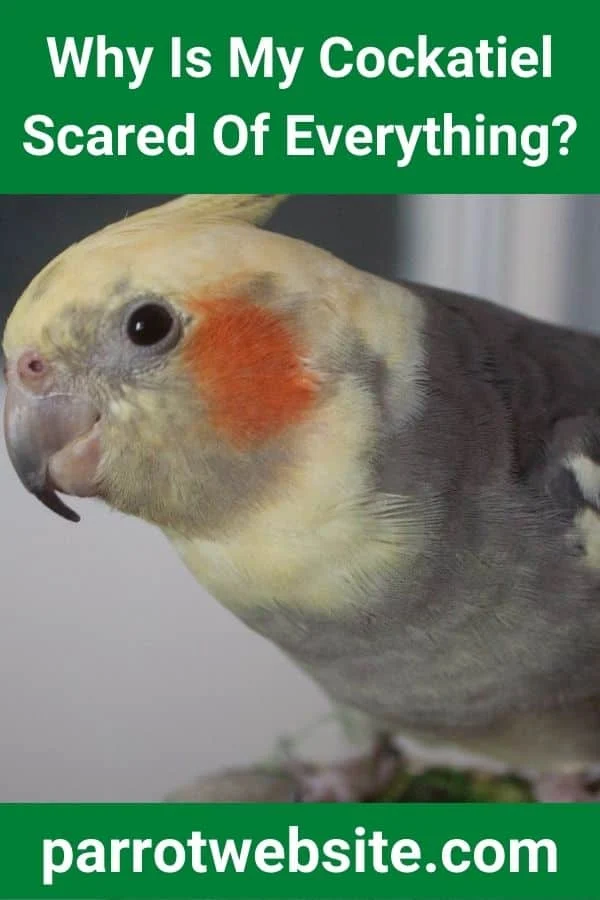
For many bird enthusiasts, the cockatiel (Nymphicus hollandicus) serves as the quintessential avian companion. Known for their expressive crests, gentle temperaments, and melodic whistles, these Australian parrots are often the first choice for prospective bird owners. However, a common point of frustration for new owners—and even seasoned enthusiasts—is the sudden, pervasive skittishness that can turn a seemingly calm pet into a bundle of nerves.
While some birds are naturally inquisitive, others seem to live in a perpetual state of "fight or flight," reacting to mundane household sounds or even the sight of their owners with visible panic. Understanding why a cockatiel remains in this state of high alert is the first step toward restoring harmony in your home.
The Anatomy of Avian Anxiety: Main Facts
At its core, a cockatiel’s fear is an evolutionary defense mechanism. In the wild, these birds occupy the bottom of the food chain, serving as prey for various raptors and terrestrial predators. Their survival depends on their ability to perceive movement, sound, and potential threats with lightning-fast reflexes.
When a pet cockatiel displays excessive fear, it is often a misfiring of this natural instinct. The most significant factors contributing to this behavior include:
- Early Developmental Deficits: Lack of proper socialization during the "fledgling" phase.
- Environmental Stressors: Sudden changes in their habitat or sensory overload.
- Social Isolation: Cockatiels are flock animals; when kept in solitary confinement without adequate interaction, they often develop deep-seated anxiety.
- Inconsistent Human Interaction: Failure to establish a predictable, trust-based bond between bird and owner.
A Chronological Perspective: From Hatchling to Household Pet
To understand why a bird is fearful, one must look at its history. The trajectory of a cockatiel’s personality is often cemented long before it reaches your living room.
The Breeder’s Influence (0–3 Months)
The foundation of a confident cockatiel is laid by the breeder. A responsible breeder employs "socialization protocols," which involve handling the chicks gently, introducing them to various household sounds, and ensuring they are accustomed to human presence while still in the nest. A bird that is "hand-reared" but not "socialized" may be physically comfortable with being touched but remain mentally unstable.
The Transition Period (The First 30 Days)
The "Arrival Phase" is the most critical period for a new owner. The bird is moved from a familiar environment—likely with its siblings and parents—to a strange, often sterile new home. During this time, the cockatiel experiences high levels of cortisol. If the owner does not provide a calm, consistent, and predictable environment, the bird’s fear can become "hard-wired," leading to long-term behavioral issues.
The Established Pet (Long-term Fear)
If a bird that was previously calm suddenly becomes fearful, or if a bird remains skittish after years of ownership, the cause is usually rooted in a lack of stimulation, a negative association with a specific object, or a change in the owner’s behavior that the bird perceives as threatening.
Supporting Data: Why Flock Mentality Matters
The most prominent scientific and anecdotal evidence regarding cockatiel behavior points to the "Flock Instinct." In the wild, cockatiels are never truly alone. They live in large, nomadic flocks where safety is found in numbers.
The Myth of the "Solo Bird"
Many owners assume that a cockatiel will bond better with a human if it is kept alone. While this is partially true in terms of focus, it is psychologically taxing for the bird. A study of parrot behavior suggests that captive birds kept in solitary conditions are significantly more prone to "stereotypic behaviors"—repetitive, nervous actions that signal chronic stress.
If you are unable to keep a pair of cockatiels, you must act as the "flock member." This means providing several hours of direct, high-quality interaction daily. If you are away for work or social obligations, the bird’s loneliness often manifests as a hyper-vigilant state of fear, as they feel exposed and vulnerable without a protector nearby.
Expert Insights: Addressing the "Fear of the Owner"
When a bird is specifically afraid of its human companion, the situation requires a shift in strategy. It is vital to recognize that the bird is not "being difficult"; it is expressing a lack of trust.
The "Back to Basics" Protocol
When a bird cowers or hisses at the sight of you, you must restart the taming process.
- Passive Presence: Spend time near the cage without trying to touch or train the bird. Read a book or work on a laptop nearby so the bird realizes you are not an immediate threat.
- Targeting and Treats: Use high-value rewards like millet sprays. Begin by placing the treat on the cage bars. Once the bird approaches, move to hand-feeding through the bars.
- The "Slow Blink": In the avian world, staring is often interpreted as predatory behavior. Practice "soft-eye" techniques—looking at the bird and slowly blinking or looking away. This signals to the cockatiel that you are a non-threatening flock mate.
Environmental Audits
Sometimes the source of fear is inanimate. Cockatiels are famously spooked by "night frights," a condition where the bird becomes disoriented in the dark and begins flapping wildly, potentially injuring itself against cage bars. Experts strongly recommend a dim night-light near the cage to provide visual orientation during the night.
Implications: The Long-Term Consequences of Chronic Stress
Ignoring a bird’s fear does not mean the behavior will simply "go away." Chronic fear has severe physiological implications:
- Immune System Suppression: A stressed bird is significantly more susceptible to respiratory infections and common avian illnesses.
- Self-Mutilation: In extreme cases, a bird suffering from chronic anxiety may begin feather-plucking, a self-destructive behavior that is difficult to reverse.
- Reduced Lifespan: Like all living creatures, a bird living in a constant state of "fight or flight" experiences cardiovascular strain, which can lead to a shorter, lower-quality life.
Conclusion: A Commitment to Calm
Living with a cockatiel is a rewarding experience that requires a deep understanding of their emotional landscape. A fearful cockatiel is not a "bad" bird; it is a bird that has lost its sense of security.
By analyzing the bird’s history, auditing your home environment, and respecting the animal’s natural need for companionship, you can systematically dismantle the barriers of fear. Whether it is through the introduction of a companion bird, the addition of a night-light, or simply dedicating more time to quiet, consistent social interaction, the goal is to create an environment where your bird feels safe enough to express its natural, joyful personality.
Remember, the transition from a skittish, frightened bird to a confident, whistling companion is a marathon, not a sprint. With patience, empathy, and the right approach, even the most nervous cockatiel can learn that the world—and its owner—is a safe place to be.
Key Takeaways for Owners:
- Consistency is Key: Keep routines for feeding, covering the cage, and playtime stable.
- Identify Triggers: Look for "fear-fixations" on specific household items or sudden loud noises.
- Prioritize Socialization: If you are a busy individual, consider the psychological benefits of keeping two cockatiels rather than one.
- Consult the Professionals: If behavior does not improve, consult with an avian veterinarian or a certified parrot behaviorist to rule out underlying medical issues that may be causing the bird to feel vulnerable.