The loss of a long-term avian companion is a profound experience, often leaving a void that feels remarkably quiet. For many bird owners, the decision to welcome a new bird into the home is not just about replacing a pet, but about rekindling a unique, interspecies bond. For those who find solace in the tactile, affectionate nature of a bird, the question often arises: Can a lovebird provide the same level of intimacy as other parrot species? While their name suggests a predisposition toward romance and affection, the reality of living with a lovebird is a nuanced study in avian behavior, social hierarchy, and human-bird bonding.
Main Facts: The Nature of the Lovebird
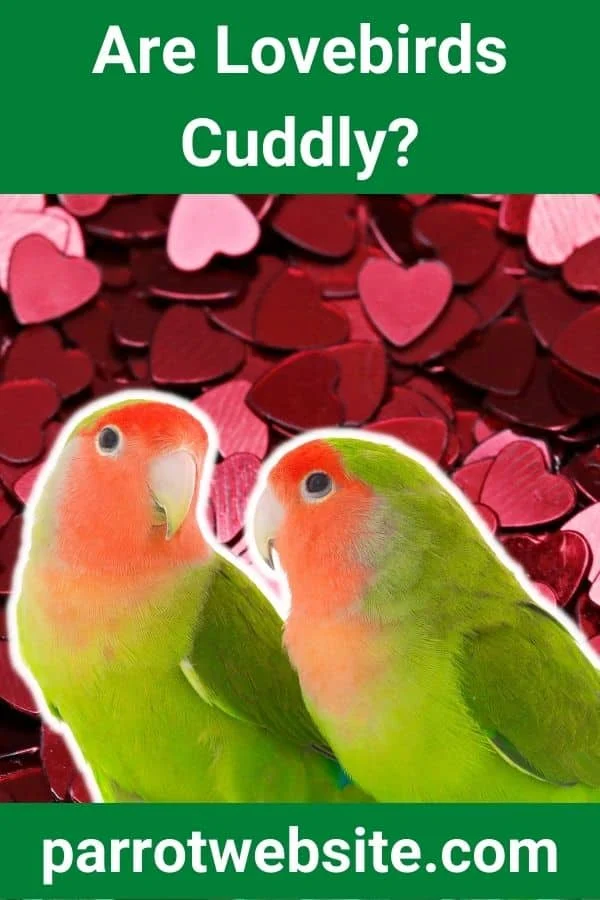
Lovebirds (Agapornis) are small, charismatic members of the parrot family known for their vibrant plumage and intense social requirements. Native to Africa and Madagascar, they are defined by their monogamous nature—a trait that has earned them their common moniker. However, there is a critical distinction between being "affectionate" and being "cuddly."
In the context of pet ownership, "cuddly" refers to a bird’s willingness to engage in physical contact—snuggling into a human neck, tolerating petting, and seeking proximity. The scientific consensus is that lovebirds are inherently social and, when properly socialized, possess a high capacity for affection. Their willingness to interact is governed by three primary factors: their upbringing (hand-reared versus parent-reared), their social environment (living alone versus in a pair), and the individual personality of the bird.
Chronology of the Bonding Process
Developing a deep, affectionate bond with a lovebird is not an instantaneous event; it is a gradual progression of trust. Understanding this timeline is essential for any prospective owner.
- The Acclimation Phase (Days 1–30): Upon arriving in a new home, the bird must adjust to a new environment. During this time, the owner should focus on passive interaction—sitting near the cage, speaking softly, and allowing the bird to observe the human without pressure.
- The Trust-Building Phase (Months 1–3): Once the bird is comfortable with the owner’s presence, the focus shifts to target training and positive reinforcement. During this period, the bird learns that the human is a source of safety and treats.
- The Deep-Bonding Phase (Months 3 and beyond): This is when physical affection begins to manifest. The bird may start to "preen" its owner—nibbling gently on fingers or clothing—as a sign of social acceptance. It is important to note that if a bird is rushed through these stages, the bond may never fully materialize, as trust is the foundation of all avian affection.
Supporting Data: Factors Influencing Affection
Research into parrot behavior suggests that social structure is the primary determinant of a bird’s behavior toward its human guardian.
The Impact of Social Pairing
A common dilemma for owners is whether to keep a single lovebird or a pair. Data indicates that lovebirds are happiest when kept in pairs. However, a pair of lovebirds will naturally prioritize their bond with each other over their bond with the owner. This does not mean they will be "wild" or aggressive; rather, they become a self-contained unit. They will fulfill each other’s social and grooming needs, often leaving the owner as a secondary, albeit still welcomed, companion.
Conversely, a single lovebird is more likely to view its human owner as its "mate" or primary flock member. This frequently results in a higher intensity of physical affection and "cuddliness." However, this comes with the ethical consideration of whether a human can provide the constant social stimulation a lovebird would receive from a feathered peer.
The "Hand-Reared" Imperative
The history of the bird’s development is perhaps the most significant indicator of future temperament. A bird raised by its parents in a large aviary may be skittish and uninterested in human touch. A hand-reared bird, by contrast, has been imprinted to associate human touch with security and socialization. Reputable breeders emphasize that the first few weeks of life are critical; a bird that has been socialized to human hands during this window is significantly more likely to enjoy head scratches and nuzzling throughout its adult life.
Official Perspectives: Expert Consensus on Pet Behavior
Veterinarians and avian behaviorists generally agree that physical affection in lovebirds is a privilege, not a guarantee. Dr. Elena Thorne, an avian specialist, notes, "Owners must recognize that birds have agency. A lovebird that refuses to be petted is not necessarily ‘unaffectionate’; it is simply setting a boundary. Respecting these boundaries is the only way to maintain a long-term, loving relationship."
Behaviorists also warn against the "cuddle-at-all-costs" mentality. Forcing a bird to snuggle when it is displaying signs of stress—such as pinning its eyes, fluffing its feathers aggressively, or attempting to fly away—can lead to biting and permanent damage to the human-bird trust.
Implications for the Prospective Owner
If your primary goal is to find a pet that will sit on your shoulder and allow for consistent cuddling, you must prepare for the realities of avian ownership.
The Gender Debate
There is a longstanding, albeit debated, belief that male lovebirds are more "mellow" and affectionate than their female counterparts. While biological sex does not dictate personality, some breeders observe that females can be more territorial, particularly when they are in breeding condition. If you are looking for a pair, two males are often recommended to avoid the territorial aggression that can occur with mixed-sex pairs or the health complications associated with egg-laying in females.
Signs of Love
To determine if your efforts are succeeding, look for the following indicators:
- The Welcome Home: If your bird initiates contact or makes excited vocalizations when you return, it is a clear sign of a strong attachment.
- The Preening Ritual: If your bird tries to nibble at your cuticles, ears, or hair, it is attempting to "groom" you. This is one of the highest compliments a bird can pay its owner.
- Vocal Feedback: A bird that chirps or mimics sounds back to you is actively attempting to communicate, which is a fundamental building block of social bonding.
Conclusion: Balancing Expectations
The journey of owning a lovebird is one of adaptation. While it is entirely possible to have a bird that is incredibly cuddly and affectionate, it is equally important to accept that these birds are complex individuals with their own moods and social preferences.
If you are mourning the loss of a past pet, it is natural to want to replicate that specific type of closeness. However, the most successful relationships with lovebirds are those built on patience. By choosing a hand-reared bird, providing a stable and loving environment, and—above all—respecting the bird’s autonomy, you will find that the lovebird more than lives up to its name. They may not always cuddle on command, but when they do choose to tuck their head into your palm and drift off to sleep, the bond feels just as meaningful and profound as any other friendship.
In the final assessment, the lovebird remains a premier choice for those seeking a small, intelligent, and deeply engaging companion, provided the owner is willing to view the relationship as a two-way street of mutual respect and discovery.