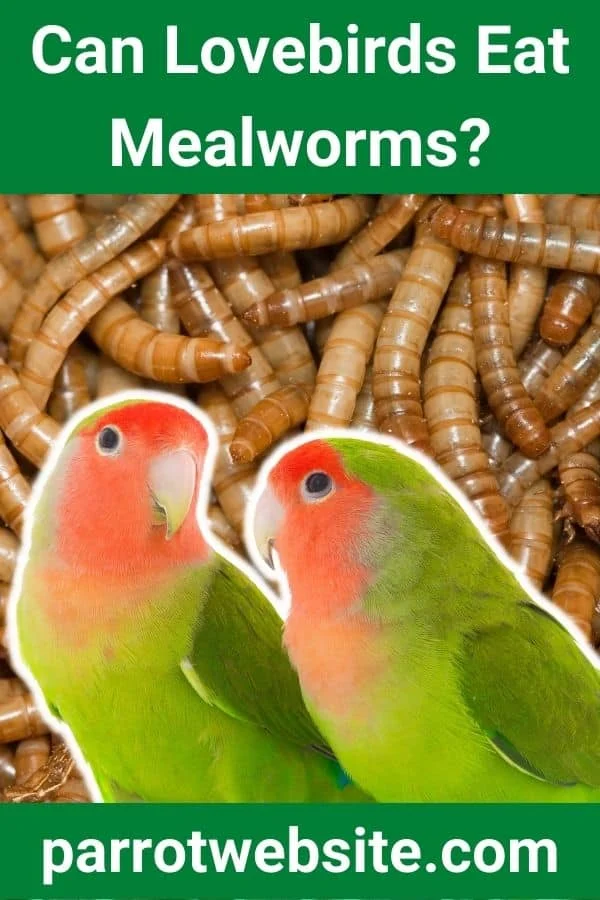
When pet owners wander the aisles of a local pet supply store, the primary goal is often consistency: purchasing the staple brand of seed mix or the reliable pellet blend that keeps their feathered companions thriving. However, avian nutrition is a dynamic field, and many owners—driven by a desire to provide enrichment and variety—often find themselves pausing in the reptile or wild bird section, eyeing containers of mealworms.
The question frequently arises: Can lovebirds, typically known for their love of seeds, fruits, and leafy greens, safely consume these protein-rich insects? The answer is a qualified "yes," though it comes with essential caveats regarding moderation, dietary balance, and the specific physiological needs of these vibrant, intelligent psittacines.
The Nutritional Profile: Why Mealworms Matter
At their core, mealworms are not toxic to lovebirds. In fact, they offer a dense nutritional punch, primarily in the form of protein. For a bird that is molting, recovering from stress, or simply needing a shift in their gustatory routine, mealworms can serve as a high-value treat.
Supporting Data: Protein Content
Mealworms are exceptionally high in protein, which accounts for roughly 50% of their total nutritional composition. In the wild, while lovebirds are predominantly granivores and frugivores—subsisting on seeds, berries, and vegetation—they are opportunistic feeders. Should a fledgling or a foraging adult encounter a source of animal protein, they are biologically equipped to process it.
However, "biologically equipped" does not mean "biologically dependent." Unlike insectivorous birds, which require a steady intake of chitin and animal-based proteins to survive, lovebirds utilize this protein as a supplement rather than a cornerstone of their diet.
Chronology of a Dietary Transition: Why Variety is Key
The impetus for introducing new treats usually stems from observation. A bird owner might notice their lovebird picking through the same bowl of seeds, leaving behind pellets, or showing signs of boredom. This behavior is a common signal of "food boredom," a psychological state where the lack of sensory stimulation leads to lethargy or even feather-plucking.
- The Observation Phase: Owners often notice a decline in enthusiasm during feeding times.
- The Exploratory Phase: The owner researches potential "novelty" foods, leading them to the pet store aisles.
- The Introduction Phase: The mealworm is introduced. Because lovebirds have distinct, individual personalities, this phase is hit-or-miss. Some birds will immediately investigate the new texture, while others may treat it with suspicion.
- The Maintenance Phase: Once a bird accepts the treat, the owner must transition from "trial" to "management," ensuring the treat remains an occasional delight rather than a dietary staple.
Analyzing the Risks: Is There a Downside?
While mealworms are nutritionally dense, the primary risk to lovebirds is not toxicity, but rather nutritional dilution.
If a lovebird fills its crop with protein-heavy mealworms, it will naturally have less appetite for the essential nutrients found in a balanced diet of fresh vegetables, leafy greens, and high-quality formulated pellets. Because mealworms lack the vitamins, minerals, and complex carbohydrates found in a diverse botanical diet, overfeeding can lead to deficiencies.
Furthermore, the high protein content of mealworms can be taxing if fed in excess. While a small amount provides a boost, an overabundance of concentrated protein can potentially place unnecessary stress on a bird’s kidneys if the diet is not otherwise balanced with appropriate moisture and fiber.
Comparing Forms: Dried vs. Live Mealworms
When purchasing mealworms, owners are typically faced with two options: dried or live. Both are acceptable, but they serve different roles in the bird’s experience.
Dried Mealworms: The Convenient Option
Dried mealworms are widely available, shelf-stable, and easy to store. They are frequently used in wild bird feeding stations, making them accessible in almost any pet department.
- Safety Note: When serving dried mealworms, it is often wise to break them into smaller fragments. While a lovebird’s beak is powerful enough to crack open hard shells and seeds, the dry, brittle nature of a dehydrated worm can be sharp. Breaking them prevents potential irritation to the crop or throat.
Live Mealworms: The Enrichment Experience
Live mealworms, often sourced from reptile specialty shops or bait stores, provide a sensory experience that dried versions cannot. The movement of a live worm can trigger a lovebird’s predatory curiosity, providing mental stimulation.
- The Downside: They are more difficult to manage, require proper storage (often involving keeping them in a container with bran or oats), and may be ignored by birds that have no innate drive to hunt moving prey.
Implications for Daily Care
For the responsible avian enthusiast, mealworms should be viewed as a "high-value reinforcement." In the context of bird training, they can be used as a reward for positive behaviors.
The Rule of Moderation
- Frequency: Offer mealworms no more than once or twice a week.
- Quantity: A few worms per serving are sufficient.
- Balance: If a mealworm is provided, ensure the rest of the day’s intake is focused on fresh, nutrient-dense produce—such as kale, bell peppers, carrots, and high-quality pellets.
Official Perspectives on Avian Diet
Veterinary nutritionists consistently emphasize the "80/20 rule": 80% of a lovebird’s diet should consist of high-quality, vet-recommended pellets, with the remaining 20% comprised of fresh vegetables and limited fruits. Seeds and treats, including mealworms, should be relegated to the very bottom of the dietary pyramid.
When introducing any new food item, it is always recommended to consult with an avian veterinarian, particularly if your lovebird has a history of health issues or sensitivity to dietary changes.
Conclusion: Enrichment Without Compromise
Mealworms are a fascinating and perfectly safe treat for lovebirds, provided they are treated as an occasional luxury rather than a dietary requirement. They offer a unique source of protein and can act as an excellent tool for behavioral enrichment, breaking the monotony of a standard seed-based diet.
However, the path to a healthy lovebird is paved with variety. Rather than relying solely on one type of treat, owners should rotate mealworms with other healthy options like sprouts, cooked legumes, or fresh herbs. By keeping the intake of mealworms strictly moderated, you ensure that your lovebird receives the excitement of a new snack without sacrificing the long-term nutritional foundation required for a long, healthy life.
Remember, the goal of introducing new foods is to mirror the diversity they might experience in the wild while ensuring the safety of a domestic environment. Keep your lovebird engaged, keep their diet varied, and most importantly, enjoy the process of learning what your specific bird enjoys most.