For centuries, the dog has occupied a central place in the human narrative. As our oldest inter-species companion, the canine is shrouded in folklore, romanticized in literature, and misunderstood by the very people who care for them. However, we are currently witnessing a seismic shift in our understanding of dogs—a transformation driven not by sentiment, but by rigorous scientific advancement.
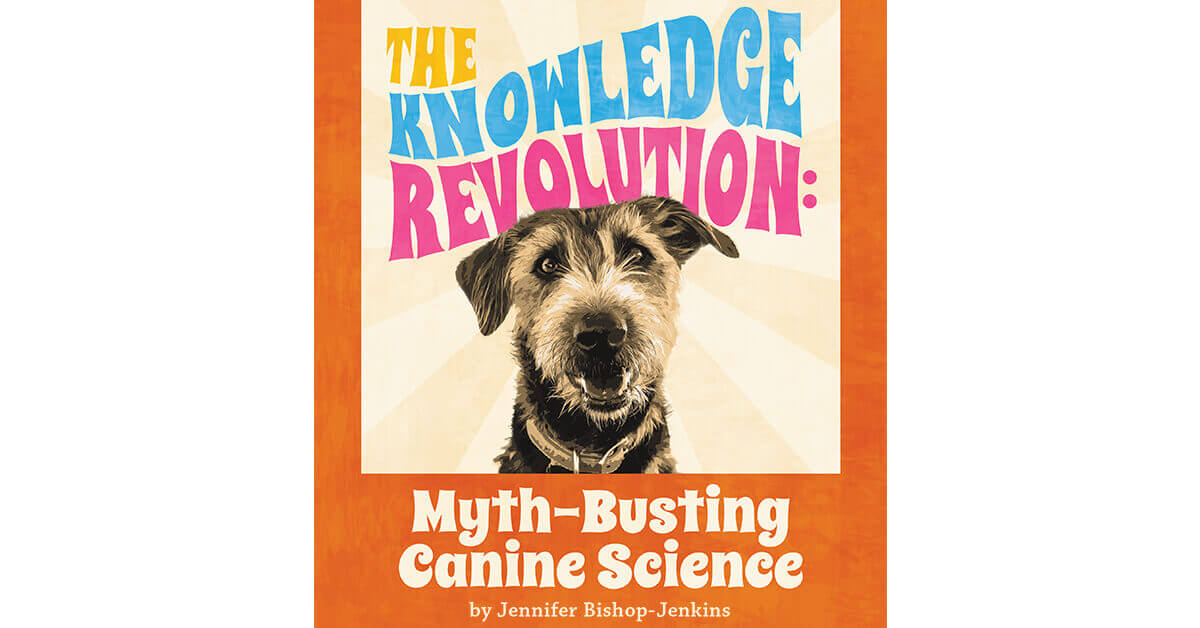
As professional groomers, we find ourselves at the forefront of a "knowledge revolution." For the better part of the last century, the grooming industry functioned in isolation. Operating from home-based salons with little access to peer-reviewed information, groomers often relied on "tribal knowledge"—anecdotal practices passed down without empirical validation. Today, that era of secrecy and stagnation is ending. As we embrace the power of myth-busting, we are elevating grooming from a simple trade to a sophisticated, science-led profession.
The Evolution of the Industry: From Silos to Science
For decades, the grooming profession was characterized by a lack of standardization and an absence of formal educational requirements. Groomers worked in silos, guarded their techniques as proprietary secrets, and operated in a vacuum where "what worked" was the only metric of success. This culture of isolation allowed outdated, and often detrimental, myths to persist.
However, the post-pandemic landscape has catalyzed a shift. With the rise of international trade shows, competitive grooming circuits, and accessible online education, the barrier to high-level knowledge has lowered. We are seeing a move toward a more collegial industry where data—not just intuition—drives our methodology.
Despite this, the transition is not uniform. In my four decades in the field, I have observed that while the influx of scientific information is exhilarating, there remains a stubborn segment of the industry that adheres to the philosophy: "I know what I know, and it works—don’t bother me with that new stuff." This resistance is a natural growing pain in any professional evolution. The transition from anecdote to evidence-based practice is never immediate, but it is necessary for the health and welfare of the pets in our care.
Busting the Foundations: Three Scientific Revelations
To understand the scope of this change, we must examine the specific myths that recent research has dismantled. These findings are not merely academic; they fundamentally change how we approach the animal on our grooming table.
1. Myth: The Dog is Descended from the Wolf
The Fact: The prevailing narrative in dog food commercials and popular science has long held that dogs are direct descendants of the gray wolf. However, genomic mapping—which reached a milestone in 2003—has rewritten this history.
Recent discoveries in ancient canine DNA suggest that dogs and wolves are not parent-and-child, but rather siblings. They share a common, extinct ancestor, often referred to by scientists as the "proto-dog" or "ancestor wolf." Just as humans did not evolve from modern-day monkeys, dogs did not evolve from modern-day wolves. Instead, they share a common lineage that diverged thousands of years ago.
Supporting Data: Evolutionary biologists have identified five distinct, globally distributed gene pools that existed as early as 11,000 years ago. These lineages—found in the Near East, Northern Europe, Siberia, New Guinea, and the Americas—prove that canine development was far more complex and multifaceted than a simple linear descent from a single wolf population.
2. Myth: Humans Domesticated the Dog
The Fact: For generations, humans have taken the credit for "taming" the dog. We viewed ourselves as the masters of the process, bringing a wild predator into our fold. The reality, according to emerging evolutionary biology, is a story of co-evolution.
Evidence suggests that it was the "proto-dog" that approached human encampments first, drawn by the utility of our waste. In return for a stable food source, these animals provided security, protection from other predators, and eventually, assistance in hunting. This mutually beneficial partnership suggests that dogs "domesticated" us just as much as we domesticated them. They taught us the value of inter-species cooperation, a trait that may have been critical to the survival of the human species at various points in history.
Implications: When a groomer views a dog as a co-evolved partner rather than a subordinate "pet," the relationship changes. There is a newfound respect for the animal’s agency and its long, complex history of adaptation to human society.
3. Myth: All Canine Coat Types Can Be Groomed the Same
The Fact: The "one-size-fits-all" approach to grooming—shaving every dog regardless of breed or coat texture—is an antiquated practice that fails to account for basic dermatological science.
In the 1980s, professional tools and products were limited, and the philosophy was largely utilitarian. Today, we have access to electron microscopy and a granular understanding of hair growth cycles (anagen, catagen, and telogen). We now categorize coats into two primary genetic groups:
- Genetically Undetermined Length (UDL): Hair that grows continuously (e.g., Poodles, Shih Tzus).
- Genetically Pre-determined Length (PDL/Fur): Coats that reach a specific length and then shed (e.g., Labradors, wire-coated terriers).
The mistake of shaving a PDL coat can lead to permanent damage to the follicle. For instance, wire-coated breeds possess complex, deep-set follicles. If these hairs are clipped rather than hand-stripped or carded, the follicle can become clogged with dead roots, leading to skin irritation and, in some cases, follicular atrophy.
Chronology of the Knowledge Revolution
- Pre-1990s: The era of isolation. Grooming is largely a home-based, secret-heavy trade. Anecdotes rule the day.
- 2003: The mapping of the canine genome. This serves as the "Big Bang" for modern canine science, providing the objective data needed to debunk evolutionary myths.
- 2010s: The rise of formal education, certification, and the professionalization of grooming associations.
- 2020-Present: Post-pandemic acceleration. Digital accessibility, webinars, and international knowledge sharing bridge the gap between "old school" groomers and the scientific community.
Professional Implications: A Call to Continued Learning
The implications of this "myth-busting" are profound. As we replace folklore with physics and biology, we move closer to a standardized, professional level of care.
When we understand the science of hair growth, we stop causing unnecessary skin trauma. When we understand the evolutionary history of the dog, we change our approach to animal behavior and handling. The goal of this knowledge revolution is not just to make us "better" at our jobs; it is to ensure that the industry becomes a highly respected trade grounded in biological fact.
The resistance to change, while frustrating, is a signal that our industry is in a state of rapid transition. For those of us who have spent decades in the field, the ability to discard old myths in favor of new, fascinating discoveries is the hallmark of a professional.
We must remain students of our craft. Every time we encounter a new research paper on canine coat genetics or a new study on evolutionary DNA, we are given the tools to improve the quality of life for the dogs on our tables. As we collectively bust these myths, we don’t just improve our bottom line; we honor the 40,000-year-old partnership between humans and dogs.
Conclusion
The grooming industry is no longer a collection of isolated home-based workers. It is a global network of professionals dedicated to the science of canine care. By embracing the truths revealed by modern science, we are shedding the skin of our "old school" past and emerging as a sophisticated trade.
Let us continue to challenge the myths, update our practices, and advocate for an industry that values education as much as it values artistry. After all, the dogs we serve deserve nothing less than the best science has to offer.
Jennifer Bishop-Jenkins, MA, ICMG, PGC, CCE, is a master groomer, educator, and the owner of Love Fur Dogs. She has spent over 40 years in the industry, advocating for the intersection of professional grooming and biological science.