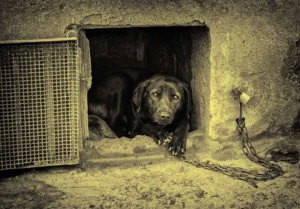

In the world of professional dog training, the pursuit of perfection is often framed as the ultimate goal. Trainers, behaviorists, and pet owners alike frequently strive for the "perfect" recall, the flawless agility run, or the impeccably behaved companion. However, beneath the polished surface of championship trials and obedient demonstrations lies the reality of the human-animal bond: a messy, complex, and often unpredictable journey. As we observe National Dog Training Month this January, a timely reminder from an unlikely source—tennis icon Roger Federer—suggests that success is not defined by perfection, but by how we navigate the inevitable failures that occur along the way.
The Reality of Coprophagia and the Trainer’s Struggle
For those living with dogs, behavioral challenges are a daily reality. Take, for instance, Maggie, a dog whose predilection for coprophagia—the consumption of feces—becomes particularly pronounced during the winter months. As temperatures plummet, backyard waste often transforms into "poopsicles," a seasonal delicacy that Maggie finds irresistible.
For the human primate, this behavior is, at best, repulsive. When a training session turns into a desperate race against a dog’s speed-eating habits, the frustration is palpable. Recently, a routine walk descended into such a scenario. Despite the command to "leave it," the dog’s speed outpaced the handler’s patience. The result was not a triumph of training, but a moment of personal breakdown, characterized by exhaustion, stress, and a lingering sense of failure.
This internal critique—the feeling that one is a "failed trainer"—is a common affliction in the community. It is a sentiment that contradicts the spirit of National Dog Training Month, an initiative championed by the Association of Professional Dog Trainers (APDT) to promote positive reinforcement (R+) as the gold standard for building communication, confidence, and a lasting bond between dogs and their owners.
The Federer Philosophy: Redefining Success
The shift in perspective came following an encounter with Roger Federer’s graduation speech. Federer, arguably the greatest tennis player in history, maintains a resume that includes 237 consecutive weeks as the world’s #1-ranked player and numerous major titles. Yet, upon closer statistical inspection, Federer’s dominance was built on winning only 54% of the points he played throughout his career.
This revelation serves as a profound metaphor for the dog training journey. If the "GOAT" of tennis barely wins more than half of his attempts, why do we hold ourselves to a standard of 100% perfection with our pets? Dog training is not a zero-sum game; there is no scoreboard, and our dogs are not our opponents. Yet, we often castigate ourselves for every missed cue or moment of frustration. The lesson here is clear: failure is not only inevitable, it is a component of mastery. Learning to pivot, recalibrate, and move forward after a setback is the true hallmark of a skilled trainer.
The Power of Positive Reinforcement: Beyond Quick Fixes
As the industry faces a surge in "quick-fix" solutions—such as board-and-train facilities that rely on aversive tools like electric collars—the importance of evidence-based positive reinforcement has never been greater. R+ is not merely a method; it is a transformative approach to husbandry.

A primary example of this is the daily administration of eye medication for Skip, another member of the canine household. Skip suffers from pannus, an immune-mediated eye disease that requires lifelong treatment with Optimmune ointment. Anyone who has attempted to apply ointment to a dog’s eye knows the difficulty; unlike liquid drops, ointments are invasive and, in this case, carry a mild stinging sensation.
Rather than resorting to physical restraint, the use of R+ and Chirag Patel’s "Bucket Game" transformed a potentially traumatic daily procedure into a cooperative interaction. By allowing the dog to signal when he is ready for the treatment and rewarding his participation, the stress of medical care is mitigated. This demonstrates that the "miracle" of R+ lies not in flashy tricks, but in the mundane, day-to-day management of our pets’ health and well-being.
Managing Behavioral Challenges: A Strategic Approach
The recent struggles with Maggie’s coprophagia provided an opportunity to apply this analytical, non-judgmental approach to training. Instead of reacting with frustration, the focus shifted to the "A-B-C" framework: Antecedent, Behavior, and Consequence.
By analyzing the context of the behavior, a new training protocol was developed. Maggie, who possesses a strong nose and high food motivation, is currently being trained to alert her handler when she locates waste. By treating her natural desire to sniff and investigate as a precursor to a "find it" game, the behavior is being redirected into a constructive, rewarded task. Once the alert is solidified, the handler will have a controlled method to manage the environment, turning a frustrating habit into an interactive game.
Implications for the Human-Animal Bond
The broader implication of this, especially during National Dog Training Month, is the necessity of "grace." Whether you are struggling with a complex behavioral issue or simply feeling overwhelmed by the demands of pet ownership, it is vital to remember that life is challenging.
When we observe others struggling with their dogs, we must resist the urge to judge. Instead, we should offer grace. We are all doing the best we can with the skills we possess at any given moment. By taking a breath, objectively assessing the situation, and focusing on the relationship rather than the "score," we can solve problems that initially seem insurmountable.
Update from the Farm: Medical Hurdles and Hope
Beyond the training ring, life on the farm has been marked by significant medical uncertainty regarding Skip. Recently, the household faced a harrowing few days after an initial veterinary assessment suggested a high likelihood of bladder cancer, given the dog’s symptoms of frequent, dilute urination and atypical bladder lining cells.

The subsequent days were filled with anxiety as the medical team conducted an ultrasound. Fortunately, the scan revealed no signs of a mass, effectively ruling out the primary cancer diagnosis. While the search for the underlying cause continues—with possibilities such as leptospirosis, a dangerous bacterial infection common in rural areas—the immediate panic has subsided. Skip is currently undergoing a course of Doxycycline as a precautionary measure while awaiting further blood panels to assess kidney function.
Professional Pursuits and Future Directions
Despite the personal challenges and a painful, persistent injury to the hand that has made daily tasks, including typing, quite difficult, the work continues. The publicity campaign for the upcoming novel, Away To Me, has been a significant undertaking. The author has participated in a series of podcasts—including Your Family Dog, Science Matters, and Behavior Buzzzzz—to discuss the nuances of animal behavior and the themes of the book.
Autographed copies of the novel remain available through Arcadia Books for those interested in supporting the project. Furthermore, as the release date of February 24th approaches, plans for a speaking tour in Wisconsin and Texas are currently underway. Interested readers are encouraged to check the official website for dates and event locations.
Conclusion: Embracing the Journey
As January draws to a close, the lessons of the month remain clear. We are all works in progress. Whether it is a dog learning to overcome a bad habit or a human learning to handle the stresses of life with grace, the process is defined by consistency, patience, and the occasional need to hit the reset button.
Skip remains as energetic and endearing as ever, a constant reminder of why we put in the work. As we move forward into the year, may we all find the strength to extend grace to ourselves and others, keeping our eyes on the goal of a stronger, more harmonious life with the animals who share our homes.