In the competitive and artistic world of professional dog grooming, few breeds demand as much technical precision—and offer as much creative reward—as the Bichon Frisé. Known for their cloud-like coats and cheerful dispositions, Bichons require a meticulous approach to maintain their iconic silhouette. However, the modern pet owner is increasingly seeking styles that balance breed-standard elegance with practical, low-maintenance daily care.
Renowned groomer and educator Blake Hernandez, known for his infectious energy and expert technique, has championed a "short and sassy" modification that caters to both the show ring’s standards and the home client’s busy schedule. Whether you are working with a pedigree show dog or a beloved curly-coated mixed breed, this versatile trim provides a polished, manageable aesthetic that is becoming a staple in high-end salons.
The Philosophy of the Modern Bichon Groom
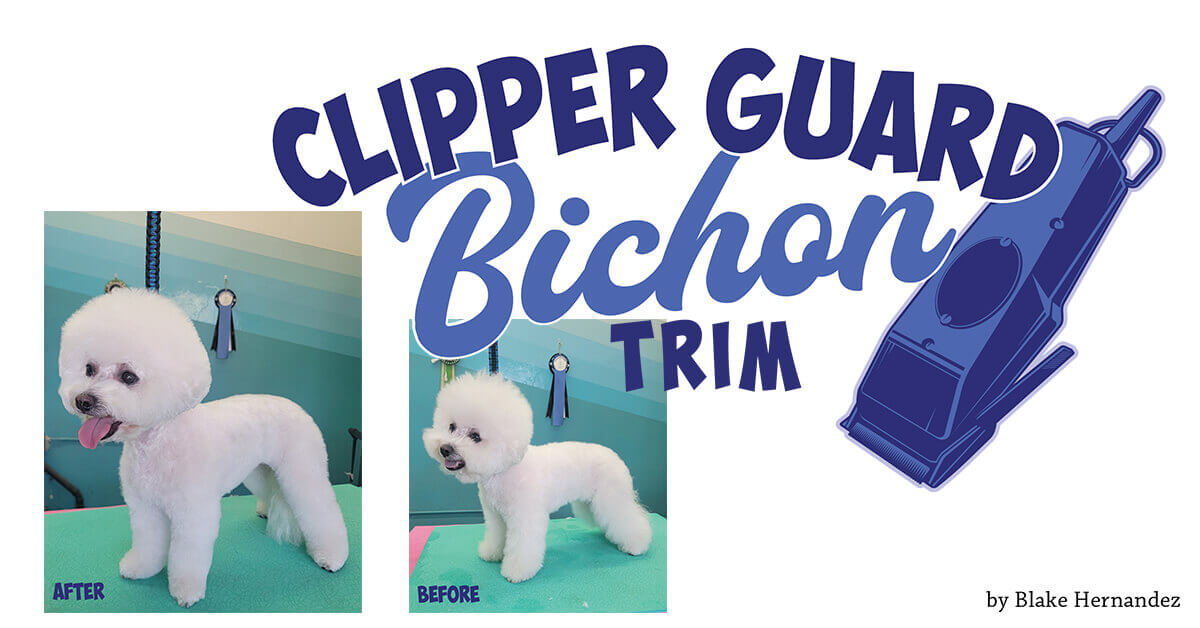
At the heart of this grooming style is the desire to achieve a rounded, approachable face while ensuring the body remains manageable. For the professional groomer, the challenge lies in maintaining the "Bichon look" while shortening the coat to a length that prevents matting and makes grooming intervals of six to eight weeks sustainable.
"Whether it’s a purebred show dog or a mixed mutt in drag, a round, cute face with a manageable body is a win with most pet owners," says Hernandez. This philosophy prioritizes the dog’s comfort and the owner’s lifestyle without sacrificing the structural beauty that defines the breed’s aesthetic appeal.

A Step-by-Step Chronology: Executing the Trim
To achieve this specific look, the process must be methodical, moving from the top line down to the fine details of the face.
Phase 1: Establishing the Body Silhouette
- The Top Line: Begin where the shoulder blades meet. For dogs on a six-to-eight-week grooming cycle, a 1/2" guard comb over a #30 blade is recommended to establish a consistent, clean top line.
- Ribs and Brisket: Carry the 1/2" length from the top line around the ribcage, carefully blending it underneath the brisket to ensure a seamless transition.
- The Throat Latch: Switch to a #5F blade in reverse. Starting at the Adam’s apple and working upward toward the throat latch, clear away excess bulk to define the neck.
Phase 2: Angulation and Leg Balance
- Rear Angulation: To showcase the dog’s natural movement, transition to a shorter length—typically a 1/4" blade—clipping from the pin bone down to the area behind the knee. This creates a visual "tuck" that highlights the dog’s rear angulation.
- Leg Volume: To provide balance to the shorter body, the legs should retain more volume. Use a 1" guard comb around the rear legs.
- Front Leg Continuity: Apply the same 1" guard length to the front legs to ensure a harmonious, balanced look from front to back.
Phase 3: Finishing Touches and Detailing
- Foot Precision: Bichon feet should be kept grounded. Scissor around them to create a perfectly round, tight "bevel" appearance that grounds the dog’s movement.
- Tail Management: With the tail held in its natural position over the back, trim away any stray hair that disrupts the visual center of the dog, ensuring the tail accentuates the silhouette rather than distracting from it.
Phase 4: Sculpting the Face
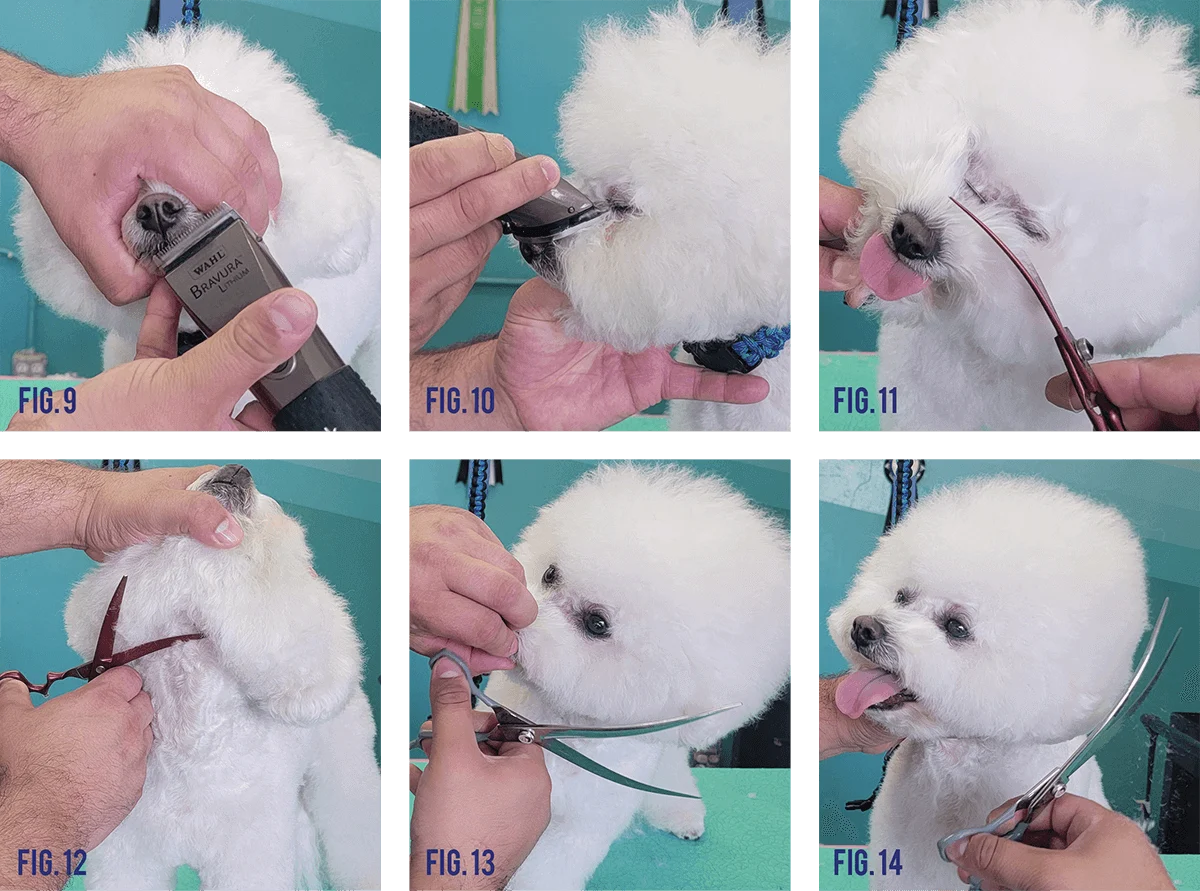
- Lip Grooming: Shave the top lip and carefully remove one or two lines of hair directly beneath the nose to create a clean, sharp look.
- The Stop: Use a #10 blade on the stop—the area between the eyes—to enhance the dog’s expression and make the eyes "pop."
- Eye Clarity: Comb the hair toward the eyes and trim at a 45-degree angle. This keeps the eyes clear and safe while maintaining the soft, circular shape of the face.
- Separating Head from Body: Utilizing a curved scissor in reverse, work into the throat latch area previously clipped to clearly separate the head from the body.
- Rounding the Head: Starting at the base of the head, shape a tight lip line and round out toward the ears. As you reach eye level, rotate the shears upward to complete the spherical shape. Repeat on both sides for symmetry.
Supporting Data: Why This Style Works
The effectiveness of this trim is rooted in its versatility. While traditional Bichon cuts can be high-maintenance, requiring daily brushing and professional attention every four weeks, this modified version extends the life of the haircut.

The shorter body length (1/2") significantly reduces the probability of tangles and mats, which are the primary enemies of the curly-coated breed. By using a 1" guard on the legs, the groomer maintains the "fluffy" appeal that owners love while making the overall care routine less taxing for the pet. Furthermore, because this technique is highly adaptable, it serves as an excellent "gateway" style for curly-coated mixed breeds, allowing owners of non-purebreds to enjoy the same aesthetic benefits of a professional Bichon clip.
Industry Perspective: The "Mr. Approachable" Standard
Blake Hernandez, the architect of this technique, has become a prominent voice in the grooming industry. His approach—characterized by high-energy education and technical excellence—emphasizes that grooming is as much about the human-canine relationship as it is about the tools used.

"Before I had any nice Bichons to practice on, I had tons of curly mixed breeds," Hernandez notes. "I would practice and practice on all sorts of mixes, as long as I could make them fluffy. This trim works on mixed breeds just as well as purebreds."
Hernandez’s influence extends beyond the salon chair. As the 2020 Barkleigh Honors Seminar Speaker of the Year and a featured expert in the Netflix documentary series DOGS, his methods are widely regarded as setting a standard for modern, functional grooming. His commitment to the craft is underscored by his work with Groomsource and his advocacy for high-quality, professional-grade equipment.

Implications for the Grooming Industry
The shift toward "shorter and sassier" styles has profound implications for salon profitability and client retention.
- Increased Client Satisfaction: By offering a style that looks professional for two months rather than one, groomers increase client satisfaction and trust.
- Professional Development: For newer groomers, this style acts as an essential training tool. Mastering the balance of blade lengths and scissor angles on a Bichon or a curly-coated mix provides the foundational skills necessary for more complex breed standards.
- Standardization of Care: The move toward manageable trims encourages owners to bring their dogs in for consistent, regular professional maintenance rather than sporadic, emergency-basis grooming to deal with matted, overgrown coats.
As the industry continues to evolve, the demand for styles that marry form and function will only grow. By adopting techniques that focus on structural balance, clear lines, and long-term coat health, professional groomers can ensure that every dog—regardless of breed—leaves the salon looking like a champion.

Whether you are a seasoned professional or an aspiring stylist, this Bichon modification serves as a testament to the fact that great grooming is never about just following a rulebook; it is about understanding the geometry of the dog and applying technical skill to highlight the unique charm of every pet.