
CHICAGO, IL — The landscape of animal welfare in the Chicago metropolitan area is facing an unprecedented strain, one that local advocates argue is fueled by a cycle of irresponsible retail practices. Leading rescue organizations, including the House Rabbit Society of Chicago (HRS Chicago), the Red Door Animal Shelter, and It’s All About The Paws (IAATP), have joined forces to issue a stark ultimatum: Petland must end the sale of live rabbits.
This campaign is not merely a philosophical disagreement over the ethics of pet retail; it is a response to a series of high-stakes, resource-draining hoarding cases that have pushed the region’s rescue infrastructure to the brink of collapse. For the professionals and volunteers on the front lines, the pattern is clear: retail rabbit sales are serving as the "patient zero" for a chain reaction of abandonment, neglect, and systemic overcrowding.
The Anatomy of a Crisis: Main Facts
The core argument against retail rabbit sales centers on the "impulse purchase" model. Unlike dogs or cats, which are often subject to stricter adoption vetting, rabbits are frequently sold in retail environments to families who are ill-prepared for their complex needs.
The consequences are predictable and devastating:
- Mis-sexing: Stores frequently sell rabbits in pairs without accurate gender identification, leading to "surprise" litters that quickly spiral into dozens of animals.
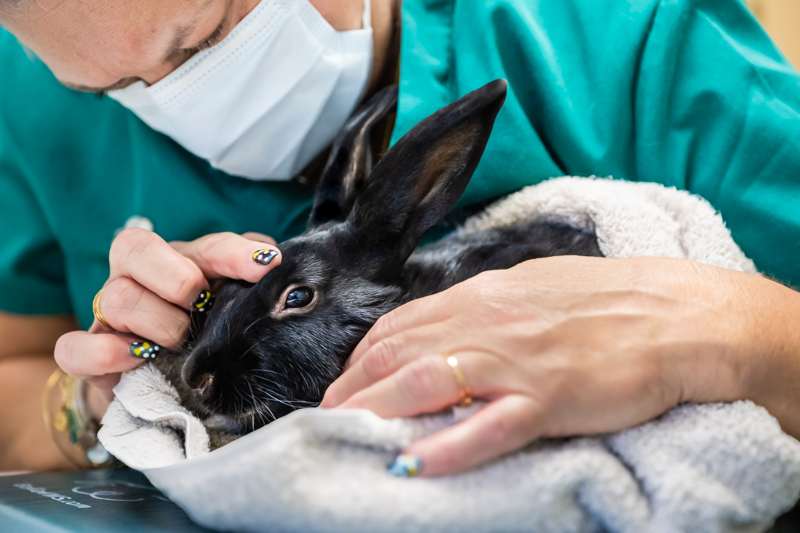
- Medical Crises: Rabbits are exotic pets that require specialized veterinary care. Many owners, unprepared for the costs, surrender these animals the moment a medical issue arises.
- Resource Depletion: When a hoarding situation occurs, the burden falls on non-profit shelters. A single rescue effort can cost thousands of dollars in emergency spay/neuter surgeries, vaccinations, and housing, draining funds that would otherwise support general community welfare.
Chronology of Neglect: The Schaumburg Cases
The demand for change is underscored by two specific, harrowing hoarding incidents in Schaumburg, both of which were traced back to the same retail origin.
The 2021 Hotel Room Intake
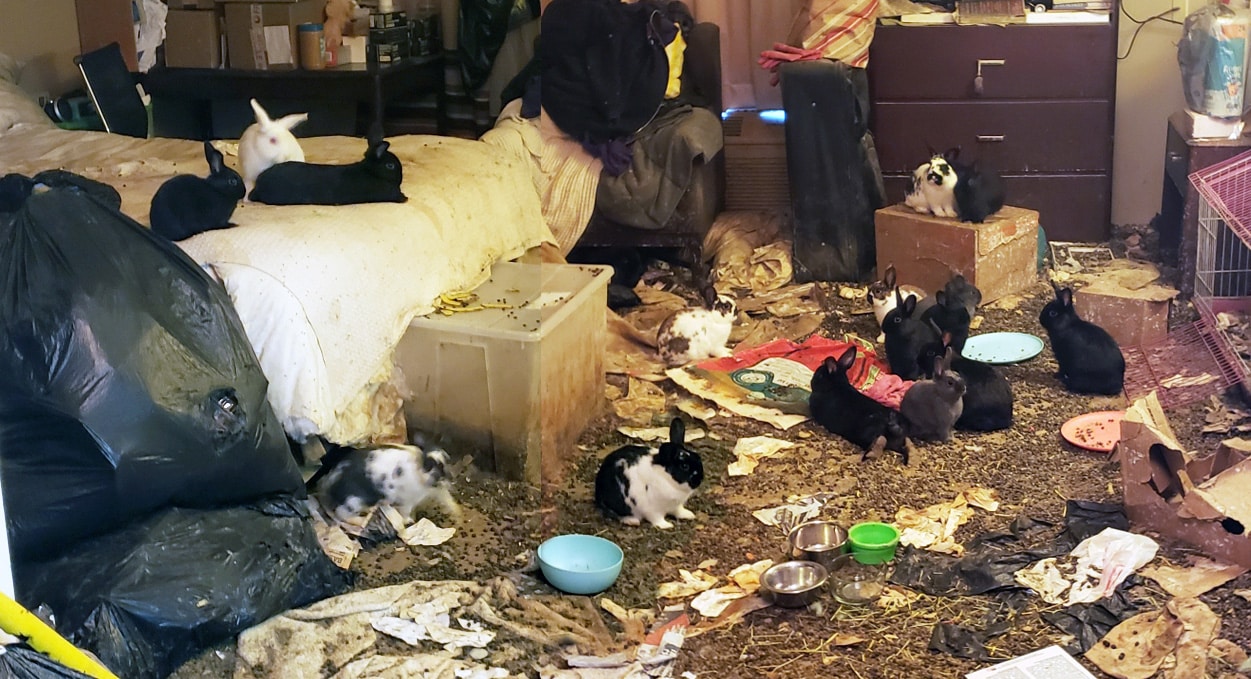
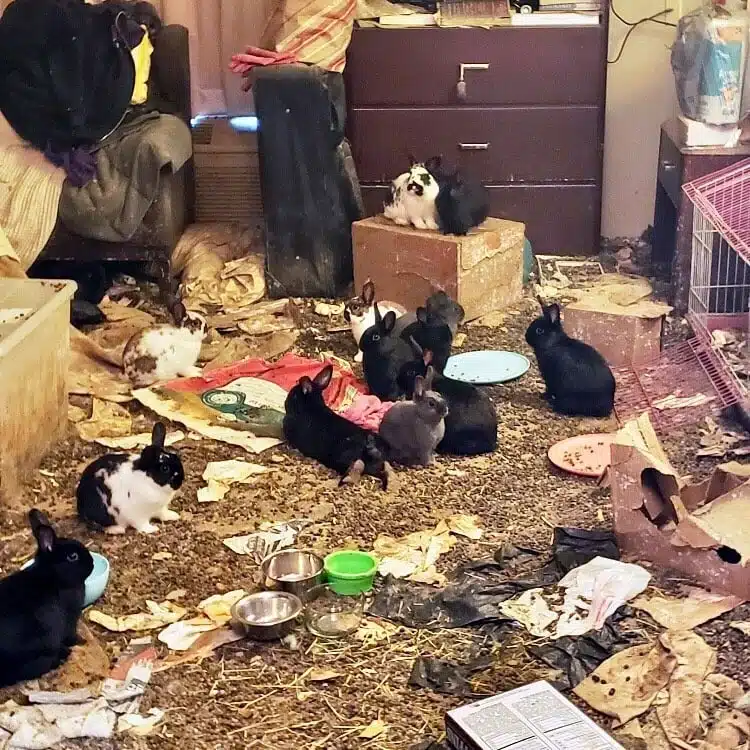
In May 2021, local animal welfare responders were called to a long-stay hotel room in Schaumburg. What they discovered was a scene of severe neglect: 47 rabbits living in a cramped, debris-filled environment. Of the 47 animals, 15 were pregnant. The responders, forced to navigate the room in full protective gear, found the rabbits in various states of distress.
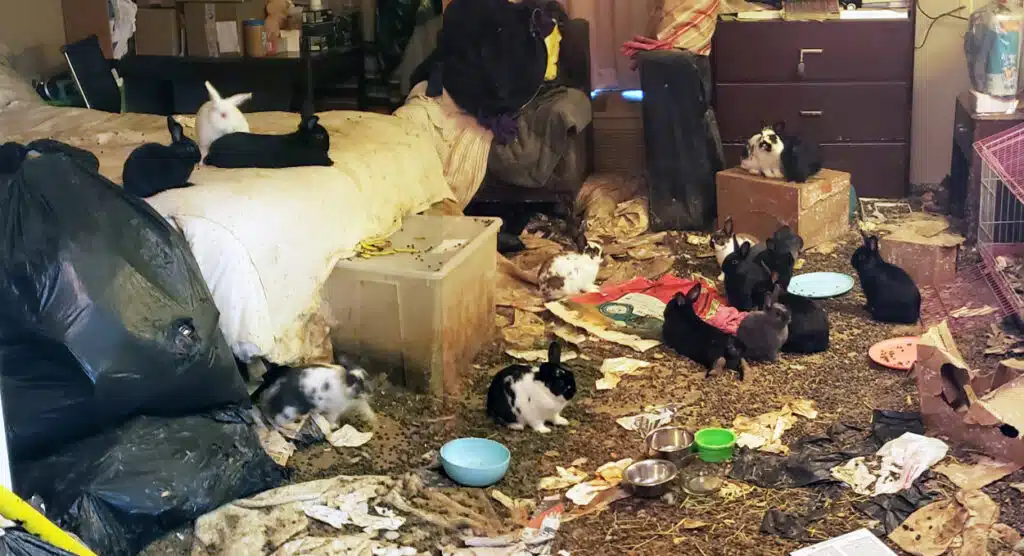
The division of labor was immense. The Red Door Animal Shelter took in 22 of the rabbits, incurring medical costs exceeding $7,000, while DuPage County Animal Services absorbed 25. According to reports from the Red Door staff, the caretaker of these animals stated that the entire population had begun with just two rabbits purchased from Petland in Hoffman Estates.
The 2023 Single-Family Home Intake
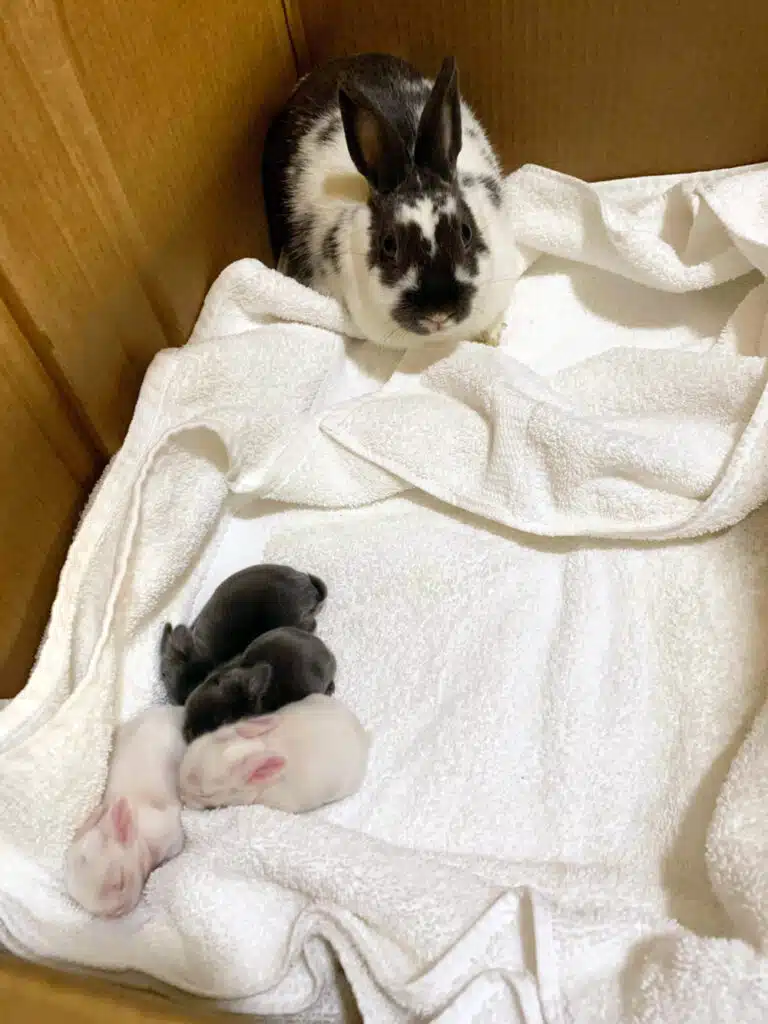
Just two years later, in July 2023, the cycle repeated itself. IAATP responded to a call regarding a single-family home in Schaumburg. Upon arrival, they discovered a population of more than 40 rabbits. Within 24 hours of the initial assessment, the team—working in conjunction with local animal control—successfully removed 29 rabbits, including several newborns.
Erika Seibert, founder of IAATP, confirmed that during the investigative process, the owners admitted the original pair was purchased from the same Petland location in Hoffman Estates. This incident required a massive, coordinated effort to find placement for the animals, involving the HRS Wisconsin, Hoopy Haven Rabbit Rescue, and the Lost Woods Animal Sanctuary.
Supporting Data and the "Downstream" Effect
The phenomenon witnessed in Schaumburg is not an outlier; it is a systemic issue within the pet retail industry. When an animal is purchased on a whim, the buyer often lacks the fundamental knowledge of rabbit biology.
The Cost of Retail Rabbit Sales
- The Multiplication Factor: A pair of unaltered rabbits can produce dozens of offspring in a single year. When stores misidentify the sex of the animals, they effectively sell an "exponential growth" kit to an unsuspecting consumer.
- Veterinary Financial Barriers: Rabbits require "rabbit-savvy" veterinarians. Standard pet clinics often lack the expertise to treat them, and specialized care is significantly more expensive than care for dogs or cats. When a rabbit falls ill, the financial burden often leads owners to abandon the animal rather than seek treatment.
- Shelter Saturation: Rescues in the Chicago area report that their waitlists for owner surrenders are at an all-time high. This means that when a crisis like the Schaumburg hoarding cases occurs, there is almost no room left to take in other animals in need, creating a bottleneck that threatens the lives of rabbits across the state.
Voices from the Front Lines
The frustration among animal welfare professionals is palpable. They see the same cycle repeating, often with the same retail point-of-origin.
Rachael Sanders, Director of the House Rabbit Society of Chicago, summarizes the situation: "Petland is a major source of rabbits who later end up abandoned or in crisis. We regularly see mis-sexed pairs adopted from stores that lead to repeated litters. While Petland profits, rabbits suffer."
Toni Greetis, Vice President of the Red Door Animal Shelter, emphasizes the logistical nightmare such cases create. "We managed back-to-back mass-intake crises in Schaumburg—each beginning with owner-reported Petland-origin pairs—stretching volunteers, foster space, and medical budgets to the breaking point," Greetis stated.
These testimonials highlight a fundamental disconnect: while the retailer views the rabbit as a commodity to be sold, the rescue organizations view the rabbit as a complex, living creature whose welfare requires long-term commitment.
Implications and the Call for Reform
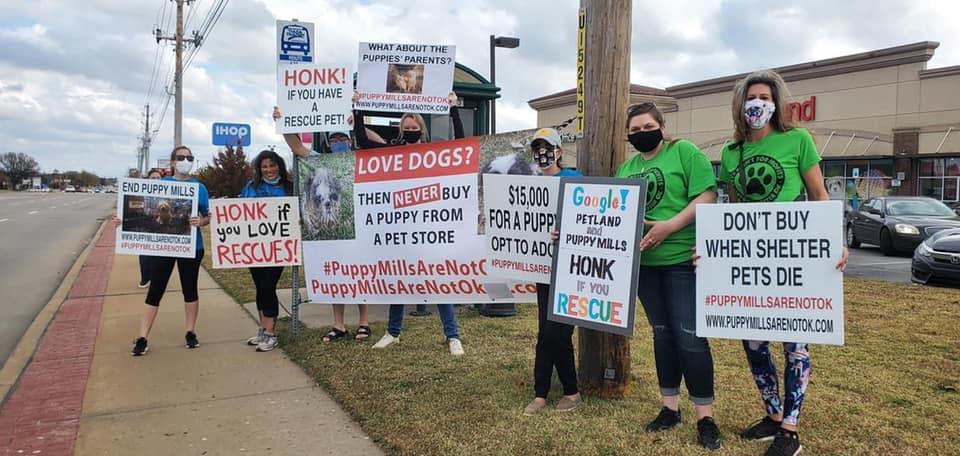
The movement to stop rabbit sales at Petland is part of a broader shift in the American pet industry. Major retailers like Petco and PetSmart have moved away from selling live animals in favor of hosting adoption events for shelter animals. This model encourages the adoption of animals that are already in need of homes rather than contributing to the commercial breeding pipeline.
Why Change is Necessary
- Humane Standards: The current retail model treats rabbits as shelf-stable inventory, which is inherently incompatible with the needs of the species.
- Public Safety and Health: Unchecked hoarding situations pose significant health risks to the animals involved and, in some cases, the human occupants of the homes.
- Community Responsibility: By ending live sales, Petland has the opportunity to pivot to a model that supports, rather than hinders, local rescue efforts.
How the Public Can Help
Advocates are calling for immediate public action to exert pressure on the retailer. A petition hosted on Change.org has become a focal point for those looking to support the call for humane reform. Beyond signatures, advocates emphasize the importance of education:
- Adopt, Don’t Shop: Potential rabbit owners are encouraged to visit local rescues where rabbits are already spayed/neutered and behaviorally assessed.
- Support Local Rescues: The financial burden of these hoarding cases is immense. Donations to organizations like the House Rabbit Society or Red Door Animal Shelter go directly toward the medical care of animals rescued from these situations.
- Spread Awareness: Understanding the "mis-sexing" issue and the reality of rabbit care is vital to preventing the impulse purchases that feed the cycle.
Conclusion: A Path Toward Humane Retail
The evidence provided by the Chicago-area rescues is a sobering reminder that the "pet store" experience is not benign. The proximity of the two Schaumburg hoarding cases, both linked to the same retailer, serves as a microcosm of a national issue.
As the Chicago community continues to rally around the message that "rabbits are not products," the pressure on Petland to modernize its business practices grows. For the volunteers who spend their nights and weekends cleaning cages in hotel rooms and nursing abandoned litters back to health, this is not just a campaign—it is a fight for the humane treatment of animals who have no voice of their own.
The data, the stories, and the collective expertise of the rescue community all point to one solution: ending the sale of rabbits in retail stores. Until that happens, the cycle of crisis in Chicago is unlikely to break.
Need help with a rabbit?
If you find yourself overwhelmed with the care of a rabbit, please reach out to your local municipal shelter or a recognized rabbit rescue organization. Abandoning animals outdoors is not a solution and often results in a painful death for the animal. Reach out for resources on surrendering, fostering, or finding low-cost veterinary care before a situation reaches a breaking point.