The Bichon Frise is an icon of the grooming world, synonymous with the plush, rounded aesthetics of a living stuffed animal. Yet, the breed’s high-maintenance coat often presents a challenge for both professional groomers and pet owners. Achieving that classic "sassy" look—a balance between a perfectly round face and a manageable, practical body—requires more than just scissors and clippers; it demands an understanding of anatomy, texture, and structural balance.
In this comprehensive guide, we break down the step-by-step techniques developed by industry expert Blake Hernandez. Whether you are working on a championship-level purebred show dog or a beloved curly-coated mixed breed, these methods offer a blueprint for creating a polished, low-maintenance, and irresistibly cute finish.
The Philosophy of the Modern Bichon Modification
The "sassy" Bichon modification is designed to hit the sweet spot of modern pet grooming: it is visually striking while remaining functional for the dog’s lifestyle. Many clients desire the iconic Bichon look but struggle with the daily upkeep of a full-coat maintenance routine. By shortening the body length and focusing on precision shaping around the head and legs, groomers can provide a look that is both "show-ready" in silhouette and "salon-practical" for the owner.
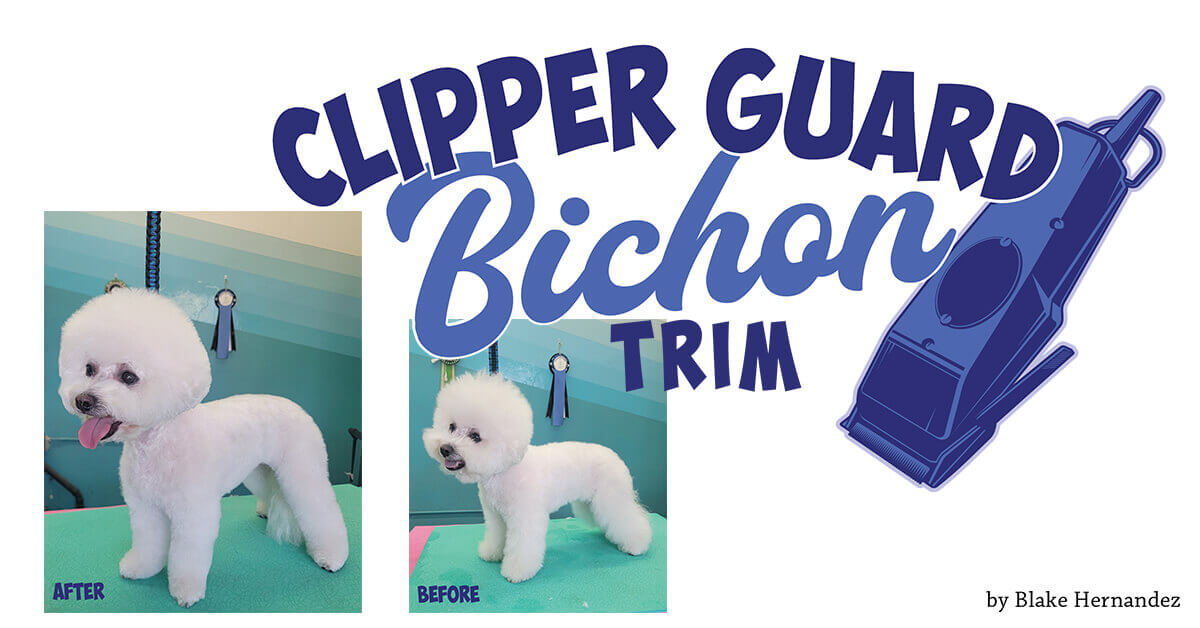
This trim is particularly versatile. As Hernandez notes, the technique is not restricted to the Bichon breed alone. Because the foundational skills rely on creating fluff and volume through strategic clipping and scissoring, this style works exceptionally well on various curly-coated mixed breeds, provided the groomer maintains a focus on the structural roundness that defines the Bichon aesthetic.
Chronology of the Groom: A Step-by-Step Execution
To achieve a professional finish, consistency and order are paramount. Follow this chronological workflow to ensure a balanced, symmetrical result.
Phase 1: Setting the Foundation
1. The Top Line: Begin your work where the shoulder blades meet. This is the anchor point for the rest of the body. For clients on a standard six-to-eight-week grooming rotation, a 1/2” guard comb over a #30 blade on the top line is ideal. It provides enough length to look soft but short enough to prevent matting between appointments.

2. The Body Contour: Transition that same length around the ribs and underneath the brisket. Smooth transitions here are critical to avoid "shelfing" the coat.
3. The Throat Latch: Switch to a #5F blade and use it in reverse, moving from the Adam’s apple up toward the throat latch. This creates a clean, tight transition that helps separate the head from the body, emphasizing the neck’s length.
Phase 2: Structural Sculpting
4. Defining the Rear Angulation: To ensure the dog doesn’t look like a solid block of hair, you must define the rear assembly. Clip from the pin bone down to behind the knee using a shorter length—a 1/4” guard is recommended—to visually "set back" the rear and create a more athletic silhouette.

5. Leg Balance: Counteract the shorter rear by adding volume to the legs. Using a 1” guard all around the rear leg adds necessary substance. Repeat this process on the front legs to maintain total body continuity.
6. Feet and Tail: For the feet, do not be afraid to keep them grounded. Scissor around the paw pads to shape a tight, round foot with a clean bevel. When addressing the tail, hold it over the back and trim away any stray hairs that draw the eye away from the center of the dog, ensuring the tail accentuates the back line rather than interrupting it.
Phase 3: The "Signature" Face
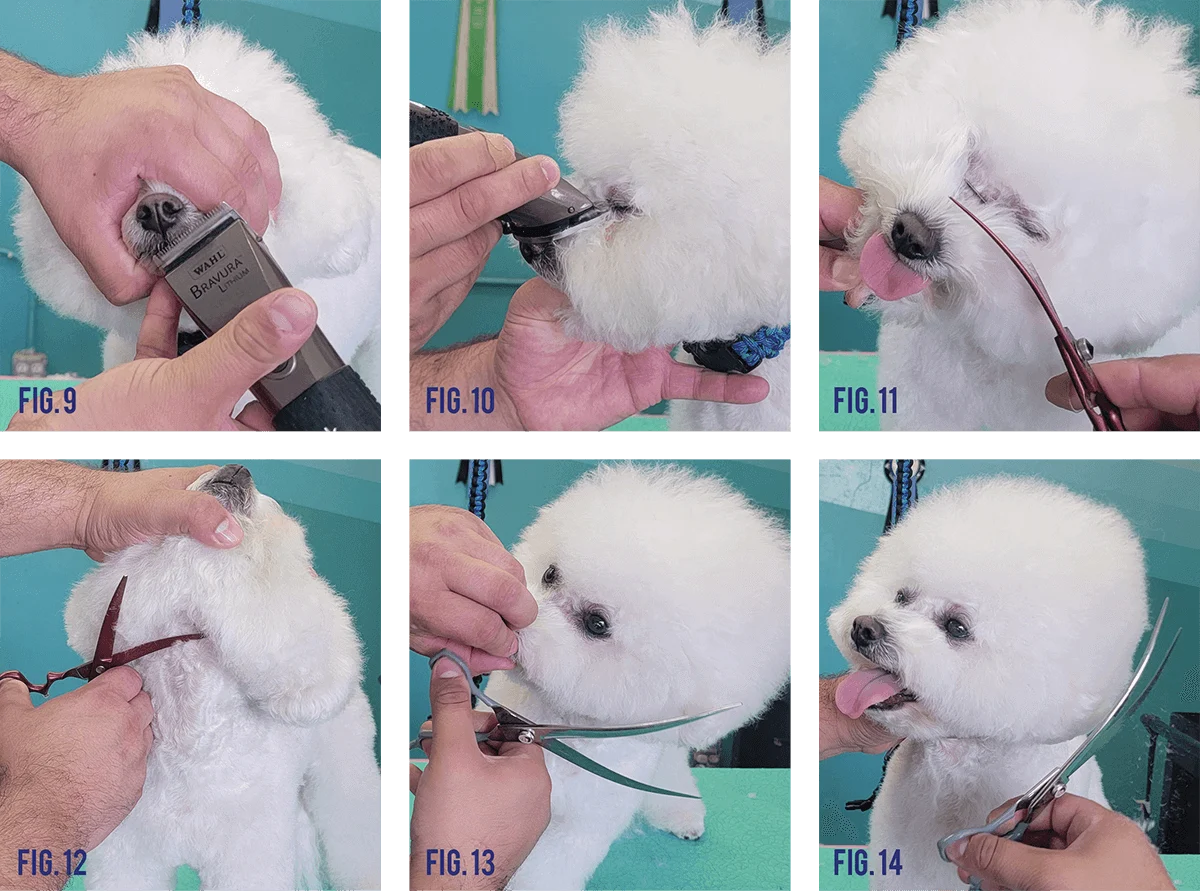
7. Muzzle Precision: Shave the top lip and carefully trim one or two lines of hair on the bottom lip, just beneath the nose. This cleans up the expression and keeps the face hygienic.

8. Eye Exposure: Clip the stop (the area between the eyes) with a #10 blade. This is a crucial step; by clearing this area, you allow the eyes to "pop," giving the dog that soulful, alert expression so characteristic of the breed.
9. The Rounded Crown: Comb the facial hair toward the eyes and trim at a 45-degree angle to clear the vision. Use a curved scissor in reverse at the throat latch to finalize the separation of the head from the body. Starting at the bottom, shape a tight lip and round outward toward the ears. Once you reach eye level, turn your scissors upward to create a perfect circle from every angle.
Supporting Data: Why This Method Works
The effectiveness of this trim lies in the geometric approach to grooming. By using specific blade lengths to create contrast (e.g., the 1/2” body vs. the 1” leg), the groomer creates an optical illusion of depth.

- Longevity: By utilizing guard combs rather than hand-stripping or heavy thinning, the coat maintains a consistent texture that is easier for owners to brush at home.
- Accessibility: The shorter ear length is a key "quality of life" feature. Long, heavy ears on a Bichon are prone to mats and can harbor moisture; this modification keeps the ears light and manageable.
- Versatility: As Hernandez points out, the "fluff-factor" is the primary variable. As long as the groomer can maintain volume, the technique can be applied to Poodle mixes, Doodles, or any breed with similar coat density.
Official Perspectives: The Industry Standard
The rise of the "sassy" Bichon look aligns with a broader shift in the pet grooming industry toward "functional aesthetics." Professional groomers are increasingly focused on the "Groomsource" philosophy—education-first approaches that prioritize the dog’s comfort without sacrificing the high standards of breed-standard silhouettes.
Blake Hernandez, a 2020 Barkleigh Honors Seminar Speaker of the Year, emphasizes that grooming is as much about the "energy" of the stylist as it is the technical skill. His work, featured on the Netflix series DOGS, highlights the importance of keeping the grooming experience positive and manageable. His approach serves as a bridge between the rigid, often unattainable standards of the show ring and the practical realities of the modern pet owner.
Implications for Future Grooming Practices
The move toward these standardized, repeatable modifications has significant implications for the industry:

- Increased Client Satisfaction: When owners receive a dog that is both aesthetically pleasing and easy to maintain, they are more likely to commit to a consistent, six-to-eight-week grooming schedule. This drives higher retention rates for salons.
- Professional Development: For newer groomers, this method provides a clear, logical sequence that builds confidence. By mastering these 14 steps, a groomer learns the fundamentals of angles, volume, and blade usage that can be applied to nearly any drop-coat or curly-coated breed.
- Animal Welfare: By keeping the face, eyes, and throat latch clear, this trim promotes better hygiene. Reducing the density of the coat in high-friction areas—like the throat and behind the knees—also helps prevent painful matting, which is a major welfare concern in long-haired breeds.
In conclusion, the "sassy" Bichon modification is a testament to the fact that you do not have to sacrifice style for utility. Through disciplined technique and a keen eye for balance, any groomer can elevate their service, ensuring that the pets in their care look like stars while feeling comfortable and well-maintained. Whether you are a seasoned professional or a student of the craft, adopting these systematic steps will undoubtedly refine your work and leave your clients—both two-legged and four-legged—delighted.