For the dedicated groomer, the Bichon Frise represents the quintessential canvas. Known for their cloud-like coats and cheerful dispositions, these dogs require a balance of technical precision and artistic flair. Whether you are prepping a purebred for the show ring or styling a curly-coated mixed breed for a client looking for low-maintenance elegance, the "short and sassy" modification has become a gold standard in modern grooming.
In this comprehensive guide, we explore the methodology behind this popular look—a style that favors a manageable body while maintaining that signature, adorable round face.
Main Facts: The Philosophy of the Short Modification
The goal of this specific style is to maximize cuteness while minimizing daily maintenance for the pet owner. Most clients operate on a six-to-eight-week grooming cycle, and this cut is specifically engineered to look just as good at the end of that cycle as it does on the day of the appointment.
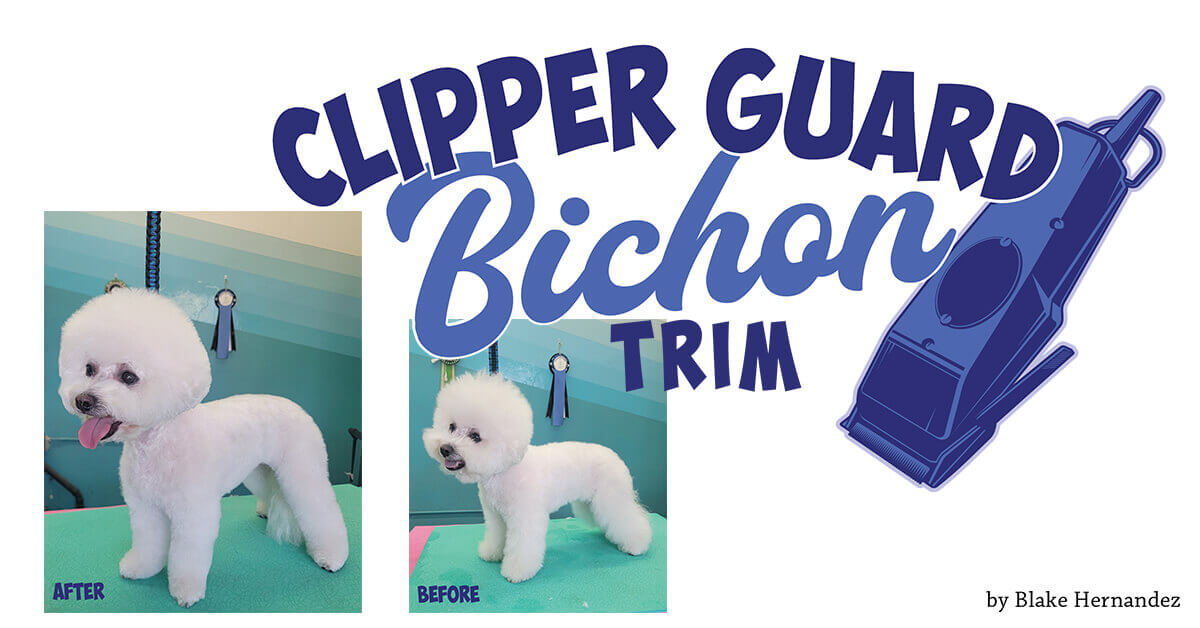
The "Short and Sassy" modification is not just about aesthetics; it is about structural balance. By clipping the body shorter, the groomer creates a silhouette that highlights the dog’s natural movement and anatomy. The round, "teddy bear" head provides the necessary softness to contrast with the crisp, clean lines of the body, creating a look that is both professional and approachable.
Chronological Workflow: A Step-by-Step Technical Guide
Achieving this look requires a disciplined approach. Follow these professional steps to ensure consistency and quality.
Phase 1: Setting the Foundation
1. The Top Line: Begin where the shoulder blades meet. For a six-to-eight-week rotation, a 1/2" guard comb over a #30 blade is recommended. This provides enough length to look soft but enough precision to maintain shape.
2. The Body Core: Carry this length around the ribs and underneath the brisket. Ensure the transition is seamless to avoid "steps" in the coat.
3. The Throat Latch: Switch to a #5F blade and work in reverse, moving from the Adam’s apple up to the throat latch. This area requires a clean finish to properly frame the head.

Phase 2: Defining Angulation and Balance
4. Rear Angulation: To accentuate the dog’s structure, use a shorter length—typically 1/4"—clipping from the pin bone down to behind the knee. This creates a subtle taper that mimics the dog’s natural muscular structure.
5. Leg Styling: To balance the shorter body, the legs should remain longer. A 1" guard comb is ideal for the rear legs, with the front legs matched for total continuity.
6. The Feet: Bichons benefit from traditional round, beveled feet. Keep the hair down and use your shears to create a tight, circular bevel that looks tidy without appearing overly "poodly."
Phase 3: The Finishing Touches
7. Tail and Detail: With the tail held in its natural position over the back, trim away any stray hairs that disrupt the silhouette.
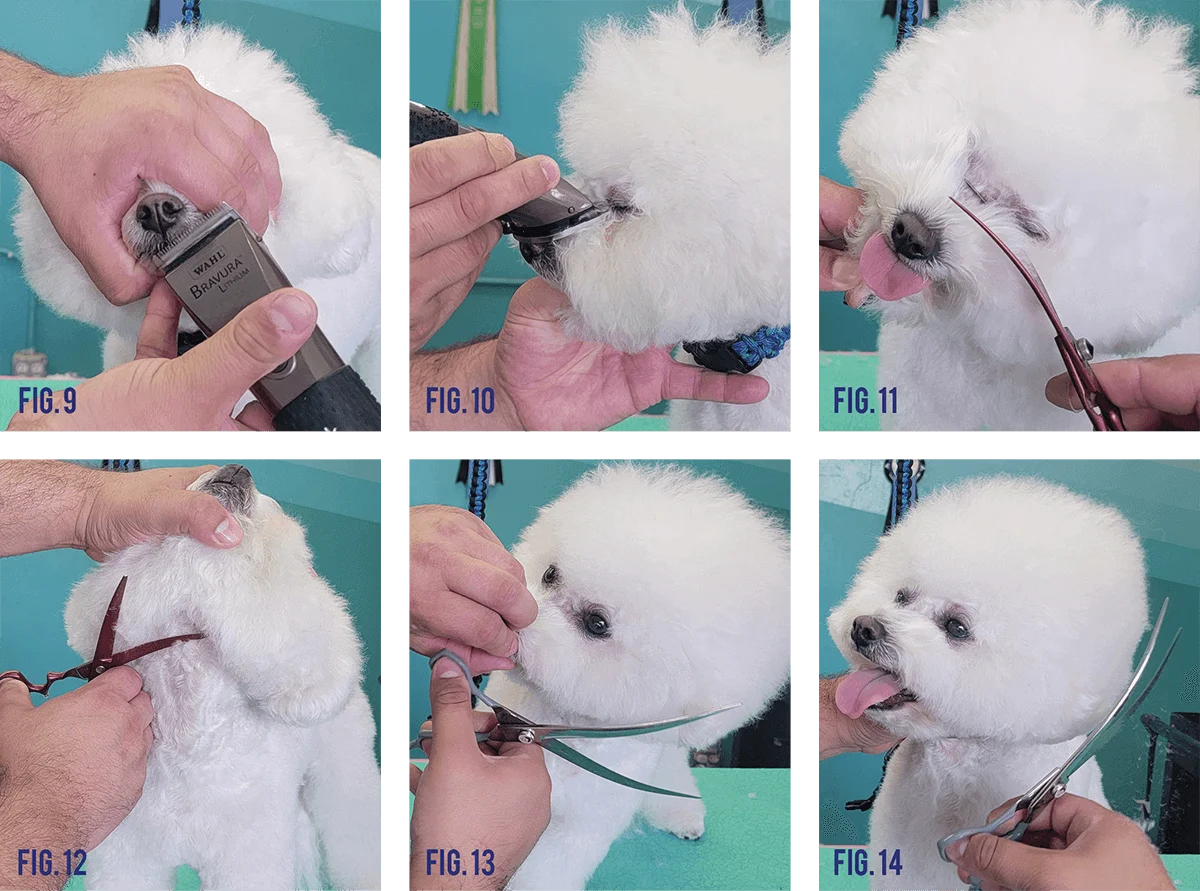
8. The Face: This is where the personality shines. Shave the top lip and carefully clear one or two lines of hair on the bottom lip just beneath the nose.
9. Eye Definition: Clip the "stop" with a #10 blade. This simple maneuver makes the eyes pop and removes the "hidden" look that often plagues long-coated Bichons.
10. The 45-Degree Angle: Comb the hair toward the eyes and trim at a 45-degree angle. This keeps the hair out of the eyes while maintaining a soft, rounded appearance.
11. Sculpting the Head: Use a curved shear in reverse at the throat latch to separate the head from the body. Starting from the bottom, shape a tight lip line and round out toward the ears, turning the scissors upward at eye level to ensure a perfectly spherical head from every angle.
Supporting Data: Why This Style Works
The versatility of this cut is its greatest asset. While originally designed for the Bichon Frise, the techniques employed here—the guard comb transitions, the reversed blade work on the throat, and the beveled feet—are universally applicable to many curly-coated breeds, including Poodle mixes (Doodles) and Bedlington Terrier crosses.

The use of specific blade lengths (1/2" for the body vs. 1" for the legs) provides a "weighted" look that prevents the dog from appearing top-heavy. By keeping the ears shorter and more manageable, groomers also address the common owner complaint of matting and debris collection in the ear leather, making this a functional style as well as a beautiful one.
Professional Perspectives: Insights from Blake Hernandez
Blake Hernandez, a renowned industry expert and 2020 Barkleigh Honors Seminar Speaker of the Year, emphasizes that practice is the only path to mastery. Before he became a go-to groomer for high-end Bichons, he honed his skills on a variety of curly-coated rescues.
"I would practice and practice on all sorts of mixes," Hernandez notes. "As long as I could make them fluffy, I could apply the principles of shape and balance." Hernandez’s approach is defined by an outgoing, approachable energy, which he believes is as important as the haircut itself. His work on the Netflix series DOGS helped bring the technical nuances of professional grooming into the mainstream, proving that a well-groomed dog is a happier, more comfortable companion.

Implications for the Grooming Industry
The shift toward "manageable, sassy" styles represents a broader trend in pet care. Owners are increasingly time-poor and prioritize styles that reduce the frequency of home brushing while still maintaining the "pet aesthetic" that the Bichon breed is famous for.
1. Salon Efficiency
By adopting standardized workflows like the one detailed above, salons can increase their throughput without sacrificing quality. When every stylist in a shop follows a set protocol for blade usage and scissoring angles, the salon’s output becomes consistent, leading to higher client retention.
2. Client Education
This style also serves as a pedagogical tool for groomers. It allows the stylist to explain to the owner why certain lengths are chosen (e.g., "The 1" guard on the legs provides balance to the 1/2" body"). This builds trust and positions the groomer as a consultant rather than just a service provider.

3. Sustainability and Maintenance
The "short and sassy" cut acknowledges the reality of the owner’s lifestyle. By keeping the face clear and the feet beveled, the dog remains cleaner for longer, reducing the "gunk" buildup around the eyes and paws. This is a win-win for both the pet’s health and the owner’s wallet.
Conclusion
The modern Bichon modification is a blend of geometry and artistry. By following a structured approach—from the initial top line clip to the final, critical scissoring of the head—groomers can achieve a professional finish that satisfies the owner’s need for convenience and the dog’s need for comfort. Whether you are an industry veteran or an apprentice just starting your journey, mastering these foundational techniques is the key to elevating your craft and ensuring that every Bichon that leaves your table looks as sassy as they feel.