In the rural expanse of Warren and Washington Counties, a quiet crisis persists beneath the surface of everyday life. It is a crisis measured in the thousands—a population of stray and feral cats struggling to survive in the harsh Northeastern climate. At the heart of the effort to mitigate this struggle is Deborah Oligny, director of the North Country Initiative (NCI), whose team operates as the region’s frontline defense against feline overpopulation and neglect.
Through a combination of medical intervention, community outreach, and persistent advocacy, Oligny and her team are transforming the landscape of animal welfare, one rescue at a time. While the task is gargantuan, the individual stories of survival—like those of two recent feline arrivals, Rubble and Rocco—serve as a poignant reminder of why the work continues despite limited resources and overwhelming demand.
Main Facts: A Constant Battle Against Overpopulation
At any given moment, the NCI facility is a hive of activity, housing dozens of cats in various stages of rehabilitation. However, the true scale of the organization’s work extends far beyond the walls of the shelter. Oligny’s team is actively managing, monitoring, and providing medical support for as many as 15 distinct feral colonies scattered across Warren and Washington Counties.
The "colony" model of management is essential in these rural regions. Unlike urban settings where animal control may be highly centralized, the North Country relies on a patchwork of volunteer networks and dedicated nonprofit organizations. NCI focuses on the Trap-Neuter-Return (TNR) method, a scientifically backed approach that stabilizes feral populations by preventing further breeding, while simultaneously improving the health and welfare of the existing cats.
"The need for support in these areas remains significant," Oligny notes. "We aren’t just taking in kittens; we are working with complex ecosystems of animals that have been left to fend for themselves for generations."
Chronology: The Journey from Crisis to Care
To understand the impact of NCI, one must look at the trajectory of individual rescues. The stories of Rubble and Rocco provide a clear timeline of the organization’s operational workflow: intake, stabilization, medical intervention, and socialization.
The Case of Rubble
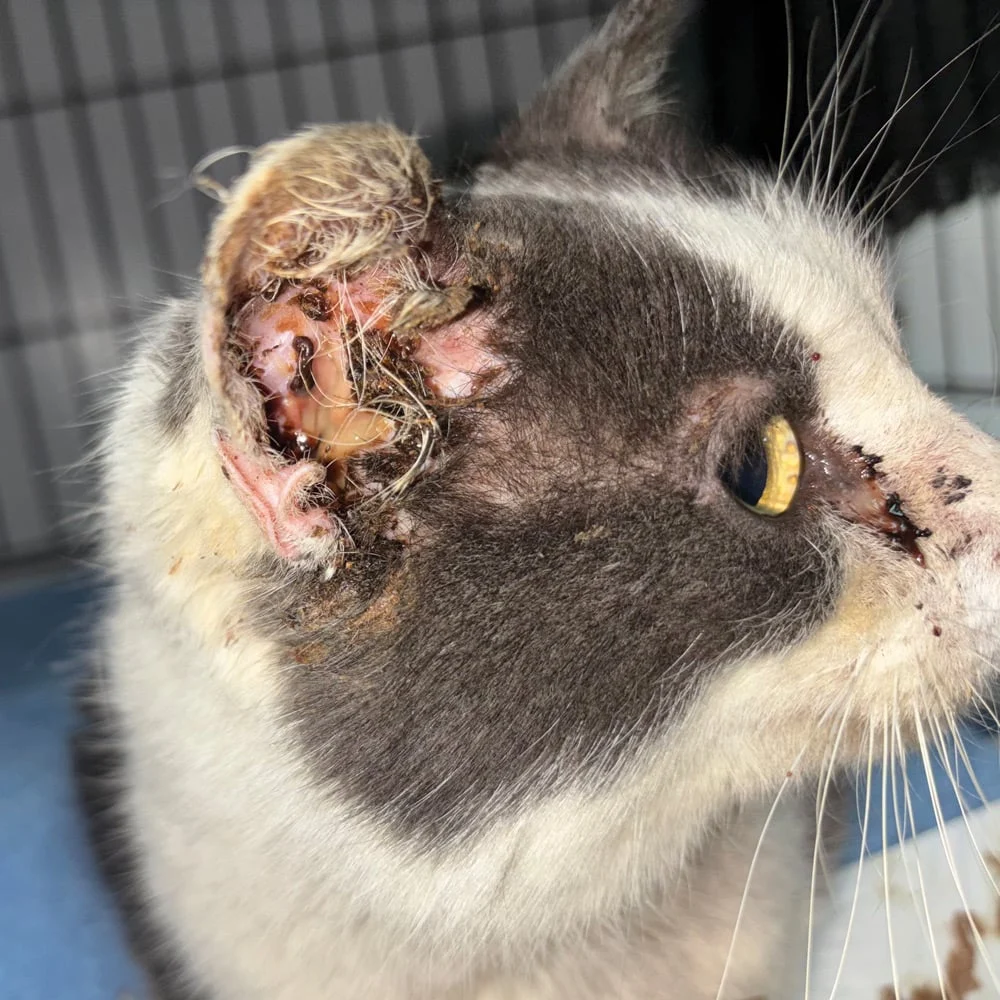
Rubble’s journey began in late autumn, when he was discovered as a stray in a high-density colony. He was suffering from a severe, neglected ear infection that had progressed to the point of rupturing his eardrum.
- Phase 1: Intake and Triage. Upon arrival, Rubble was clearly in pain, exhibiting signs of chronic illness and malnutrition. NCI staff immediately initiated a rigorous medical protocol, including aggressive antibiotic treatment and pain management.
- Phase 2: Medical Rehabilitation. Over the course of four weeks, Rubble remained in a restricted recovery ward. The infection, which would have likely been fatal if left untreated, was meticulously managed by the veterinary team.
- Phase 3: TLC and Socialization. Once the medical crisis passed, the focus shifted to behavioral rehabilitation. Rubble, who had spent his life in fear, required consistent human interaction to learn that he was safe.
- Phase 4: Readiness. Today, Rubble is fully recovered. He is now a candidate for adoption, having transformed from a desperate, suffering stray into a healthy, affectionate companion ready to transition into a permanent home.
Rocco’s case followed a similar, albeit distinct, trajectory. Like Rubble, he arrived as part of a targeted intervention in a neglected neighborhood. His recovery underscores the organization’s commitment to "long-game" animal welfare—recognizing that rescue is not a singular act, but a sustained investment in a living creature’s future.
Supporting Data: The Scope of the Regional Crisis
The struggle to manage feral populations in the North Country is backed by sobering statistics. While specific census data for stray cats is notoriously difficult to capture due to the transient nature of the population, NCI’s operational metrics tell a compelling story.
Managing 15 colonies simultaneously implies that NCI is responsible for the health, feeding, and medical oversight of hundreds of cats. In rural counties like Washington and Warren, the lack of low-cost spay/neuter clinics often creates a "vacuum effect." When one colony is removed or thinned, the lack of territorial control allows new, unsterilized cats to move into the area, leading to a cycle of exponential growth.
The financial burden of this work is significant. A single medical case involving a ruptured eardrum, such as Rubble’s, can cost the organization hundreds of dollars in veterinary bills, medication, and specialized care. When multiplied by the dozens of cats in the shelter and the hundreds more in the field, the annual budget for medical supplies, food, and utilities becomes an immense challenge that relies almost entirely on donations and community grants.
Official Responses and Strategic Vision
Deborah Oligny views the organization’s mission as a dual-track strategy: direct rescue and community education.
"We want to move from being a reactive organization to a proactive one," says Oligny. This shift involves educating the public on the importance of spaying and neutering family pets to prevent abandonment and the subsequent birth of feral litters. NCI officials emphasize that the stray population is often a reflection of domestic animal neglect. When individuals dump cats in rural areas, believing they will "fend for themselves," they inadvertently trigger the birth of generations of feral, suffering animals.
The local municipal governments in the region have begun to recognize the value of NCI’s work, acknowledging that the organization provides a public health service. By reducing the number of unvaccinated strays, NCI helps manage the risk of zoonotic diseases—illnesses that can jump from animals to humans—and stabilizes the local ecosystem.
Implications: The Road Ahead for Animal Welfare
The work performed by NCI carries profound implications for the future of animal welfare in the North Country. As the organization looks toward the next decade, several key trends have emerged that will dictate the effectiveness of their efforts.
1. The Necessity of Regional Partnerships
The complexity of managing 15 colonies across two large counties means that NCI cannot work in a silo. The future of their operation depends on strengthening partnerships with local veterinary clinics, municipal animal control officers, and private donors. Without a collaborative approach, the risk of burnout among staff and volunteers is high.
2. The Shift Toward Preventive Care
The ultimate goal of NCI is to reach a point where the number of cats needing emergency rescue decreases. This requires a systemic change in how the community views feline ownership. Programs that offer vouchers for low-cost spay/neuter services, and initiatives that assist low-income households in keeping their pets, are becoming essential pillars of the organization’s strategic plan.
3. The Human-Animal Connection
The success stories of cats like Rubble and Rocco are not just victories for the animals; they are victories for the humans involved. The presence of these animals in homes provides companionship, reduces stress, and fosters empathy within the community. When NCI successfully adopts out a cat, they are not just finding a home for a pet; they are closing the loop on a cycle of suffering that began in the wild.
4. Sustaining the Operational Model
The sustainability of NCI remains the most significant hurdle. The "TLC" mentioned by the staff is not an intangible asset; it is a resource-heavy commitment that requires time, energy, and physical space. As the population of the region fluctuates and the challenges of inflation impact the cost of pet food and veterinary services, NCI must continue to innovate in its fundraising and outreach efforts to ensure that the "Silent Guardians" of the North Country can continue their vital work.
Conclusion: A Call to Action
The stories of Rubble and Rocco are representative of the thousands of silent, often unseen, battles being fought in the woods and backyards of Warren and Washington Counties. Deborah Oligny and her team at NCI have positioned themselves as the stewards of these vulnerable populations, turning the tide against neglect through sheer force of will and a commitment to professional excellence.
However, the success of their mission depends on the awareness and support of the public. Every dollar donated, every hour volunteered, and every conversation held about the importance of spaying and neutering contributes to a future where fewer cats are found suffering with ruptured eardrums or struggling for their next meal in a feral colony.
As NCI continues to operate at the intersection of compassion and crisis, one thing remains clear: the health of our community is reflected in how we treat the most vulnerable among us. For the cats of the North Country, NCI is the difference between a life of agony and the hope of a warm, loving home. The mission is ongoing, the stakes are high, and the work, quite literally, never sleeps.