Main Facts
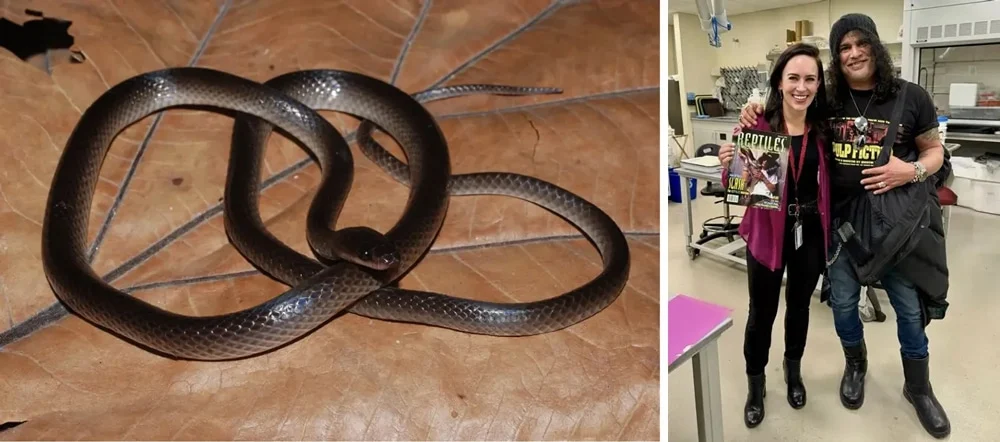
In a remarkable convergence of heavy metal iconography and rigorous biological fieldwork, scientists have formally described and named a brand-new species of snake after Saul Hudson, the iconic, top-hat-wearing lead guitarist of Guns N’ Roses better known to the world as Slash. The newly discovered reptile, christened Lielaphis slashi—commonly known as Slash’s groundsnake—was officially introduced to the scientific community in a paper published in the journal Zootaxa.
The discovery adds a fascinating new entry to the biodiversity of New Guinea, a region renowned for its complex ecosystems and staggering array of endemic wildlife. However, what sets this taxonomic breakthrough apart is not just the scientific rigor behind it, but the deeply personal connection the researchers share with their musical muse. For the scientific team—comprising herpetologists from the Louisiana State University (LSU) Museum of Natural Science and the Field Museum in Chicago—naming the snake after Slash was the realization of a childhood dream forged in the pages of REPTILES Magazine during the mid-1990s.
The animal itself is a sleek, terrestrial serpent inhabiting the rugged and biodiverse terrain of the world’s second-largest island. Utilizing a combination of traditional morphological examination—such as counting and analyzing distinct scale patterns—and state-of-the-art genetic sequencing, the research team proved that Lielaphis slashi is definitively distinct from other known species within its genus. Furthermore, ecological modeling techniques revealed that this particular groundsnake occupies a unique environmental niche, preferring specific habitat conditions that set it apart from its closest evolutionary relatives.
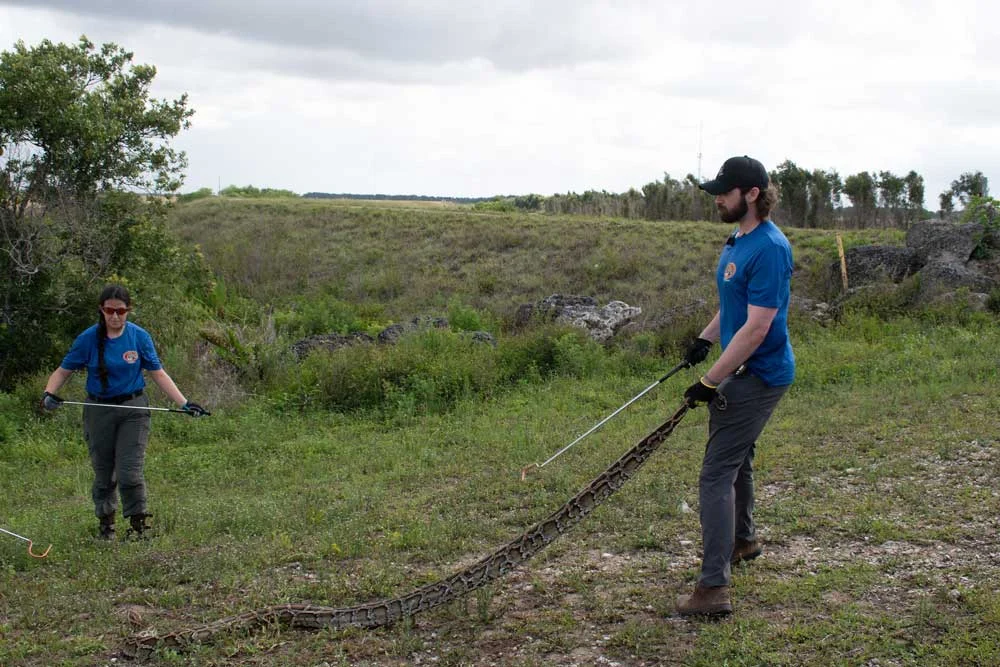
For Slash, a lifelong reptile enthusiast and advocate who famously kept large constrictors and other reptiles at the height of his rock-and-roll fame, the honor is a surreal pinnacle. The legendary musician, who once graced the cover of REPTILES Magazine holding a massive reticulated python, expressed profound gratitude and humility upon learning that a piece of the natural world now bears his name.
Chronology of Discovery
The journey of Lielaphis slashi from an unidentified specimen in the rainforests of New Guinea to a formally recognized species spans nearly two decades, involving international collaboration, advanced laboratory techniques, and serendipity in the field.
2006: The Initial Encounter
The story of Slash’s groundsnake begins nearly twenty years ago during an expedition to the tropical wilderness of New Guinea. In 2006, Dr. Chris Austin, a prominent professor and curator of herpetology at the LSU Museum of Natural Science, was deep in the field conducting routine biodiversity surveys. While navigating the dense foliage and humid undergrowth of the island, Austin encountered a snake that immediately caught his attention. While it bore some superficial similarities to known Papuan groundsnakes, its exact identity remained elusive. Recognizing that it did not neatly fit into any existing species descriptions, Austin collected the specimen for further study, setting off a multi-year investigative trail.
2016: Re-examining the Evidence
For a decade, the enigmatic New Guinea specimen waited in museum archives as researchers grappled with the complexities of Pacific herpetology. The turning point arrived in 2016, when Dr. Sara Ruane—then a postdoctoral researcher and now the Field Museum’s Associate Curator of Herpetology—teamed up with Austin to tackle the backlog of unidentified material. Armed with fresh perspectives and evolving taxonomic tools, Ruane and Austin began the meticulous process of comparing the mysterious New Guinea snake against global museum databases and historical records.
2025: Genetic Confirmation and Naming
As sequencing technologies advanced, the team required specialized genomic firepower to definitively separate Lielaphis slashi from morphologically similar lookalikes. In 2025, Dr. Tianqi Huang, a postdoctoral researcher at the Field Museum, joined the project as the study’s first author. Huang brought cutting-edge genetic analyses to the table, extracting DNA from the specimen to compare its genetic lineage with other members of the genus Lielaphis.
By combining high-resolution genomic data with exhaustive physical scale counts and ecological habitat modeling, the trio confirmed what they had long suspected: they were looking at an entirely new species to science. With the scientific boundaries established, the team settled on the binomial nomenclature Lielaphis slashi, finalizing a manuscript titled "A new species of Papuan groundsnake (Squamata: Colubridae: Lielaphis) from New Guinea" and submitting it to Zootaxa for peer review and publication.
Supporting Data and Scientific Methodology
Classifying a new vertebrate species in the 21st century requires an empirical framework that leaves no room for ambiguity. In the case of Lielaphis slashi, the researchers employed a multi-faceted methodological approach that integrated molecular phylogenetics, traditional morphology, and ecological niche modeling.
Molecular Phylogenetics
The cornerstone of the discovery relied on DNA extraction and sequencing. Dr. Tianqi Huang spearheaded the genetic analysis phase, utilizing modern laboratory protocols to sequence mitochondrial and nuclear DNA from the New Guinea specimen. These genetic sequences were then aligned and compared against genetic libraries containing data from other known species within the Lielaphis genus and related colubrid snakes.
The molecular data revealed clear, undeniable divergence. Lielaphis slashi exhibited significant genetic distances from its closest relatives, proving that the lineage had been evolutionarily isolated for a substantial period. This genetic isolation was the primary indicator that the snake warranted full species status rather than being classified as a mere regional variant or subspecies.
Morphological Analysis
While DNA tells a powerful story, classical taxonomy still relies heavily on physical traits—the phenotype. The researchers meticulously examined the physical characteristics of the preserved specimen under high-powered microscopes.
Key morphological metrics included:
- Scutellation: Counting and mapping the precise number, shape, and arrangement of scales across the head, dorsal surface, and ventral region. Scale counts are crucial in herpetology because they often remain remarkably stable within a species while varying distinctly between closely related ones.
- Proportions and Coloration: Measuring body length, tail length, and documenting the precise pigmentation patterns, which help the snake camouflage within its specific leaf-litter environment.
When the LSU and Field Museum teams cross-referenced these physical anomalies with their genetic findings, the pieces of the puzzle clicked into place. The physical variations—such as unique scale configurations—directly mirrored the genetic boundaries uncovered in the lab.
Ecological Niche Modeling
Beyond genetics and anatomy, the researchers sought to understand how Lielaphis slashi interacts with its environment. Utilizing ecological modeling software, the team analyzed environmental variables—including temperature, precipitation, elevation, and canopy cover—associated with the geographical locations where the snake was found.
The results demonstrated that Lielaphis slashi occupies a distinct ecological niche compared to similar groundsnakes in New Guinea. Its preferred microhabitat features specific humidity and soil-composition profiles, suggesting that evolutionary pressures have driven the species to adapt to a very particular ecological zone within the island’s complex rainforest mosaic.
Official Responses and Personal Connections
Few scientific papers are born out of such a joyful blend of academic rigor and childhood fandom. The discovery of Lielaphis slashi has generated widespread media attention not only for its biological significance, but for the heartwarming story of how the scientists behind it turned their adolescent pop-culture idols into taxonomic immortality.
The Researchers’ Perspectives
For senior author Dr. Sara Ruane, the naming of the snake represents a full-circle moment that traces directly back to her formative years. In a press release published by the Field Museum, Ruane reflected on her lifelong passion for reptiles and her early exposure to Guns N’ Roses:
"Guns N’ Roses has been one of my favorite bands since I was in first grade, and by fifth grade, I had already told my teacher that I wanted to be a herpetologist—a scientist who studies reptiles—when I grew up. So when I was 12 years old and got my copy of REPTILES Magazine in the mail, and it had a picture of Slash holding his pet reticulated python on the cover, I thought, ‘This guy is so cool.’"
That exact moment—seeing a global rock icon unashamedly championing the beauty and fascination of snakes—helped cement Ruane’s career path. Decades later, leading a team that would name a newly discovered serpent after that very same rock star felt like paying an essential debt of inspiration.
Tianqi Huang, whose genetic wizardry cemented the species’ validity, emphasized the collaborative and multidisciplinary nature of the triumph:
"Using multiple cutting-edge genetic analyses, we found that L. slashi is genetically distinct from other similar snakes in the same genus. The combination of physical characteristics, like differences in numbers of scales when compared with other species, and the genetic evidence is what led us to realize that it is an entirely new species. We also used ecological modeling to show that L. slashi’s preferred habitat is different from similar snakes."
Slash’s Response
Upon being informed of the honor by the Field Museum, Saul Hudson—who has spent decades performing sold-out stadium tours around the globe—was visibly touched by the gesture from the scientific community. As a well-known "herpephile" (a dedicated lover and keeper of reptiles long before it was fashionable in mainstream rock circles), having a species permanently cataloged in the annals of biological science holds a unique kind of weight.
In an official statement responding to the honor, Slash shared his astonishment:
"As a long-time herpephile, I am extremely honored and humbled to have Lielaphis slashi from New Guinea named after me. It is really exciting, I never would have imagined this moment would arrive."
The crossing of paths between a rock guitar legend and elite academic researchers highlights a broader cultural trend: the growing bridge between mainstream entertainment figures and grassroots conservation and scientific literacy.
Implications for Biodiversity and Conservation
While the naming of Lielaphis slashi provides a delightful headline for music fans and science enthusiasts alike, the discovery carries profound implications for conservation biology, tropical ecology, and our understanding of New Guinea’s threatened ecosystems.
The Biodiversity Hotspot of New Guinea
New Guinea is widely recognized by biologists as one of the most biologically diverse landmasses on Earth. Divided politically between the independent nation of Papua New Guinea and the Indonesian provinces of Papua and West Papua, the island boasts an extraordinary rate of endemism—meaning a vast percentage of its flora and fauna cannot be found anywhere else on the planet.
Dense rainforests, towering mountain ranges, and isolated valley systems create countless micro-habitats that have driven rapid evolutionary diversification. However, much of this immense biodiversity remains undocumented. Herpetologists estimate that numerous reptile and amphibian species are currently hidden within the island’s interior, awaiting formal scientific discovery.
The identification of Lielaphis slashi underscores just how much of the natural world remains unmapped. It serves as a reminder that museum collections—often housing neglected or unidentified specimens gathered decades ago—are treasure troves of hidden biodiversity waiting for modern molecular tools to unlock their secrets.
Conservation Challenges in the Pacific
Despite its ecological riches, New Guinea faces escalating environmental threats. Deforestation driven by commercial logging, large-scale agricultural conversion (particularly oil palm plantations), mining operations, and infrastructure development are rapidly encroaching upon pristine habitats.
Groundsnakes like Lielaphis slashi, which rely on specific microclimates and leaf-litter ecosystems for survival, are exceptionally vulnerable to habitat fragmentation. When primary forests are cleared or degraded, the delicate balance of humidity, temperature, and prey availability is disrupted, spelling disaster for endemic species with restricted geographic ranges.
By formally describing Lielaphis slashi and mapping its ecological niche, researchers provide conservationists with critical baseline data. Knowing that a distinct species exists in a specific environmental envelope allows local governments, indigenous communities, and international NGOs to advocate more effectively for habitat protections. Furthermore, high-profile species names—such as those tied to global celebrities—can serve as powerful flagship tools to capture public interest, generate media coverage, and secure funding for broader conservation initiatives in the region.
The Path Forward
The publication of "A new species of Papuan groundsnake (Squamata: Colubridae: Lielaphis) from New Guinea" in Zootaxa is more than just an academic milestone; it is a testament to the enduring power of curiosity. Whether inspired by the crunch of a distorted guitar riff or the mesmerizing patterns of a reticulated python, the scientists who brought Lielaphis slashi to light have ensured that Slash’s legacy extends far beyond the rock-and-roll hall of fame, etching his name permanently into the living history of Earth’s natural biosphere.
For those wishing to dive deeper into the scientific nomenclature and anatomical specifications of the discovery, the complete research paper is freely available for download in PDF format directly on the Zootaxa website, while further background on the project can be explored through The Field Museum’s official press release.