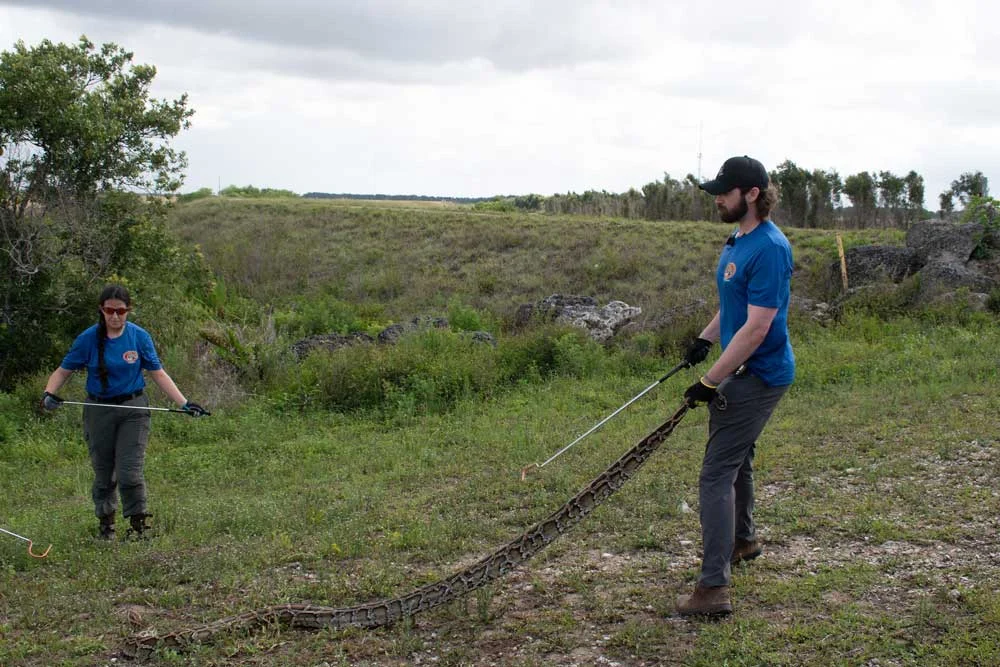
The Florida Everglades, a sprawling, unique wetland ecosystem known as the "River of Grass," is facing an existential threat from a silent, slithering invader. As the 2026 Florida Python Challenge officially opens its registration, conservationists and state officials are bracing for a ten-day intensive effort to curb the population of the invasive Burmese python (Python bivittatus). Running from July 10 through July 19, this year’s iteration of the hunt represents a critical front in the ongoing struggle to preserve the biological integrity of one of America’s most precious national parks.
Main Facts: The 2026 Challenge Overview
The Florida Python Challenge is more than just a public event; it is a strategic wildlife management initiative designed to incentivize the removal of an apex predator that has no natural enemies in the region.
For the 2026 event, the stakes are higher than ever. With a total prize purse of $25,000, the competition aims to draw both seasoned professionals and dedicated novices into the field. The grand prize—a $10,000 reward—will be granted to the individual who successfully removes the highest number of Burmese pythons. To ensure fair competition and broad participation, the state has categorized the hunt into three distinct divisions: Professional, Novice, and Military.
Registration is currently live, and prospective participants are encouraged to visit flpythonchallenge.org to sign up, review safety protocols, and understand the rigorous tracking requirements necessary to validate their catches. The challenge is a collaborative effort spearheaded by the Florida Fish and Wildlife Conservation Commission (FWC), the South Florida Water Management District, and the National Park Service.
The Chronology of an Invasion
To understand the significance of the 2026 challenge, one must look at the timeline of this ecological disaster. Burmese pythons, native to Southeast Asia, were introduced to the Florida ecosystem in the late 20th century, largely through the exotic pet trade. Following the devastation of Hurricane Andrew in 1992, which destroyed several breeding facilities, the population began to take hold in the wild.
- Pre-2000: The initial establishment phase, where the presence of the snakes went largely unnoticed by the general public.
- 2000–2012: Rapid expansion. Sightings increased exponentially, and the decline of native small mammal populations in the Everglades became statistically undeniable.
- 2013: The inaugural Florida Python Challenge is launched to raise public awareness and encourage active participation in removal efforts.
- 2022: A milestone year where 231 pythons were removed during the challenge alone, proving the effectiveness of gamified conservation.
- 2025–2026: Continued intensification of efforts, with total removals since the year 2000 estimated at approximately 27,000 snakes.
Since the challenge launched in 2013, the collective weight of the removed snakes has been staggering. Records indicate that 1,406 snakes were removed just between the end of the 2025 event and the lead-up to the current hunt. This represents between 14 and 17.5 tons of biomass removed from the Everglades—an incredible achievement for conservationists, yet a sobering reminder of the scale of the infestation.
Supporting Data: The Ecological Footprint
The Burmese python is a "generalist predator," meaning it is not picky about its diet. This trait has allowed it to decimate native wildlife populations. Research conducted in the Everglades has shown that populations of raccoons, opossums, and marsh rabbits have dropped by as much as 90% in areas where pythons are established.
The sheer volume of the removal efforts highlights both the success of the programs and the resilience of the invasive species. Estimates suggest that if 27,000 pythons have been removed since 2000, the total population in the wild likely numbers in the tens, if not hundreds, of thousands. Because these snakes are masters of camouflage and inhabit the dense, labyrinthine mangroves and sawgrass prairies of the Everglades, they are notoriously difficult to track.
Furthermore, the data suggests that these snakes are not merely surviving; they are thriving. Females can lay up to 100 eggs in a single clutch, and their lack of natural predators allows for a high survival rate of hatchlings.
Official Responses and Strategic Vision
The Florida government has treated the python crisis as a top-tier environmental priority. In a recent statement to the media, South Florida Water Management District Governing Board Member "Alligator Ron" Bergeron emphasized the urgency of the mission.
"We continue to advance Everglades restoration efforts thanks to the support of Governor Ron DeSantis, and we’ll keep doing everything we can to protect this important ecosystem," Bergeron said. "Removing Burmese pythons from this ecosystem is critical to the survival of the native species that call this area home. We appreciate our partners at the Florida Fish and Wildlife Conservation Commission and Everglades National Park as we continue to work together to raise awareness about invasive species. This is a great way for the public to get involved in the protection of the Everglades, and I want to thank everyone who is participating in the 2026 Florida Python Challenge. Long live the Everglades!"
This rhetoric reflects a shift in policy from mere observation to active, state-sponsored removal. By engaging the public, the FWC not only increases the number of snakes removed but also fosters a culture of stewardship among Florida’s residents and visitors.
Emerging Ecological Dynamics: The Hunt for Natural Controls
While human intervention is the primary tool for population control, biologists are closely watching for signs of native species beginning to fight back. In recent years, researchers have documented surprising predatory behaviors from native Florida species.
It has been observed that the Florida cottonmouth (Agkistrodon piscivorus), a venomous pit viper, has begun consuming juvenile Burmese pythons. While this will not stop the invasion—as cottonmouths cannot tackle adult pythons—it represents a fascinating, if minor, shift in local food-web dynamics.
Other animals have also joined the fray. The American alligator (Alligator mississippiensis) has been documented in combat with pythons, and in some cases, has successfully consumed them. Similarly, the Gulf Coast indigo snake, the bobcat (Lynx rufus), and potentially the Florida black bear (Ursus americanus floridanus) have all been noted as predators of smaller pythons. These interactions serve as a beacon of hope for scientists, suggesting that the ecosystem may be slowly attempting to "learn" how to contend with the new arrival.
Implications: Why the 2026 Challenge Matters
The stakes for the 2026 Florida Python Challenge extend far beyond the $10,000 prize. The Everglades serve as the primary water source for millions of Floridians and act as a critical carbon sink and biodiversity hotspot. When the foundation of that ecosystem—the small mammals and birds—is eroded by an invasive predator, the entire hydrological and biological system suffers.
If the 2026 challenge can replicate or exceed the success of previous years, it reinforces the efficacy of public-private partnerships in conservation. However, experts warn that the Python Challenge is only one piece of the puzzle. Long-term success will require continued funding for research, advancements in thermal imaging and tracking technology, and sustained political will to ensure the Everglades remain a wild sanctuary rather than a habitat for non-native reptiles.
As the July 10 start date approaches, the eyes of the conservation world are on Florida. For the participants, it is a test of skill, endurance, and dedication. For the Everglades, it is a desperate, necessary fight for survival. The outcome of these ten days will not only determine the prize winners but will also play a role in shaping the future of the American wilderness.
For those looking to participate, time is of the essence. The registration portal remains the gateway to contributing to the largest invasive species eradication effort in the United States. As the motto goes, "Long live the Everglades"—a goal that is now inextricably linked to the removal of the Burmese python.