For centuries, parrots have captivated humans with their vibrant plumage, uncanny ability to mimic speech, and profound capacity for social bonding. As these intelligent creatures continue to rise in popularity as household companions, owners often find themselves anthropomorphizing their behaviors. One common question that frequently arises is whether parrots cry—and, if they do, what it means for their emotional well-being. To truly understand our avian companions, we must look past human emotional triggers and examine the biological and behavioral mechanisms that define their existence.
The Biological Reality of Avian Tears
Contrary to popular belief, while parrots possess tear ducts and the biological apparatus to produce tears, they do not weep as a manifestation of sadness, grief, or emotional release in the human sense. The physiological purpose of a parrot’s tears is strictly functional: to protect, lubricate, and maintain ocular health.
The Role of the Harderian Gland
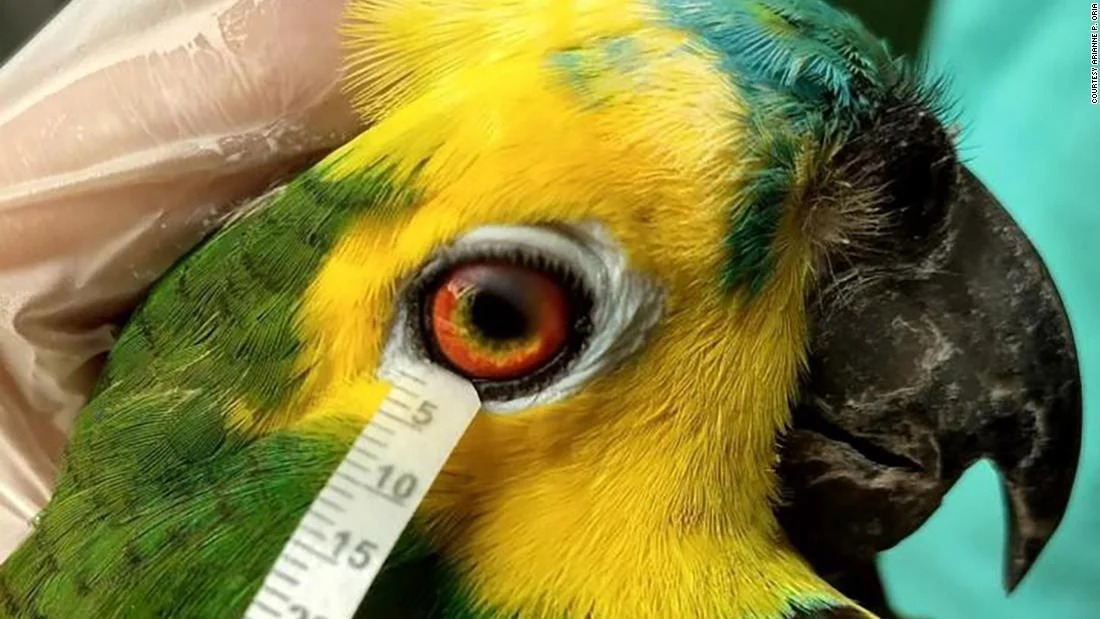
The mechanism behind these tears is the Harderian gland, a specialized organ located on the upper surface of the eye. This gland secretes a complex fluid comprised of water, sodium, calcium, urea, chloride, and proteins—a composition remarkably similar to human tears. This fluid is organized into a three-layered tear film: a mucus layer, a watery layer, and an oily layer.
Each time a parrot blinks, these layers are spread across the cornea, clearing away debris and providing essential moisture. The secretion is often involuntary, frequently triggered by light sensitivity or an instinctive response to perceived threats. When a parrot senses danger, it may blink rapidly or widen its eyes, prompting the Harderian gland to release fluid. It is crucial for owners to understand that this is a protective, reflexive action rather than a sentimental one.
Decoding Distress: How Parrots Communicate Emotional Turmoil
While they may not cry in the human sense, parrots are highly emotional, sentient beings. Because they are flock animals by nature, they rely heavily on subtle and overt communication to express distress. Understanding these signals is the cornerstone of responsible avian ownership.
Auditory Indicators: Calls and Screams
Parrots use vocalization as a primary survival tool. When a parrot is distressed, it may drastically increase the volume or frequency of its calls. In the wild, this serves to alert the flock to danger or to locate missing members. In a domestic setting, a sudden spike in screaming often points to unmet needs, such as a desire for attention, hunger, or anxiety regarding environmental changes. If a bird’s vocal patterns shift significantly, it is a call for the owner to investigate the environment for potential stressors.
Body Language: The Silent Language of Agitation
A parrot’s physical stance is a window into its psychological state. Owners should pay close attention to:
- Repetitive Head Movements: Rhythmic head shaking or turning can indicate confusion or distress. If the motion resembles a “no” shake, it may be a behavioral indicator of irritation.
- Wing Angling: When a parrot holds its wings away from its body, it is a complex signal. It may indicate fear, a desire to appear larger to a threat, or, in some cases, simple playfulness. When combined with puffed feathers and a raised tail, this posture is a clear warning to give the bird space.
- Biting as a Defense Mechanism: Biting is rarely an unprovoked act of malice. It is often a final resort for a parrot feeling trapped or threatened. Whether it is a result of territorial aggression, overstimulation, or a lack of mental enrichment, biting is a clear message that the bird’s boundaries are being violated.
Physiological Manifestations: Stress Bars and Appetite
The body often reflects the mind in parrots. Stress bars—horizontal black lines appearing across feathers—are literal markers of trauma. These occur when the bird’s muscles tense during a period of sustained fear or stress, disrupting the growth of the feather.
Furthermore, a loss of appetite is a clinical red flag. Because birds have high metabolic rates, a sudden refusal to eat can lead to rapid weight loss and life-threatening complications within a very short timeframe. Any change in eating habits should be treated as a medical emergency.
A Chronology of Domestic Integration and Emotional Needs
The domestication of parrots is not a recent phenomenon. For thousands of years, these birds have been kept for their beauty and companionship. However, the transition from wild flock-dweller to domestic pet has created a unique set of challenges.
- Historical Context: Parrots were traditionally valued for their mimicry. As they were brought into closer contact with humans, their ability to form deep, cross-species bonds became more apparent.
- The Rise of Modern Ownership: In the late 20th and early 21st centuries, the focus shifted toward understanding the psychological requirements of psittacines. It became clear that isolation is the primary driver of depression in these animals.
- The Current Standard of Care: Today, experts emphasize that a parrot separated from its flock—or from an owner who serves as its surrogate flock—is at high risk for self-mutilation, feather plucking, and deep, lasting psychological trauma.
Expert Perspectives and Veterinary Implications
The consensus among avian veterinarians is clear: emotional health is indistinguishable from physical health in parrots. When a bird presents with behavioral issues, a medical exam is the first step. Conditions such as nutritional deficiencies, chronic pain, or hormonal imbalances can mimic—or cause—what owners perceive as “bad behavior.”
"Avian behavior is a complex intersection of instinct and intelligence," notes one avian specialist. "When a bird acts out, it is almost always responding to a deficit in its environment or a lack of mental stimulation."
Veterinarians advocate for a proactive approach. Regular check-ups allow for the early detection of stress-related illnesses before they manifest as chronic physical symptoms. Furthermore, consulting a certified animal behaviorist can provide owners with tools to improve the bird’s quality of life through environmental enrichment and positive reinforcement training.
Managing the Domestic Environment: Preventing Stress
The prevention of stress in parrots requires a holistic commitment to their environment. Because they are intellectually equivalent to human toddlers, they require constant mental engagement.
- Socialization: Parrots require consistent, daily interaction. This does not merely mean being in the same room, but rather active engagement, play, and training.
- Environmental Enrichment: A cage should be a sanctuary, not a prison. Providing a variety of foraging toys, puzzles, and safe climbing structures is essential to prevent the boredom that leads to destructive behaviors like feather plucking.
- Nutritional Stability: A balanced diet is fundamental. Stress can often be mitigated by ensuring the bird is receiving proper nutrients, as malnutrition often lowers a bird’s threshold for anxiety.
- Predictability: While parrots are intelligent, they thrive on routine. Sudden moves, changes in cage placement, or significant disruptions in the household schedule can be major sources of distress.
Conclusion: Empathy Through Education
The misconception that parrots cry because they are sad is a testament to the human desire to relate to our pets. While our parrots do not shed tears for emotional grief, they are no less capable of feeling deep, complex emotions. Their distress, though expressed in ways that are sometimes misunderstood—through screams, bites, or stress-marked feathers—is real and requires immediate attention.
By shifting our focus from human-centric interpretations to a biologically accurate understanding of avian behavior, we can better serve our feathered companions. We are not just owners of these brilliant birds; we are their guardians, their flock, and their lifeline. Through education, patience, and a commitment to their specific needs, we can ensure that our parrots lead lives that are not only free from unnecessary stress but filled with the social connection and enrichment they so deeply deserve. When we observe our parrots, we should look past the tear duct and into the heart of their behavior, responding with the empathy and scientific understanding required to keep them thriving.