In the competitive and highly visual world of professional dog grooming, few styles are as iconic or as technically demanding as the classic Bichon Frisé trim. Renowned for their powder-puff aesthetic and cheerful disposition, the Bichon requires a meticulous hand to balance breed-standard elegance with the practical needs of the modern pet owner. Grooming expert Blake Hernandez, a fixture in the industry and a breakout star from the Netflix series DOGS, has developed a “short and sassy” modification that bridges the gap between show-ring perfection and daily manageability.
Whether you are working with a purebred show dog or a curly-coated mixed breed, this guide offers a professional blueprint for achieving a round, charming silhouette that is both functional and aesthetically pleasing.
Main Facts: The Philosophy of the "Short and Sassy" Bichon
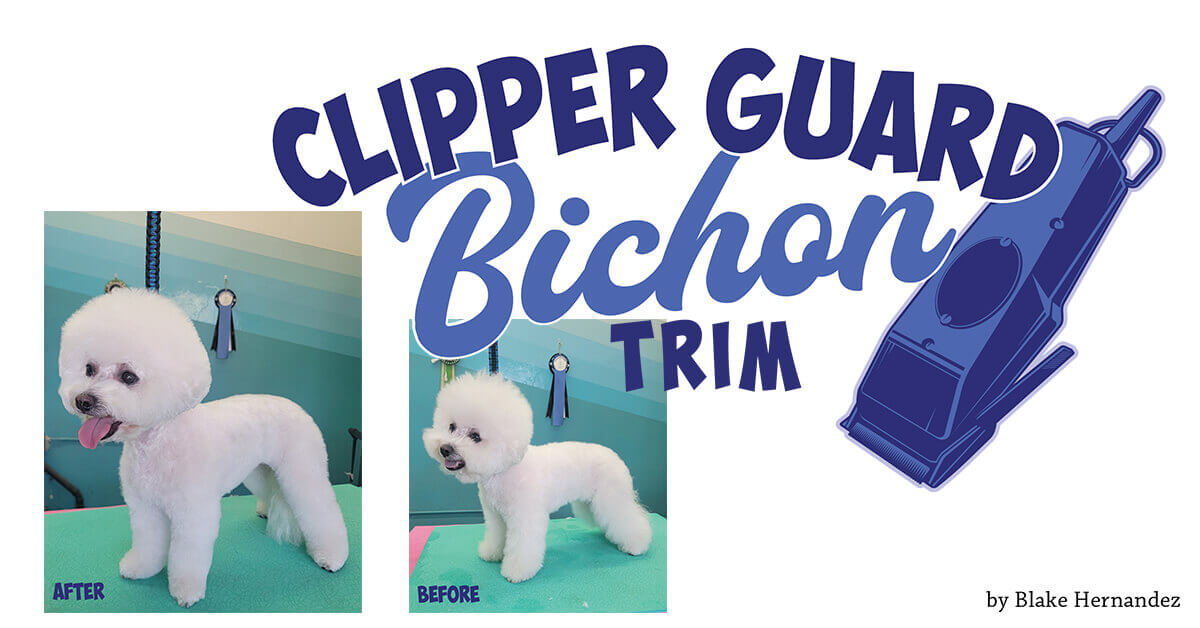
At the heart of this grooming style is the concept of "manageable beauty." Many owners of Bichons and Bichon-mixes struggle with the high-maintenance nature of traditional, long-coat styles. The "short and sassy" modification focuses on creating a clean, structured frame while maintaining the signature roundness that defines the breed’s personality.
The core principles of this style include:

- Geometric Precision: Using specific guard combs and blade techniques to create a smooth, flowing transition from the shoulders to the brisket.
- Emphasis on Angulation: Carefully trimming the rear to highlight the dog’s structure without sacrificing the "fluffy" appeal.
- Facial Expression: A strategic approach to the muzzle and eye area that "pops" the eyes and softens the face, creating that hallmark "puppy-dog" look.
Chronology: A Step-by-Step Grooming Workflow
Achieving this look requires a disciplined approach. Blake Hernandez outlines a precise, 14-step workflow designed to streamline the grooming process while ensuring professional-grade results.
Phase 1: The Body and Foundation
- The Top Line: Begin where the shoulder blades meet. Use a 1/2” guard comb over a #30 blade to set the length along the top line. This is ideal for clients on a six-to-eight-week maintenance rotation.
- The Ribs and Brisket: Carry the same 1/2” length down around the ribs and underneath the dog’s brisket to maintain a uniform, sleek body profile.
- The Throat Latch: Switch to a #5F blade and clip in reverse, moving from the Adam’s apple up to the throat latch. This cleans up the neck area, providing a sharp contrast to the fullness of the head.
- Rear Angulation: To define the rear, switch to a 1/4” guard comb. Clip from the pin bone down to the area behind the knee. This creates necessary definition and highlights the dog’s natural movement.
- Leg Balance: To balance the shorter body, leave the legs fuller. A 1” guard comb is used on the rear legs to ensure they look substantial and proportional to the body.
- Front Leg Continuity: Apply the same 1” guard length to the front legs, ensuring a seamless visual transition from the front to the back of the dog.
Phase 2: Finishing Touches and Detailing
- Foot Sculpting: Keep the feet grounded. Use professional shears to shape a tight, round bevel, which adds a polished, "finished" look to the gait.
- Tail Presentation: With the tail held in its natural position over the back, trim away any stray hairs that detract from the dog’s center of gravity or overall silhouette.
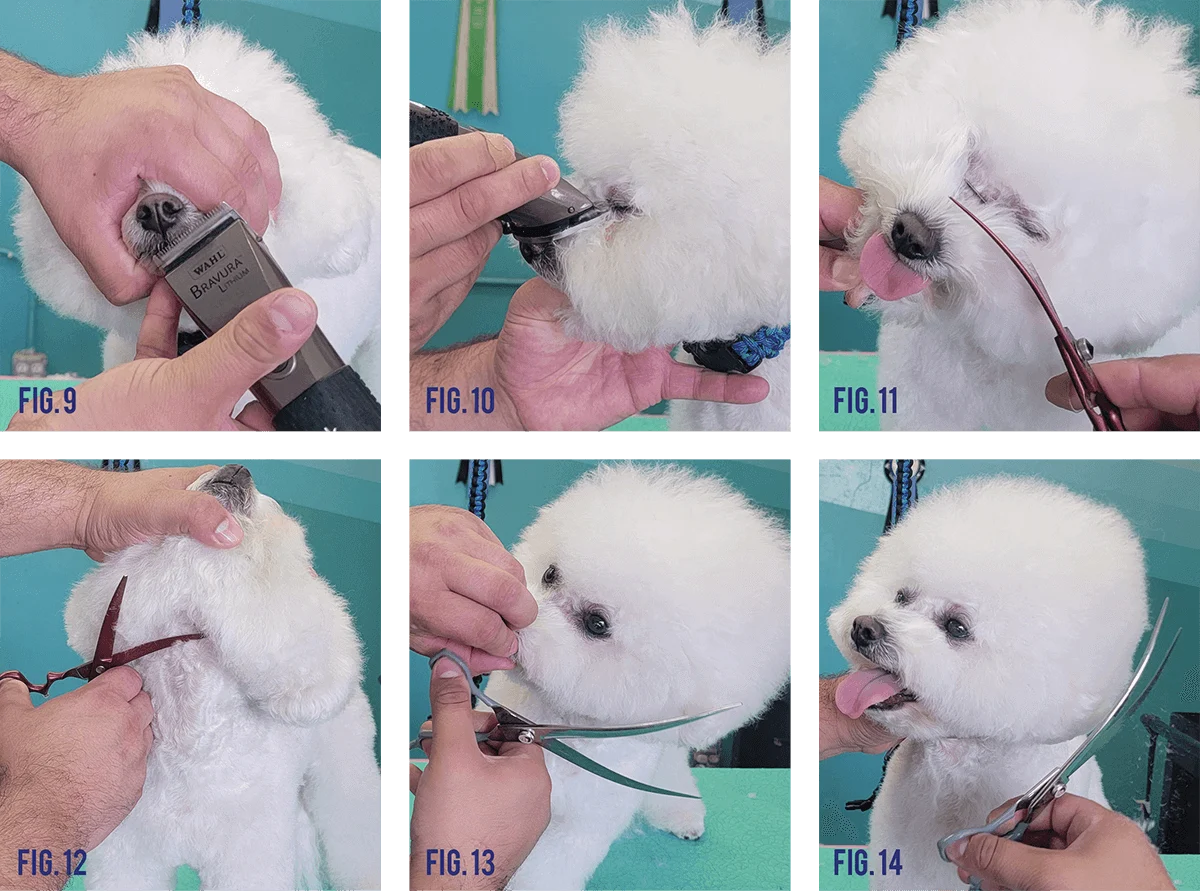
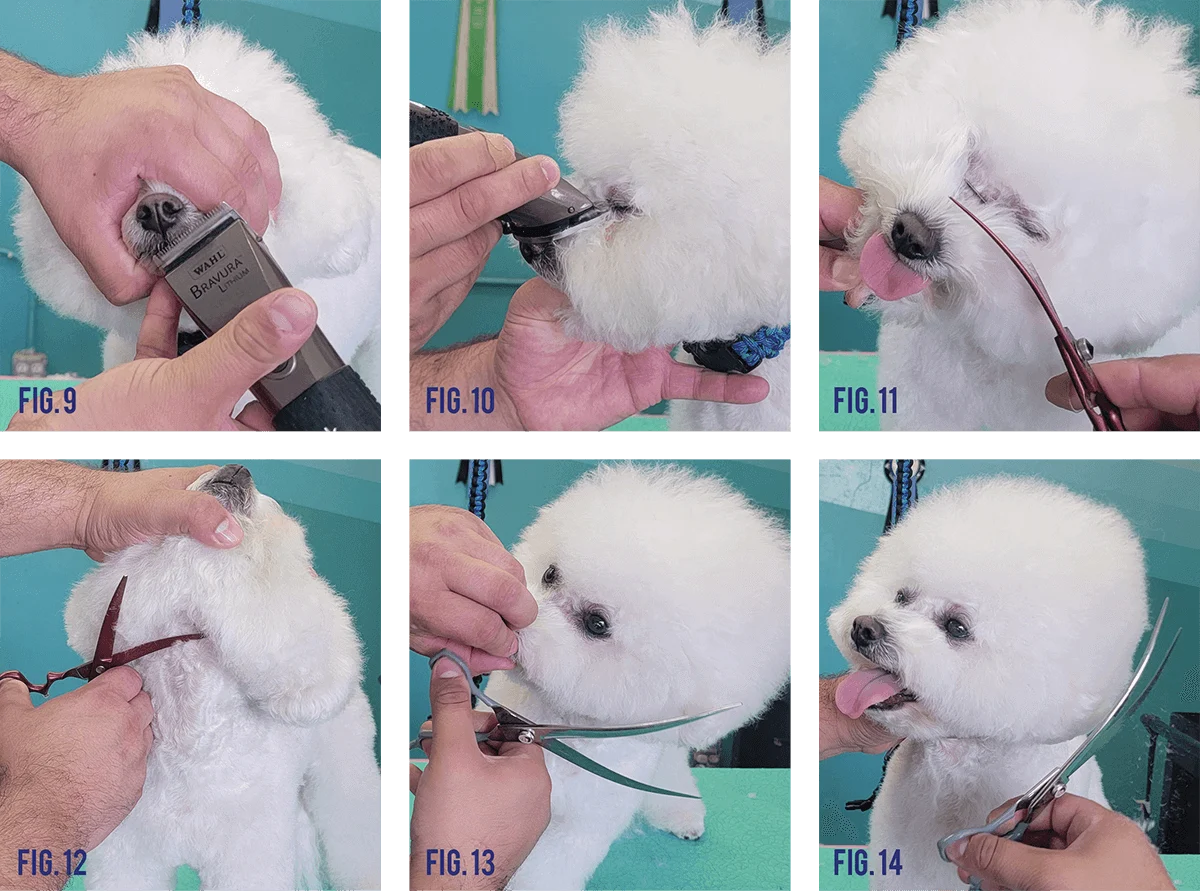
- The Muzzle: Shave the top lip and carefully trim one or two lines of hair on the bottom lip, just beneath the nose. This removes excess bulk and creates a clean, friendly expression.
- The Stop: Use a #10 blade to clip the stop. This subtle removal of hair helps the eyes appear larger and more expressive.
- Eye Alignment: Comb the hair forward toward the eyes and use thinning or curved shears at a 45-degree angle to clear the vision and frame the eyes.
- Head Separation: Returning to the throat latch area, use a curved scissor in reverse to clearly separate the head from the body, creating a distinct "neck" effect.
- Rounding the Head: Starting at the base of the head, shape a tight lip line and round outward toward the ears.
- Final Framing: As you reach eye level, rotate the shears upward to create a perfect circle. Repeat on the opposite side for total symmetry.
Supporting Data: Why This Method Works
The efficacy of this trim lies in its versatility. While traditional show grooms require hours of tedious fluff-drying and scissoring, this modification is built for the high-volume salon environment. By utilizing guard combs for the bulk of the body work, the groomer reduces the physical strain of prolonged hand-scissoring.

Furthermore, the style is highly adaptable. Hernandez notes that he originally refined these techniques on curly-coated mixed breeds before applying them to purebred Bichons. Because the structure relies on "roundness" rather than rigid breed-standard angles, it is a forgiving and flattering style for almost any dog with a soft, curly coat.
Official Perspectives: Expert Insight
Blake Hernandez, a 2020 Barkleigh Honors Seminar Speaker of the Year, emphasizes that grooming is as much about the personality of the groomer as it is about the technical skill. Known for his "Mr. Approachable" persona and his advocacy for the industry, Hernandez views these tutorials as essential tools for the next generation of groomers.

"I practiced on all sorts of mixes," Hernandez explains. "As long as I could make them look fluffy, I was happy. This trim is a winner because it’s not just about the show ring—it’s about the client who wants their dog to look cute, feel comfortable, and stay manageable between appointments."
His influence, notably featured in Netflix’s DOGS series, has helped demystify complex grooming techniques, making high-end styling accessible to salon professionals everywhere.

Implications: The Evolution of Pet Grooming
The industry is currently seeing a shift away from the "extreme" grooming styles of the past in favor of "lifestyle" grooming. The "short and sassy" Bichon trim is emblematic of this shift. As pet owners become more informed about canine comfort, the demand for styles that prevent matting, allow for better hygiene, and keep the animal cool has skyrocketed.
Impact on Client Retention
For the professional salon, adopting a standard, reproducible trim like this one has significant implications for business health:

- Predictability: Clients love knowing exactly how their dog will look when they pick them up.
- Efficiency: Standardizing the process allows groomers to maintain a consistent pace, improving salon throughput.
- Professionalism: By providing a "menu" of styles that include this manageable cut, groomers demonstrate their expertise and dedication to the dog’s long-term health.
In conclusion, the "short and sassy" Bichon trim is more than just a haircut; it is a masterclass in balance and utility. By combining the artistic flair of head-shaping with the practical efficiency of guard-comb body work, groomers can provide a service that delights pet owners and keeps dogs looking their absolute best. As the industry continues to evolve, techniques like those championed by Blake Hernandez will remain the gold standard for blending beauty with functionality.