The Association of American Feed Control Officials (AAFCO) recently concluded its biannual gathering in San Diego, California, drawing stakeholders from across the regulatory, industry, and consumer advocacy landscapes. While AAFCO is technically a private organization, its influence is profound; it serves as the primary architect for the laws governing pet food and animal feed at the state level.
For the average pet owner, these meetings are often obscured by bureaucratic jargon. However, the discussions held in San Diego have unveiled deep-seated fractures in the regulatory framework, ongoing debates over ingredient definitions, and potential delays in long-promised label reforms. As the industry faces mounting pressure from consumers and legal experts, the path toward transparent, safe pet nutrition remains shrouded in uncertainty.
The Ingredient Definition Dilemma: Meat and Bone Meal
A focal point of the recent meeting was the Ingredient Definitions Committee, where a seemingly minor debate over the definition of "Meat and Bone Meal" (MBM) exposed broader concerns about quality control.
The current definition for MBM describes it as the rendered product from mammal tissues, including bones, while explicitly excluding added blood, hair, hoof, horn, manure, stomach, and rumen contents—though it permits these materials to be present if they occur "unavoidably" during processing. The committee debated the removal of a specific requirement: that the product must contain a minimum of 28% ash.
Proponents of removing the ash requirement argued that it was an outdated metric. Critics, however, pointed out that without this minimum, the boundary between "Meat Meal" and "Meat and Bone Meal" becomes dangerously porous. Industry insiders acknowledged that if the ash floor were removed, manufacturers could theoretically rebrand lower-quality meat meal as meat and bone meal with little oversight.
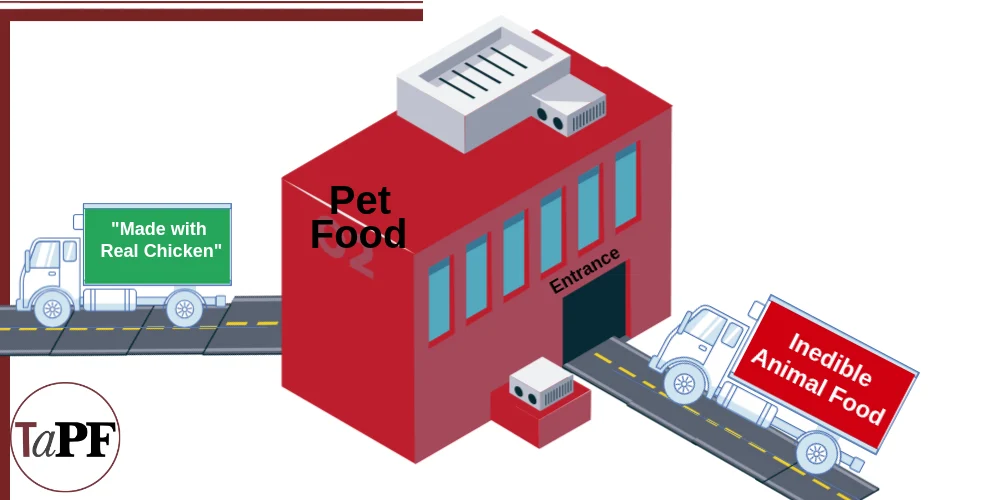
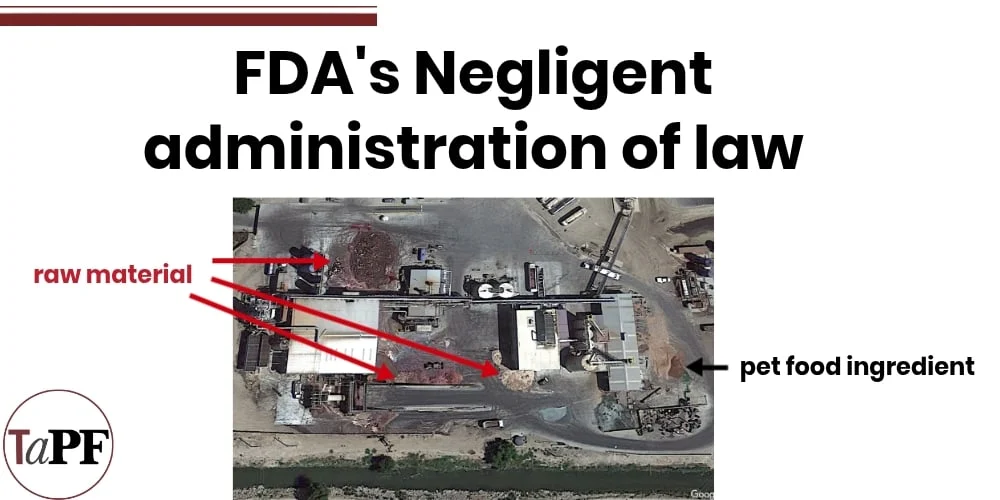
This distinction is significant because MBM has historically occupied the lowest rung of the rendered-ingredient ladder. The FDA has previously acknowledged that ingredients like MBM, Beef and Bone Meal, and Animal Digest are often rendered from sources that can include euthanized animals, with some samples historically testing positive for the barbiturate pentobarbital. Conversely, "Meat Meal" is frequently marketed as a premium protein source. By blurring the lines between these two definitions, regulators risk facilitating a "race to the bottom" in terms of ingredient sourcing, prioritizing industry convenience over the clarity required to inform consumer purchasing decisions.
Chronology of Reform: A Two-Decade Delay
The stagnation of pet food regulation is perhaps best illustrated by the ongoing saga of label modernization. In 2007, Congress passed the "Ensuring the Safety of Pet Food" act, mandating that the FDA update labeling requirements to better protect consumers. The agency was given a two-year deadline to complete these updates.
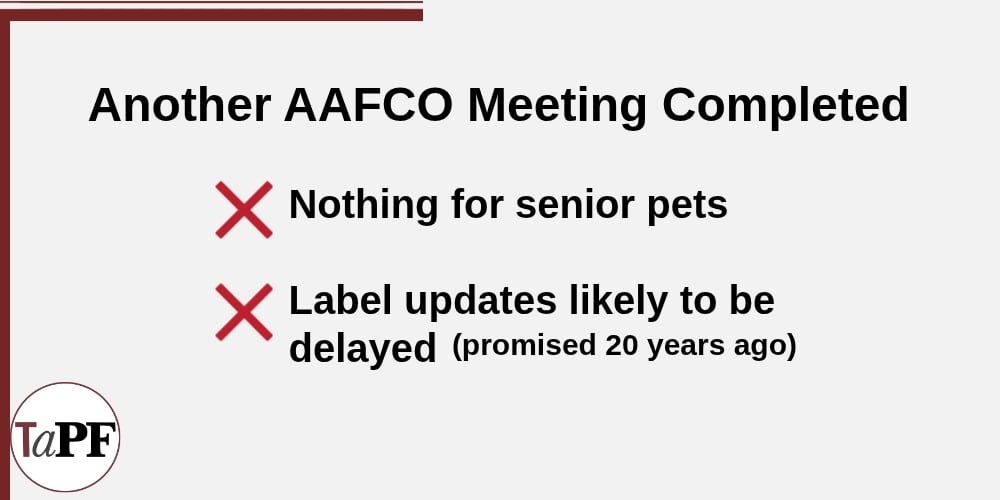
Seventeen years later, the mission remains unfulfilled. The FDA delegated much of this responsibility to AAFCO, which spent over a decade drafting new standards. While these updates were finally finalized in July 2023, their implementation has been pushed to 2030—a staggering 23-year gap from the original congressional mandate.
During the recent Current Issues and Outreach Committee meeting, this timeline was further challenged. Industry representatives raised concerns about the feasibility of the upcoming dietary fiber disclosure requirements, citing a lack of consistent, accurate lab testing methods, particularly for high-moisture products like canned, fresh, or raw pet foods.
For many advocates, this feels like a familiar stalling tactic. When industry voices suggested delaying the fiber requirement, it signaled that the 2030 deadline—already a compromise—is now under active threat of further postponement.
The Myth of the "Senior" Diet
Beyond labeling, the Pet Food Committee addressed a critical issue regarding senior pet nutrition. The FDA presented a report acknowledging that many senior-specific diets may fail to provide adequate nutrient density for aging animals. Because senior pets are often less active, veterinarians frequently advise owners to reduce their caloric intake. If the food being provided is not specifically formulated with a higher concentration of essential nutrients to compensate for smaller portions, the animal may suffer from chronic nutrient deficiencies.
Despite the FDA representative admitting that this is a tangible problem impacting animal health, the committee stopped short of issuing a new, evidence-based nutritional profile for senior pets. Instead, the current status quo remains: manufacturers are permitted to market products as "senior" even when they offer no distinct nutritional advantage or safeguard for an aging animal’s metabolism. This allows the industry to profit from the "senior" label while failing to address the underlying physiological needs of the pets they serve.

Legal Risks and the Illusion of Imagery
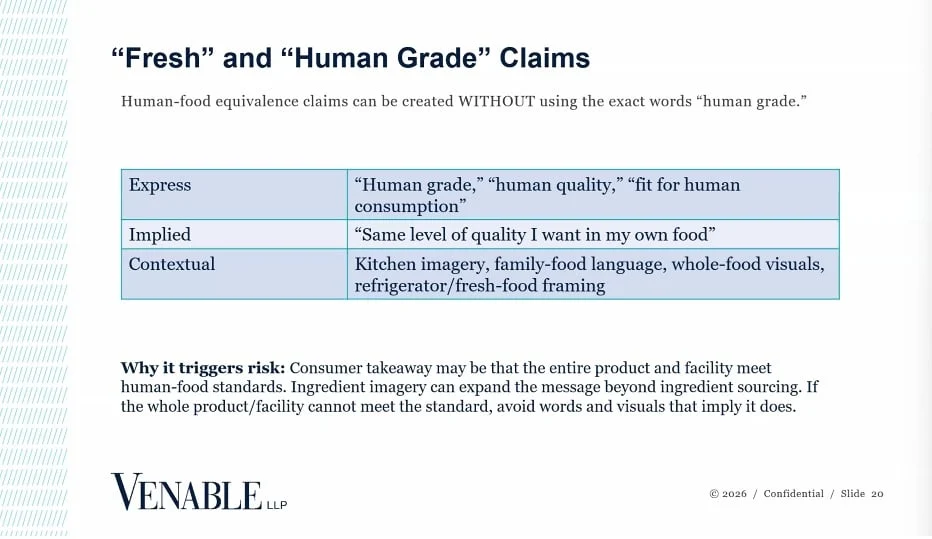
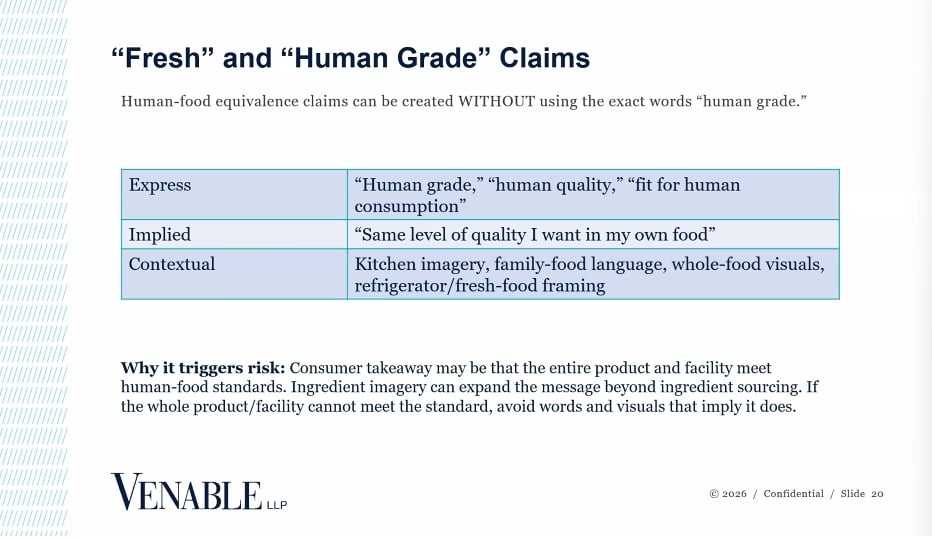
A recurring theme throughout the San Diego summit was the looming threat of litigation. Todd Harrison, an attorney from the firm Venable, provided a stark warning during the Pet Food Committee session. He cautioned manufacturers that the common practice of using "ingredient imagery"—such as pictures of fresh roasted chicken or grilled steak on bags of highly processed kibble—is increasingly becoming a legal liability.
As consumer awareness grows, the gap between the marketing "story" of a pet food brand and the reality of the rendered, processed ingredients inside the bag is narrowing. Mr. Harrison’s presentation suggested that if regulators like AAFCO do not tighten the rules, the judicial system will likely do it for them through consumer class-action lawsuits.
Implications: A System at a Crossroads
The proceedings in San Diego highlight a fundamental tension: AAFCO acts as a gatekeeper that is simultaneously beholden to industry interests and tasked with public protection.
The implications for pet owners are clear:
- Lack of Transparency: As long as definitions for ingredients like Meat and Bone Meal remain ambiguous, consumers cannot be certain of the quality or safety of the proteins they are feeding their pets.
- Regulatory Capture: The ability of industry representatives to delay mandatory label updates, which were promised nearly two decades ago, suggests that AAFCO’s decision-making process is heavily influenced by the manufacturers it is supposed to oversee.
- The "Senior" Deception: The refusal to establish a mandatory nutritional profile for senior diets leaves a vulnerable population of aging pets at risk of malnutrition under the guise of "specialized" care.
The delay of label modernization and the failure to address the senior nutrition gap are not just administrative hiccups; they are systemic failures. While AAFCO touts its "consumer education" initiatives planned for 2027, the underlying reality is that the regulatory framework is currently designed to accommodate industry flexibility rather than consumer safety.
Moving Forward: What Can Pet Owners Do?
The next AAFCO meeting is scheduled for January in Orlando, Florida. As the industry grapples with these issues, the role of independent consumer advocacy has never been more vital. Organizations like the Association for Truth in Pet Food continue to serve as the only consistent voice for the pet owner at these closed-door meetings.
For the average consumer, the lesson from San Diego is one of caution. Marketing imagery should be viewed with skepticism, and the reliance on labels—which are currently undergoing a long, painful, and delayed modernization process—should be balanced with research into the specific sourcing practices of pet food manufacturers.
Ultimately, until AAFCO and the FDA move beyond the current cycle of committees, discussions, and delays, the burden of ensuring pet health rests largely on the shoulders of the consumer. As the legal community begins to take notice of misleading labeling, perhaps the pressure of the courtroom will succeed where years of bureaucratic deliberation have failed. Until then, the pet food industry remains a landscape where the definitions of "meat" and "nutrition" are far more flexible than any pet owner would hope.