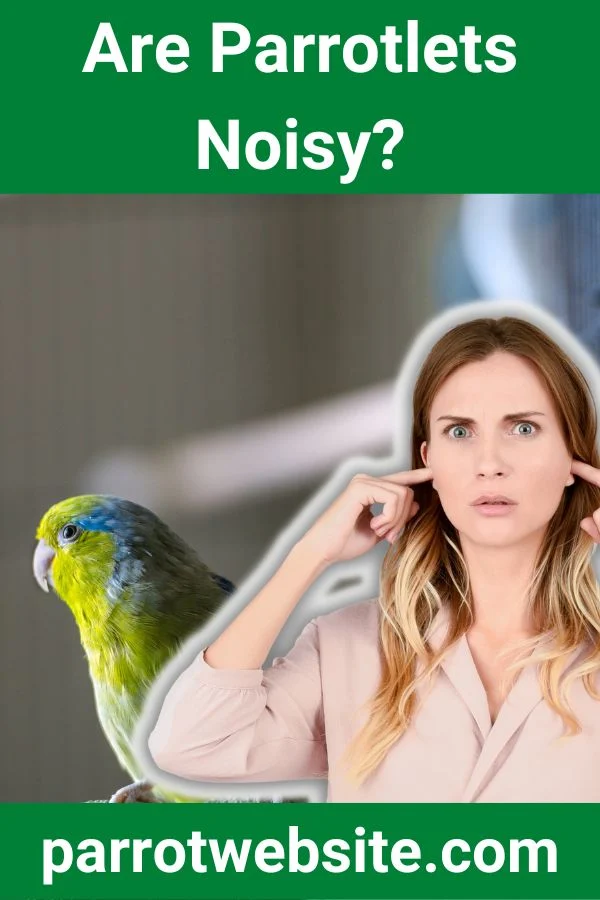
Parrotlets, known scientifically as members of the genus Forpus, have captured the hearts of bird enthusiasts worldwide, largely due to their diminutive stature. As the smallest of all domestic parrot species, they are often sought after by apartment dwellers and those living in close proximity to neighbors. However, a common misconception persists: because they are small, they must be quiet.
The reality is nuanced. While parrotlets are undeniably quieter than their larger cousins, such as Macaws or Cockatoos, they remain parrots. Vocalization is their primary form of communication, and prospective owners must reconcile the desire for a companion bird with the inherent, persistent nature of avian behavior.
Main Facts: Understanding the Vocal Nature of Parrotlets
To understand the sound profile of a parrotlet, one must first look at their biology. In the wild, these birds exist in flocks. Their vocalizations—ranging from soft contact chirps to high-pitched alarm screeches—are essential tools for survival. These sounds alert flock members to predators, maintain social bonds, and signal location during foraging.
When brought into a domestic setting, the parrotlet simply translates these instincts into a home environment. You, the owner, become their "flock." When they call out, they are not necessarily being "noisy" in a human sense; they are attempting to maintain contact, express excitement, or demand attention.
Key Takeaways:
- Persistent Communication: Unlike a goldfish or a reptile, a parrotlet will never be silent.
- The Decibel Reality: A parrotlet’s peak volume generally hits around 65 decibels, which is roughly equivalent to a normal conversation.
- Individual Variation: Much like humans, individual parrotlets have varying "personalities." Some are naturally more loquacious than others.
Chronology of Activity: The Daily Rhythm
Parrotlets are diurnal creatures, meaning their activity levels—and consequently their noise levels—are dictated by the rising and setting of the sun. Understanding their daily cycle is vital for anyone considering bringing one into their home.
Morning Rituals: The "Wake-Up" Call
As soon as the sun rises, or as soon as they sense movement in the household, a parrotlet will initiate its day. This is often the loudest time of the morning, as the bird "checks in" with its human flock. Expect a flurry of activity and chirping as they move around their cage, stretch their wings, and demand breakfast.
Mid-Day Maintenance
Throughout the afternoon, you will hear intermittent bouts of activity. These bursts of sound usually coincide with feeding, preening, or play sessions. If you have multiple parrotlets, this is when they will engage in a "back-and-forth" dialogue. The presence of a second bird often results in a cumulative noise effect; while the individual birds may be quiet, their interaction with one another creates a consistent, background "chatter."
The Evening Wind-Down
As dusk approaches, their activity levels naturally decline. This is the period when they prepare for sleep. You may hear soft, rhythmic grinding of their beaks—a sign of contentment—as they settle on their perch. By the time the house is dark, a well-adjusted parrotlet should be silent.
Supporting Data: Comparing the Decibels
When debating the "noise factor," it is essential to use comparative data. While a 65-decibel sound might seem insignificant to some, it is a persistent sound that differs significantly from the quietude of traditional household pets.
| Bird Species | Typical Peak Noise (Decibels) |
|---|---|
| Parrotlet | ~65 dB |
| Budgie (Parakeet) | ~68 dB |
| Quaker Parrot | ~113 dB |
| Macaw | ~120+ dB |
As the data suggests, the parrotlet is indeed one of the most manageable species regarding volume. A Budgie (Parakeet) is slightly louder, while larger species like the Quaker parrot can produce sounds as loud as a chainsaw or a power drill.
However, the "nuisance factor" is not just about the decibels; it is about the frequency. A cat may meow occasionally; a dog may bark at a delivery driver. A parrotlet, however, engages in rhythmic, constant chirping that can be taxing for individuals who require absolute silence to focus or relax.
Official Perspectives: The Expert Consensus
Avian veterinarians and behaviorists often emphasize that a "noisy" bird is frequently a bird with unmet needs. While there is no "off-switch" for a parrot, excessive or aggressive screaming is usually a red flag.
The Problem of Boredom
Parrotlets are exceptionally intelligent. They possess a level of curiosity that demands constant mental stimulation. If a bird is left in a cage for eight hours a day without toys, puzzles, or human interaction, it will resort to screaming out of pure, unadulterated boredom. Experts suggest a "rotation" of toys to keep the environment fresh.
The Dietary Connection
Nutrition plays a significant role in mood. A bird suffering from nutritional deficiencies may exhibit behavioral changes, including irritability and increased vocalization. A balanced diet of high-quality pellets, supplemented with fresh vegetables and occasional healthy treats, is the foundation of a "quieter" pet.
Sleep Hygiene
"Bedtime" for a parrot is not merely a suggestion; it is a physiological requirement. Parrots need 10 to 12 hours of uninterrupted darkness. If a bird is kept in a living room where the television is on until midnight, it will become chronically sleep-deprived. An irritable, sleep-deprived parrotlet is a loud parrotlet. Experts strongly recommend a designated sleeping cage or a heavy, breathable cover to ensure the bird receives the deep rest it needs.
Implications for Prospective Owners
Before deciding to purchase or adopt a parrotlet, one must consider the long-term implications. Owning a bird is a commitment that can span over a decade.
The "Talking" Myth
Many people mistakenly believe that buying a parrotlet will provide them with a conversational companion. While some parrotlets have the capacity to mimic sounds or learn a few words, they are not known for their eloquence. They are far more likely to mimic the sound of a microwave beep, a doorbell, or your laughter than they are to hold a conversation. If your primary motivation for getting a bird is to have a "talker," you may be disappointed.
The Social Requirement
If you are considering a pair of parrotlets to keep them "company" while you are at work, be prepared for the noise to double. Two birds will socialize with each other, and while this reduces their dependence on you, it creates a constant ambient noise level that a single bird might not produce.
The "Quiet" Expectation
If you are someone who works from home in a job that requires absolute silence, or if you are sensitive to repetitive high-pitched sounds, a parrotlet—despite its status as the "quietest" parrot—may still be too much. It is highly recommended that potential owners visit a shelter or a breeder to spend time in a room with parrotlets before making a commitment. Listen to the sound of a group of them and ask yourself: Can I live with this sound in my living room for the next fifteen years?
Conclusion: A Balanced View
Parrotlets are, without a doubt, a marvelous choice for the bird lover who lives in a smaller space. They offer the intelligence, personality, and companionship of a larger parrot in a package that is significantly easier to manage in terms of volume.
However, prospective owners must move past the idea that "small" equals "silent." They are vibrant, active, and vocal creatures. They will chirp, they will sing, and they will express their needs loudly when they feel ignored. By ensuring their social, intellectual, and sleep needs are met, you can cultivate a happy, healthy environment where their vocalizations are a charming part of your day rather than a source of stress.
Ultimately, the parrotlet is a creature of communication. If you are prepared to join their flock and engage with them on their terms, the "noise" becomes just another language—the language of a happy, thriving companion.