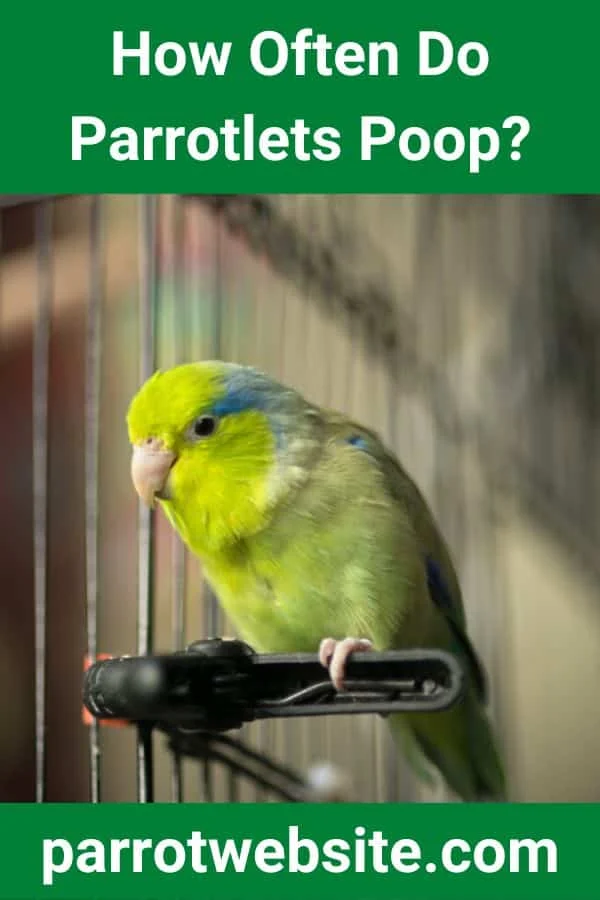
For many prospective pet owners, the allure of the parrotlet—a diminutive, vibrant, and highly intelligent member of the parrot family—is undeniable. Often referred to as "pocket parrots," these birds possess the personality of a much larger bird housed in a small, manageable frame. However, beneath their charming exterior lies a biological reality that frequently catches new owners off guard: their exceptionally high-frequency digestive cycle.
For those uninitiated in avian care, the sheer volume of waste produced by a bird weighing less than 35 grams can be startling. To ensure a harmonious relationship between human and bird, it is essential to move beyond the aesthetic appeal of these creatures and examine the physiological and practical implications of their high-metabolism lifestyle.
Main Facts: The Biological "Always-On" Engine
The primary reason for a parrotlet’s constant waste production is its hyper-active metabolism. Unlike mammals, which often possess more complex digestive tracts and storage capacities, the parrotlet operates on a "high-throughput" system. They are designed for flight, and to maintain the energy levels required for their rapid wing beats and active temperaments, they consume food almost continuously throughout their waking hours.
As a general rule of thumb, a healthy parrotlet will defecate every 15 to 30 minutes. This is not a sign of digestive distress or a health complication; rather, it is the standard operating procedure for a bird of this size. Because they lack a bladder, their anatomy combines liquid and solid waste into a single, cohesive byproduct. This process, which occurs in the cloaca, means that every time your bird relieves itself, it is performing a dual function of urination and defecation.
Chronology of Care: A 24-Hour Cycle
To understand the scope of the cleaning commitment required, one must look at the chronology of a parrotlet’s day.
The Morning Rush
The start of the day is often the most significant period for waste management. Throughout the night, while the bird is sleeping and not eating, waste accumulates in the cloaca. Upon waking, the first defecation is typically much larger than the tiny droppings produced during the day. Owners should be prepared for a substantial cleanup immediately upon uncovering the cage each morning.
Daytime Intervals
Throughout the day, the 15-to-30-minute interval remains consistent. If an owner allows their parrotlet to spend significant time out of the cage, this cycle dictates the bird’s behavior. Because the parrotlet has almost no voluntary control over the timing of this expulsion, the bird will simply pause, shift its posture, and deposit waste wherever it happens to be standing—be it on a shoulder, a keyboard, or a piece of furniture.
Evening Wind-down
As the bird prepares for sleep, the frequency of intake slows down, and consequently, the frequency of waste production decreases. However, the requirement for cage hygiene remains a constant daily responsibility, as the sheer frequency of these small, frequent drops can lead to a rapid buildup of bacteria if not addressed daily.
Supporting Data: Metabolism and Anatomy
The anatomy of a parrotlet is a marvel of evolutionary efficiency, yet it is arguably the most challenging aspect for a human to manage in a domestic setting.
Why They Cannot "Hold It"
In larger animals, the development of a bladder allows for the storage of liquid waste, permitting the animal to wait for a "convenient" time to urinate. Parrots have evolved to be as light as possible to facilitate flight. Carrying heavy, liquid-filled bladders would be an aerodynamic disadvantage. Therefore, they have bypassed the bladder entirely, processing waste directly from the kidneys into the cloaca. This means there is no "holding" capacity. When the cloaca is full, it must empty.
The Myth of Control
There is a common misconception that parrotlets, like dogs or cats, can be trained to signal their need to defecate. While some owners report success in conditioning their birds to fly to a specific "potty perch," this is less about the bird "holding it" and more about the bird learning a preferred routine. In reality, the bird is not controlling the reflex; it is simply choosing a location it finds comfortable. For the vast majority of owners, the bird will defecate wherever it is, including in mid-air or upon takeoff.
Implications for Domestic Life: Managing Expectations
The decision to bring a parrotlet into one’s home is a commitment to a decade or more of high-frequency maintenance.
The "No-Training" Reality
Prospective owners must accept that "potty training" is largely a misnomer in the avian world. While one can use positive reinforcement to encourage a bird to use a designated area, one can never truly "train" a bird to be continent. Expecting a parrotlet to wait to use the bathroom is a recipe for frustration and potential health issues for the bird, as holding in waste can lead to serious physiological stress.
Strategies for Success
To maintain a clean home environment, owners must employ creative strategies:
- Strategic Perching: Place natural wood perches in areas where the bird spends the most time. By placing newspapers or specialized avian liners beneath these perches, you catch a significant percentage of the waste.
- The "Uniform" Approach: Many owners wear dedicated "bird shirts" or use shoulder guards when interacting with their parrots. This allows for intimate bonding time without the risk of ruining clothing.
- Frequent Cage Maintenance: The use of moisture-wicking cage liners is recommended to keep the environment hygienic and to minimize the time spent scrubbing cage trays.
Official Responses and Professional Perspectives
Avian veterinarians and behaviorists emphasize that attempting to suppress a parrotlet’s natural digestive rhythm is ill-advised. According to experts in avian medicine, the most common issues arising from "potty training" attempts are owner-induced stress. When owners get angry at a bird for pooping on them or on the furniture, they create a volatile environment.
Veterinarians suggest that the key to a happy bird is not the modification of its biology, but the adjustment of the human lifestyle. If you are a person who values a pristine, "show-home" environment, the parrotlet may not be the ideal companion. Professional advice consistently points to "acceptance as a component of care." When you choose to share your life with an exotic creature, you are choosing to accept the natural, messy, and frequent biological realities of that animal.
Conclusion: The Commitment Required
The parrotlet is a bird of immense joy, intelligence, and personality. However, the "clean-up" aspect of their ownership is not a minor inconvenience—it is a foundational element of the relationship.
If you are considering adopting a parrotlet, ask yourself if you can handle the responsibility of a creature that will, without malice or intent, leave its mark on your world every fifteen minutes. If you can accept this, you will be rewarded with the companionship of one of the most vibrant and engaging animals on the planet. If the prospect of constant cleaning feels like an insurmountable hurdle, it is better to recognize that reality now, rather than after the bird has joined your family.
Ultimately, the parrotlet is a reminder that nature is not always tidy. Embracing this messiness is part of the broader experience of living with an animal that has not been domesticated, but rather, has chosen to coexist with us on its own terms. Manage your expectations, equip yourself with the right cleaning tools, and you will find that the bond formed with these tiny, energetic creatures is well worth the paper towels.