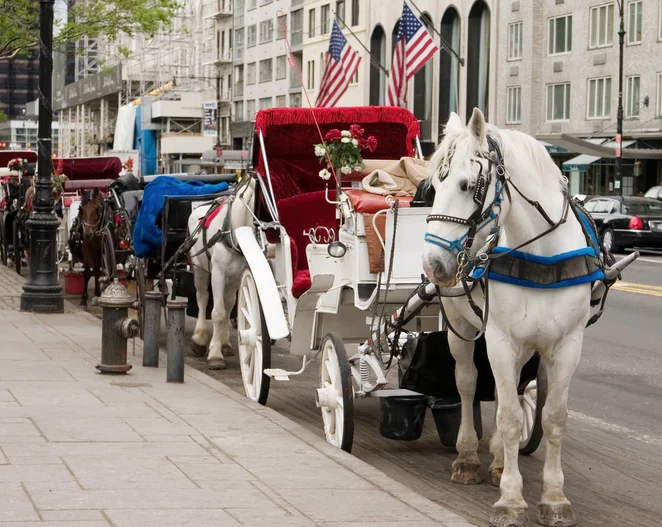
NEW YORK — In a landmark legislative move that reshapes a tradition stretching back nearly two centuries, the New York City Council has voted overwhelmingly to phase out the city’s horse-drawn carriage operations. Passing by a decisive 40-7 margin, the historic measure marks a watershed moment for animal welfare advocates, urban safety planners, and labor representatives alike.
The legislation, formally designated as Introduction 943-A and widely known as Romanch’s Law (formerly referred to as Ryder’s Law), sets a hard deadline of June 1, 2028, for the complete cessation of horse-drawn carriage operations on the bustling streets of Manhattan. The bill now heads to Mayor Zohran Mamdani, who has expressed support for the measure and is widely expected to sign it into law, cementing a new chapter for the city’s historic parks and congested corridors.
Main Facts: What Romanch’s Law Entails
Romanch’s Law represents a comprehensive legislative framework designed to wind down an industry that has operated in Central Park since 1858. The core components of the new law include:
- The Phase-Out Timeline: Effective June 1, 2028, the city will cease issuing licenses for carriage horses, horse-drawn cabs, and drivers. Any licenses active prior to this date will permanently expire on May 31, 2028, with no option for renewal.
- Prohibition of Inhumane Transfers: To protect the animals from neglect or exploitation after operations cease, the bill strictly bans the sale or transfer of carriage horses for "inhumane purposes"—explicitly forbidding their entry into the slaughter pipeline or their deployment in other commercial carriage operations.
- Comprehensive Transition Plans: By April 1, 2027, city agencies designated by the Mayor must formulate a comprehensive transition blueprint. This will include workforce retraining and job placement programs for drivers and stable hands, alongside economic considerations such as business compensation and assistance for horse owners to safely rehome their animals and equipment.
- The Impetus: The legislation was forged in the wake of a tragic accident on June 17, 2026, which claimed the life of 18-year-old Romanch Mahajan following a carriage-related incident in Central Park.
Chronology: From 19th-Century Tradition to 21st-Century Controversy
To understand the weight of the City Council’s recent vote, one must trace the evolution of the horse-drawn carriage in New York City across three distinct eras:
1. The Origins (1858–Late 20th Century)
Horse-drawn carriages were introduced to Central Park shortly after its creation in 1858, initially serving as a primary mode of elegant transportation for affluent New Yorkers and visitors. Over the decades, as the automobile took over urban transit, the carriages evolved from practical conveyances into nostalgic, romanticized tourist attractions that came to define the postcard image of Manhattan.
2. Decades of Mounting Scrutiny
As New York City grew increasingly dense, the compatibility of large livestock with modern, high-speed urban traffic deteriorated. For decades, animal welfare organizations—led prominently by the American Society for the Prevention of Cruelty to Animals (ASPCA)—raised alarms regarding the welfare of the horses. Critics pointed to extreme summer heat waves, exhaust fumes, terrifying encounters with aggressive motorists or sirens, and inadequate stable conditions as inherent hazards of urban carriage work.
3. The Catalyst: Summer 2026 and the Birth of Romanch’s Law
The debate shifted from advocacy campaigns to a legislative emergency on June 17, 2026, when an 18-year-old named Romanch Mahajan tragically lost his life following a carriage-related accident in Central Park. The tragedy galvanized public sentiment, putting immense pressure on city lawmakers to address long-standing safety liabilities. Within months, Council Member Christopher Marte introduced Introduction 943-A, pivoting the conversation from mere regulatory tweaks to an orderly, humane abolition of the industry. Following hours of emotional testimony from drivers, advocates, and constituents, the City Council passed the bill 40-7 on October 22, 2026.
Supporting Data: The Strains of a Modern Metropolis
The decision to retire the carriage horses was not made in a vacuum; it was driven by stark demographic and logistical data reflecting the realities of 21st-century New York:
- Central Park Congestion: Central Park now welcomes more than 42 million visitors annually, creating an unprecedented level of foot, bicycle, and micro-mobility traffic that intersects directly with the carriage routes.
- Urban Density: Manhattan streets are busier and noisier than at any point in the city’s history. The juxtaposition of heavy commercial traffic, delivery trucks, and easily startled prey animals (horses) has created a persistent public safety hazard.
- Global Precedent: New York City joins a growing international consensus that traditional carriage operations are incompatible with modern urban centers. Domestically, cities such as Chicago, Philadelphia, and Salt Lake City have already prohibited or phased out horse-drawn carriages. Internationally, major global capitals—including London, Paris, Toronto, Barcelona, Montreal, and Beijing—have restricted or ended similar practices.
Official Responses: Leaders Weigh In on the Historic Vote
The passage of Romanch’s Law elicited strong reactions from political leaders, animal rights champions, and industry stakeholders.
City Leadership
City Council Speaker Julie Menin lauded her colleagues for taking decisive action.
"Today, the City Council made history," said Speaker Menin. "Our landmark vote to pass Romanch’s Law is a demonstration of this Council’s commitment to animal welfare, public safety and worker protection. The tragic and preventable death of 18-year-old Romanch Mahajan this summer underscored the need for urgent action after decades of mounting concerns… The status quo has become unsustainable and unsafe for horses and people alike."
Council Member Christopher Marte, the primary sponsor of the legislation, emphasized the collaborative effort required to balance animal protection with the livelihoods of working New Yorkers.
"Today, the Council passed legislation that protects horses and passengers while supporting carriage workers as they move into new livelihoods," Marte stated. "Romanch’s Law provides time for that transition and requires the city to help workers access job opportunities, training and career support. After decades of debate, the persistence of advocates and the courage of the Mahajan family have helped us reach a point where we can retire these horses safely."
Animal Welfare Advocates
The ASPCA, headquartered in New York City since its founding in 1866, celebrated the vote as the realization of a decades-long mission. While acknowledging that regulatory measures have historically offered incremental improvements, the organization maintained that no amount of oversight can completely insulate working animals from the dangers of dense city streets.
"We are grateful to Council Member Marte and Speaker Menin for their leadership in passing this historic legislation, and we urge Mayor Mamdani to sign Intro. 943 into law," said Matt Bershadker, President and CEO of the ASPCA. "This phases out horse-drawn carriages while providing a responsible path forward for both the horses and the workers who depend on the industry."
Bershadker added that the ASPCA stands ready to leverage its network of equine rescue partners, sanctuaries, and retirement coalitions to ensure every displaced carriage horse finds a safe, humane, and permanent home.
Implications: The Road Ahead to June 2028
As New York City prepares for the post-carriage era, the next 19 months will be critical for implementation. The multi-faceted transition will test the city’s administrative capacity across several areas:
- Equine Welfare and Rehoming: City agencies must collaborate closely with organizations like the ASPCA and independent rescue groups to catalog, vet, and rehome dozens of horses. The strict prohibition against slaughter or secondary commercial carriage use guarantees that these animals will spend their twilight years in verified sanctuaries or private, non-commercial retirements.
- Workforce Reintegration: For generations, carriage drivers and stable hands have built their livelihoods around the stables of the West Side and Central Park. The mandated transition plan—due by April 1, 2027—must deliver tangible economic relief, career counseling, and job placement assistance to ensure these workers are not left behind.
- Park Tourism and Cultural Adaptation: Central Park tourism will undoubtedly pivot. City planners and tourism boards are already evaluating alternative, modern visitor experiences—such as electric-powered vintage replica cars—that can capture the romantic aesthetic of the 19th-century carriages without the associated animal welfare and safety risks.
A New Chapter for Manhattan
When the final carriage license expires on May 31, 2028, New York City will close a 170-year chapter of its cultural history. While the clip-clop of hooves along the asphalt of Central Park South will fade into memory, the legacy of Romanch’s Law will endure as a testament to a city willing to re-evaluate its traditions in the name of safety, compassion, and progress.