In an era where the private lives of public officials are under constant digital scrutiny, U.S. Health and Human Services (HHS) Secretary Robert F. Kennedy Jr. has found himself at the center of an unlikely controversy: his hands-on approach to local wildlife management. Following a viral video capturing his attempt to relocate a Western diamondback rattlesnake from his driveway, Kennedy has ignited a firestorm of discussion regarding public safety, animal welfare, and the boundaries of amateur herpetology.
Main Facts: A High-Stakes Driveway Encounter
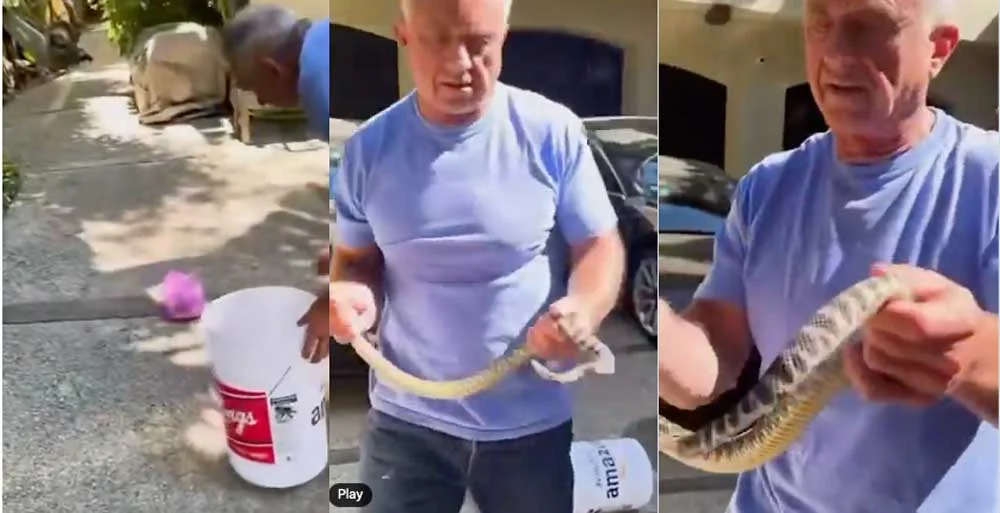
The incident, which occurred in late May 2026, features Secretary Kennedy employing unconventional—and many experts argue, dangerous—tactics to secure a venomous reptile. Armed with little more than a standard butterfly net and a plastic bucket, Kennedy was filmed attempting to coerce a Western diamondback rattlesnake into custody.
The footage, shared by the Secretary himself on social media, depicts a chaotic scene. As the rattlesnake’s signature warning signal—the rapid vibration of its tail—echoed throughout the driveway, Kennedy attempted to guide the serpent into the net. In one particularly perilous moment, he bypassed the equipment entirely, attempting to push the agitated snake with his bare hand.
The capture reached a controversial crescendo when, after successfully containing the animal, Kennedy dumped it back out to pin its head using a kitchen spatula. By applying firm pressure to the snake’s cranium, he was able to grasp the animal behind the head to display its full length for the camera, labeling the creature a "beautiful Western diamondback" before eventually releasing it into nearby brush.
Chronology of Kennedy’s Reptilian Rescues
Secretary Kennedy’s history with reptiles is well-documented, painting a picture of an official who views himself as a steward of the environment, even when those environments are suburban residential areas.
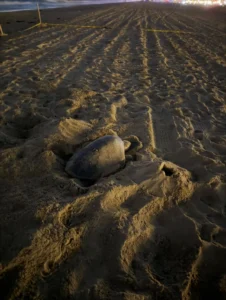
- 2013 (Nantucket Sound): Kennedy and his brother, Max, intervened to rescue a leatherback sea turtle ensnared in a buoy line. While the intent was humanitarian, the action drew the ire of the National Marine Fisheries Service. Because the brothers lacked the requisite federal permits to interact with an endangered species, the act was deemed a technical violation of the Endangered Species Act, highlighting the legal complexities of "rescue" efforts.
- 2024 (Presidential Campaign): During the heat of his short-lived presidential bid, footage surfaced of Kennedy untangling a gopher snake from plastic netting at the home of his daughter’s friend. The act was largely viewed as a character-building moment, portraying him as a man of action and compassion.
- May 2026 (The "Racer" Incident): Just days before the rattlesnake video went viral, Kennedy made headlines for subduing a pair of black racer snakes on the patio of Dr. Mehmet Oz. This incident was the precursor to the intense scrutiny he now faces regarding his methods.
- May 27, 2026: Kennedy posts the rattlesnake video to his social media channels, explicitly framing it as a demonstration of how he and his wife, Cheryl Hines, manage wildlife on their property.
Supporting Data: The Perils of Amateur Handling
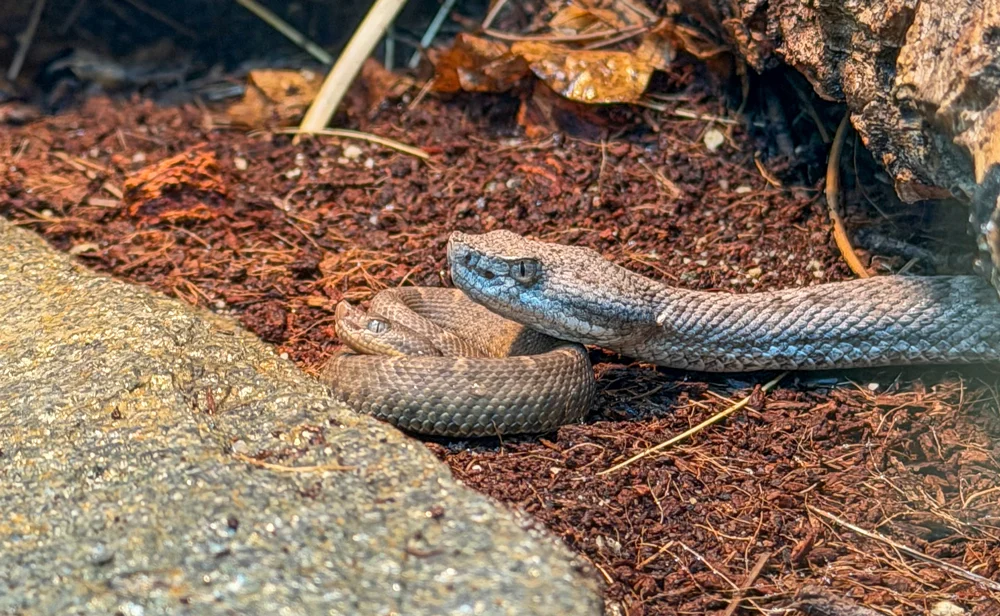
To understand why the public and scientific communities are reacting with such alarm, one must look at the biological reality of the Western diamondback (Crotalus atrox). As one of the most venomous snakes in North America, C. atrox is responsible for a significant number of snakebite cases annually.
According to herpetological safety standards, the tools used by Kennedy—a butterfly net and a kitchen spatula—are entirely inadequate for venomous snake relocation. Professional wildlife removal specialists emphasize the following:
- Safety Distance: A snake’s "strike zone" is typically one-third to one-half of its body length. By attempting to use his hand to "nudge" the snake, Kennedy placed himself well within the lethal range of a defensive strike.
- Tool Efficacy: Snake hooks and tongs are designed to provide a buffer between the human and the venomous animal. A butterfly net is prone to tearing, and a spatula offers no protection against the speed and precision of a defensive rattlesnake.
- Animal Stress: Pinning a snake’s head with a kitchen tool is not a recognized or humane relocation technique. It subjects the animal to potential spinal injury and unnecessary stress, which in turn increases the likelihood of a defensive strike.
"When you handle a venomous snake with kitchen implements, you aren’t performing a rescue; you are performing a dangerous stunt," says Dr. Elena Vance, a research herpetologist. "The risk of envenomation is not just a personal matter for the Secretary—it is a matter of public health optics."
Official Responses and Public Reaction
The backlash to the video was swift. Critics from both the political and scientific spheres have questioned the judgment of a high-ranking official who chooses to engage in high-risk wildlife handling without proper equipment or training.
In his social media post, Kennedy appeared to anticipate the criticism, framing the act as a "rattlesnake rescue." However, his attempt to normalize the behavior as a household chore was met with derision. Wildlife advocates have pointed out that if a high-profile official is seen "pinning" snakes with spatulas, it encourages a dangerous and misguided precedent for the general public, who may attempt similar feats without the resources—or the healthcare access—that a Cabinet member enjoys.
When pressed for comment, the Department of Health and Human Services issued a brief statement noting that the Secretary’s personal activities on his private property do not reflect official department policy. There has been no formal apology or acknowledgement that the methods used were hazardous.
Implications: The Intersection of Governance and Personal Conduct
The viral nature of these videos raises significant questions about the "Kennedy brand" and the role of modern political figures. In an age of social media, the line between a politician’s private life and their public persona is increasingly blurred.
The Public Health Perspective
As the head of the Department of Health and Human Services, Kennedy oversees the very institutions—such as the CDC and FDA—that formulate guidelines on injury prevention. For an official tasked with promoting public safety to broadcast videos of himself engaging in activities that are, by all medical standards, "high-risk," creates a cognitive dissonance. If a private citizen were to present to an emergency room with a rattlesnake bite sustained while attempting to use a spatula to pin the animal, the incident would be categorized as a preventable injury.
The Legal and Ethical Dimension
The 2013 leatherback turtle incident serves as a reminder that Kennedy’s desire to "intervene" in nature has legal limits. While moving a rattlesnake in one’s own driveway is generally a personal matter, the documentation of these events suggests a pattern of behavior that prioritizes personal narrative over professional wildlife management protocols.
The Future of Wildlife Interaction
There is a growing call from professional organizations, such as the North American Field Herpetologists Association, for Kennedy to either cease these interventions or invest in professional-grade gear. "If you live in rattlesnake country, buy a snake hook. Take a course. Don’t make it a spectacle," urges the association in a recent open letter.
Ultimately, the rattlesnake incident is a microcosm of a larger debate. It asks us to consider how much risk we are willing to tolerate from our leaders and whether the digital drive for "viral content" has compromised the basic safety standards that should guide those in positions of power. Whether one views Kennedy as a rugged conservationist or a reckless amateur, the video of the spatula-wielding Secretary will likely remain a hallmark of his tenure—a bizarre, dangerous, and thoroughly modern political footnote.
As Secretary Kennedy continues his term, the public will be watching not just for his policy decisions, but for his next move in the driveway. The question remains: will the HHS Secretary heed the warnings of experts, or will the allure of the next viral "rescue" prove too strong to resist? In the world of herpetology, as in the world of politics, the most dangerous strikes are often the ones you don’t see coming.