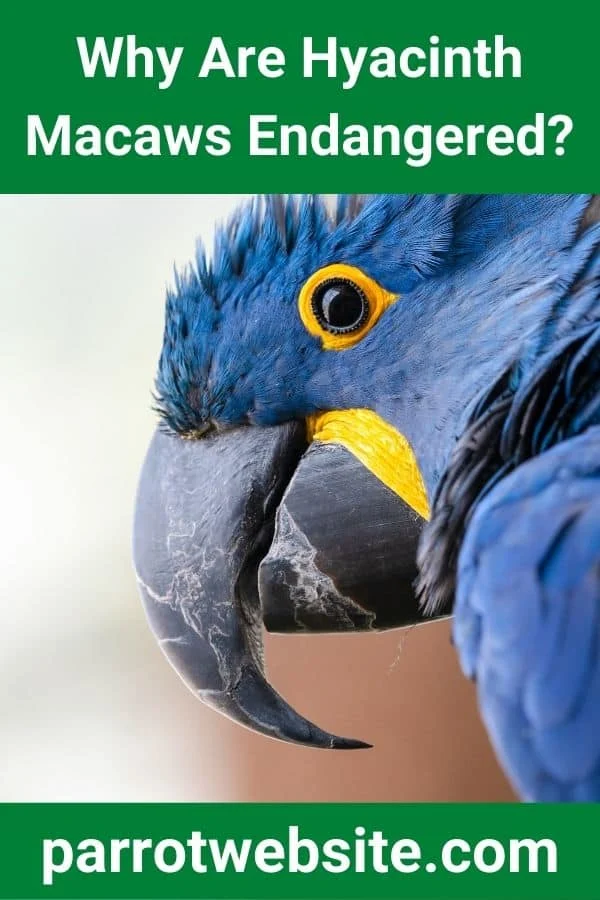
During a recent family excursion to Disney’s Animal Kingdom, the vibrant, cobalt-blue silhouette of the hyacinth macaw (Anodorhynchus hyacinthinus) commanded the attention of every guest in its vicinity. Known as the world’s largest flying parrot, this magnificent creature is a testament to the evolutionary splendor of the South American rainforest. Yet, beneath their striking appearance lies a somber reality: these birds are currently classified as "Vulnerable" on the IUCN Red List of Threatened Species. For many visitors, the realization that such an iconic animal faces a precarious future in the wild comes as a jarring revelation.
To understand the hyacinth macaw’s current status, one must look beyond the park enclosures and into the complex intersection of global commerce, habitat loss, and conservation science.
Main Facts: The Anatomy of a Crisis
The hyacinth macaw is not merely a pet-trade curiosity; it is a keystone species of the Pantanal wetlands, the Cerrado grasslands, and the Amazon basin. Reaching lengths of up to 40 inches and possessing an incredible wingspan, they are easily recognized by their solid, brilliant blue plumage and bright yellow orbital rings around their eyes.
However, their beauty has historically been their downfall. As a highly social and intelligent species, they have been subjected to intense anthropogenic pressures. The core facts of their decline are rooted in three primary drivers:
- The Pet Trade: Historically, their high intelligence and striking aesthetics made them a prime target for illegal and legal wildlife trafficking.
- Poaching for Feathers: The iridescent blue feathers have long been harvested, often illegally, for artisanal crafts and collector markets.
- Habitat Fragmentation: The conversion of their native range into agricultural land—specifically for cattle ranching and soy production—has decimated the nesting sites necessary for their reproductive success.
Chronology: A History of Exploitation
The plight of the hyacinth macaw is not a sudden occurrence but a culmination of decades of environmental and economic mismanagement.
The 1980s: The Great Extraction
The most catastrophic era for the species occurred during the 1980s. Fueled by a surge in global demand for exotic pets, the legal and black-market trade in macaws reached a fever pitch. Conservationists estimate that as many as 10,000 individual birds were harvested from their natural habitats during this single decade. This mass removal devastated the genetic diversity of the population and created an age-gap crisis in the wild, as the oldest, most productive breeding pairs were often the primary targets of poachers.
The 1990s to Early 2000s: Legislative Intervention
Recognizing the imminent risk of extinction, international governing bodies moved to categorize the bird under CITES (Convention on International Trade in Endangered Species of Wild Fauna and Flora) Appendix I. This effectively banned international commercial trade in wild-caught individuals. While this significantly curtailed the legal export market, it inadvertently bolstered the black market, as the scarcity of the bird drove up its price on the underground exotic pet market.
The Modern Era: Focus on Habitat
In the last two decades, the focus has shifted from mere trade prevention to landscape-scale conservation. Organizations have begun working with private landowners in the Pantanal to protect nesting trees, such as the manduvi tree, which is essential for the macaw’s breeding cycle.
Supporting Data: The Numbers Behind the Decline
The statistics surrounding the hyacinth macaw are, at best, estimates—a reflection of the difficulty in tracking a species that inhabits vast, often inaccessible regions of South America.
- Total Wild Population: Current estimates vary wildly, with conservative figures suggesting as few as 2,000 individuals, while more optimistic census reports suggest up to 6,500. Regardless of the exact number, it is a staggering decline from pre-colonial figures.
- The Captivity Paradox: While wild numbers dwindle, the number of captive-bred macaws in private homes and zoos remains relatively high. Because the species can be bred in captivity, the "domestic" population is arguably more secure than the wild one. However, captive-bred birds often lack the behavioral traits necessary for reintroduction, making the wild population the only true measure of the species’ long-term survival.
- The 10,000 Threshold: To put the population decline in perspective, the number of birds removed in the 1980s is nearly double the number currently estimated to exist in the wild. This historic debt is a primary reason why recovery has been so slow.
Official Responses and Conservation Efforts
International conservation agencies, including the International Union for Conservation of Nature (IUCN), maintain the species under the "Vulnerable" classification. This is a critical distinction: the bird is not "Endangered" (which would imply a high risk of extinction in the near future) nor is it "Extinct." It is, however, "Threatened," which serves as a red flag for ecologists.
The Role of Managed Reintroduction
Several breeding programs in Brazil have pioneered the practice of reintroducing captive-bred macaws into areas where populations had been locally extirpated. These programs focus on "soft release" methods, where birds are gradually acclimated to the wild, learning to forage for native nuts and identify predators, which is a significant improvement over previous "hard release" attempts that saw high mortality rates.
The Shift in Tourism
The development of "ecotourism" has proven to be an unexpected lifeline. In the Pantanal, local communities have realized that a live macaw—viewed by thousands of tourists over its 50-year lifespan—is worth significantly more to the regional economy than a poached bird. By transforming former poachers into wildlife guides, conservationists have managed to reduce illegal hunting pressure in several key territories.
Implications: Can We Save the Sapphire Giant?
The question of whether the hyacinth macaw is destined for extinction remains the subject of intense debate. The prevailing consensus among wildlife biologists is that the species is not on the brink of total collapse, provided that current protection levels are maintained and, where possible, expanded.
The Domestic Safety Net
One of the most complex aspects of this issue is the role of the domestic population. While some conservationists argue that private breeding is a distraction from wild habitat protection, others contend that a robust genetic bank in captivity acts as an insurance policy against catastrophic events in the wild, such as disease outbreaks or severe weather events caused by climate change.
The Path Forward
To ensure the survival of the hyacinth macaw, several hurdles must be cleared:
- Habitat Connectivity: Protecting isolated nesting trees is insufficient. We must protect the "corridors" of forest that allow different macaw sub-populations to interact, ensuring genetic health.
- Law Enforcement: The black-market demand for feathers and live birds persists. Strengthened border controls and intelligence-led policing in South America are essential to stopping the flow of wildlife.
- Public Awareness: As my son discovered at the zoo, the emotional connection formed between humans and these birds is a powerful tool. When the public understands the link between their potential purchase of an exotic pet and the destruction of a species, market demand decreases.
Conclusion: A Fragile Hope
The hyacinth macaw remains one of nature’s most hauntingly beautiful creations. Its survival is not guaranteed by its current "vulnerable" status; rather, that status is an urgent call to action. We are currently in a pivotal decade. If we can maintain the momentum of habitat protection and continue to stifle the illicit trade, the sapphire shadow will continue to fly over the South American canopy. However, if we become complacent, resting on the fact that they are "not yet extinct," we risk losing one of the most magnificent biological treasures on our planet.
The story of the hyacinth macaw is ultimately a story about us. It reflects our capacity for destruction, but also our growing ability to mend the fractures we have caused in the natural world. Whether these birds remain a part of our world—or become another cautionary tale in the annals of history—will be determined by the choices made by the current generation of conservationists, policymakers, and, most importantly, the global public.