By Investigative Staff
In the high-stakes world of premium pet nutrition, the labels often promise a standard of quality that mirrors human dining: "organic," "humanely raised," and "natural." However, a recent solicitation from a major salvage broker has pulled back the curtain on a disturbing reality within the global supply chain. It reveals how tens of thousands of pounds of spoiled, malodorous meat—deemed unfit for human consumption—can legally transition from a warehouse floor into the bowls of unsuspecting pets, all while maintaining a "premium" label.
At the heart of this controversy is a 53,000-pound shipment of organic lamb that sat in a state of decay for nearly a year before being pitched to pet food manufacturers. The incident has reignited a fierce debate over "economically motivated adulteration" and the Federal Food and Drug Administration’s (FDA) refusal to mandate transparency in pet food labeling.
Main Facts: The 53,000-Pound Offer
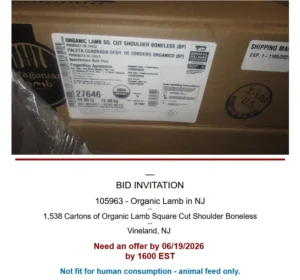
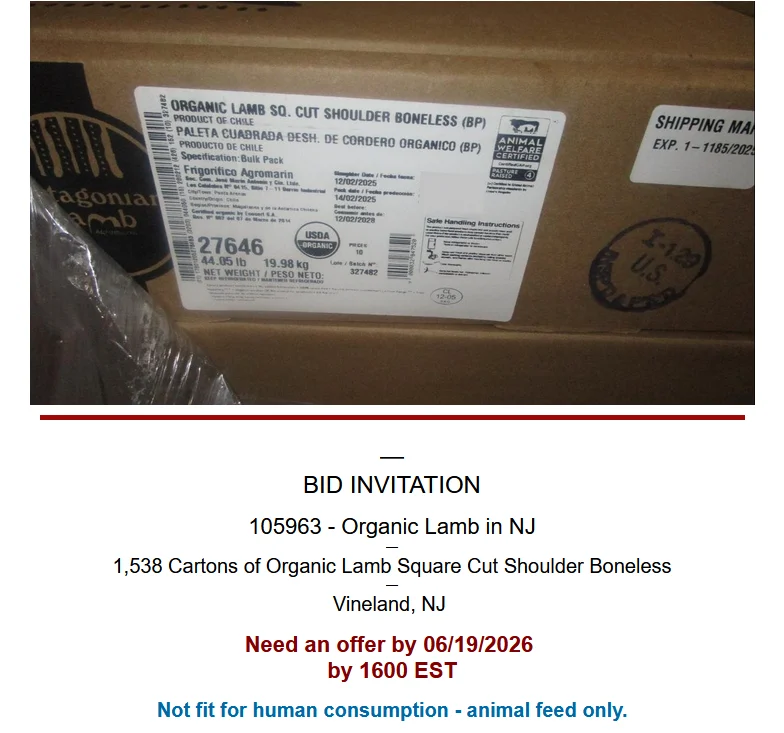
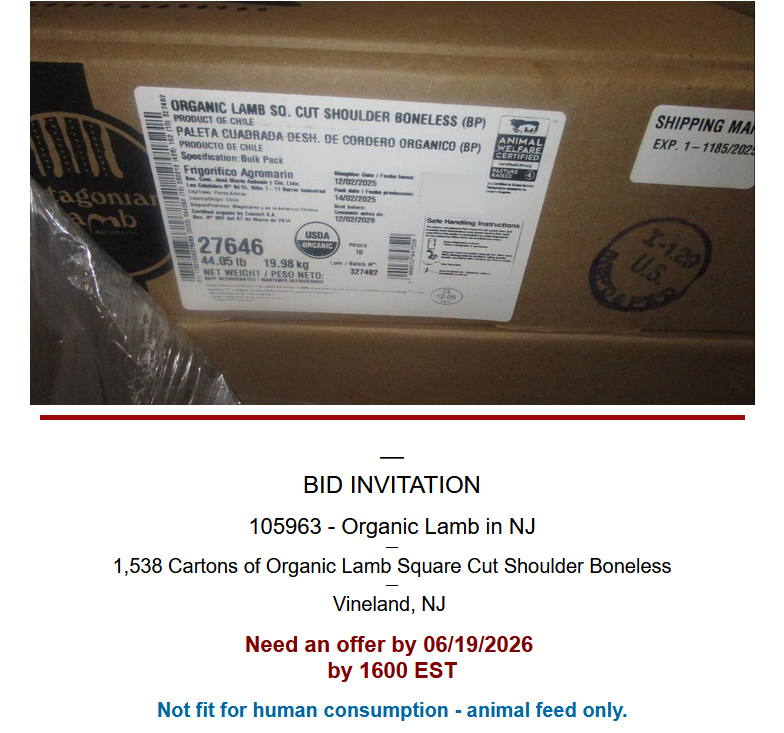
The controversy began when Benedict Company, a prominent salvage broker specializing in the resale of distressed or damaged goods, issued an "offer" to pet food manufacturers. The product in question was a massive inventory of Organic Lamb Square Cut Shoulder (Boneless).
The specifics of the offer are as follows:
- Total Quantity: 1,538 cartons.
- Total Net Weight: 53,077.15 lbs.
- Original Status: Certified Organic, USDA-approved for human consumption upon arrival.
- Current Status: Reclassified as "Animal Feed Only."
The salvage broker’s pitch was candid about the product’s condition. According to the internal communication, the lamb had arrived at a warehouse on June 20, 2025, in a frozen state. However, due to a logistical error, the facility stored the containers as "chilled" rather than "frozen."
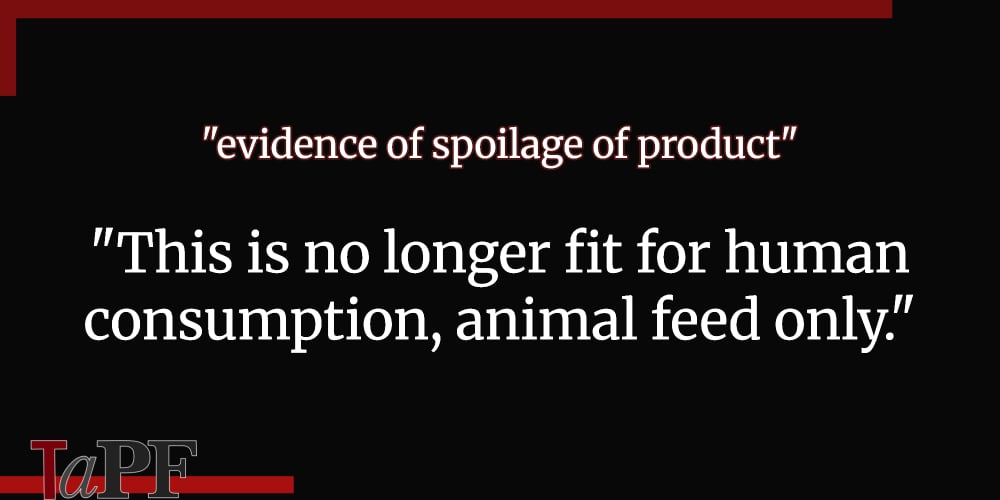
This mistake triggered a catastrophic chain of spoilage. The meat defrosted, leading to what the surveyor described as "considerable bloodletting." The resulting leakage saturated the packaging, leaving blood stains across hundreds of cartons. Most concerningly, a survey conducted nearly a year later noted a distinct "malodor"—a polite industry term for the smell of rotting flesh—and significant icing within the cartons, suggesting the product had been re-frozen after the spoilage had already begun.
Under federal law, meat that has undergone this level of temperature abuse and decomposition is legally barred from the human food supply. However, under current FDA "enforcement discretion," it remains a viable, and highly profitable, ingredient for the pet food industry.
Chronology of Spoilage: A Year in Limbo
To understand the scale of this regulatory loophole, one must look at the timeline of the lamb’s degradation. The journey from a premium organic product to a salvaged "feed-grade" ingredient spans exactly 364 days.
- June 20, 2025: The frozen organic lamb arrives at the warehouse and passes USDA inspection. At this moment, it is "human-grade" meat, destined for high-end butchers or organic grocers.
- Post-Arrival (Summer 2025): The warehouse mistakenly stores the product in a chilled section. The lamb thaws completely. Blood leaks from the vacuum seals, soaking the cardboard cartons. Spoilage begins as bacteria multiply in the temperate environment.
- Discovery & Re-freezing: Warehouse personnel eventually notice the blood leakage and the error. Instead of disposing of the meat, the product is moved back into deep freeze. This halts the rot but does not reverse the bacterial load or the chemical changes (such as the development of biogenic amines) that occur during decomposition.
- June 4, 2026: An official survey is conducted. The surveyor notes the "malodor" and the damaged packaging. The meat is officially declared "no longer fit for human consumption."
- June 2026: Benedict Company begins soliciting bids from pet food manufacturers. The deadline for bids is set for June 19, 2026—just one day shy of a full year since the meat first arrived at the warehouse.
This chronology highlights a systemic issue: meat can sit in a state of documented decay for a year and still be legally sold as a primary ingredient in pet food, provided it is processed to kill pathogens.
Supporting Data: The Economics of Adulteration
The pet food industry is a multi-billion dollar sector driven increasingly by "humanization"—the trend of pet owners seeking food that matches their own dietary standards. According to market research, the "Organic" and "Natural" pet food segments are among the fastest-growing.
However, the salvage market creates a massive disconnect between marketing and reality.
- Cost Arbitrage: Human-grade organic lamb can cost several dollars per pound at wholesale. Salvage lamb, specifically marked "animal feed only" due to spoilage, can be acquired at a fraction of that cost—often pennies on the dollar.
- Nutritional Degradation: While high-heat processing (rendering or extrusion) can kill bacteria like Salmonella or E. coli present in spoiled meat, it does not necessarily remove heat-stable toxins or restore the nutritional integrity of the protein.
- The "Organic" Loophole: Under current USDA National Organic Program (NOP) rules, if the livestock was raised and slaughtered under organic certification, the resulting meat is "organic." The fact that it subsequently rotted in a warehouse does not technically strip it of its "organic" status in the eyes of labeling laws, even if it is no longer safe for humans to eat.
Susan Thixton, a prominent pet food consumer advocate and founder of TruthAboutPetFood.com, argues that this is a textbook case of Economically Motivated Adulteration (EMA). The FDA defines EMA as the "fraudulent, intentional substitution or addition of a substance in a product for the purpose of increasing the apparent value of the product or reducing the cost of its production."
In this instance, a manufacturer can purchase spoiled lamb (reducing costs) and sell it as "Organic Lamb" (increasing apparent value), relying on the fact that the consumer has no way of knowing the meat was salvaged.
Official Responses: The FDA’s Stance on "Consumer Expectations"
The regulatory vacuum that allows this practice to persist is not an oversight, but a deliberate policy choice. For years, advocacy groups have petitioned the FDA to require clearer labeling on pet food, specifically demanding that ingredients unfit for human consumption be labeled as "feed grade."
In June 2022, the Association for Truth in Pet Food (ATPF) submitted a formal request to the FDA. The petition asked the agency to establish a "standard of identity" for feed-grade ingredients, ensuring that if a pet food used salvaged, 4-D (dead, dying, diseased, or disabled), or spoiled meat, the label would have to disclose that information.
After a delay of over 1,000 days, the FDA issued a final response in March 2026. The agency denied the request.

In its response, the FDA stated that it failed to see how a "feed grade" disclosure was "necessary to maintain the integrity of the food, or ensure that the food meets consumer expectations." The agency maintained that as long as the final product is safe for the animal (meaning it doesn’t contain active pathogens at the time of sale), the history and quality of the raw ingredients are secondary.
Critics argue this response ignores the very definition of "integrity." If a consumer buys a bag of kibble featuring a picture of a succulent lamb roast and the words "Certified Organic," their "expectation" is certainly not a product made from year-old, malodorous meat that leaked blood onto a warehouse floor.
Implications: The Transparency Crisis
The implications of the Benedict Company offer extend far beyond a single shipment of lamb. It exposes a systemic lack of transparency that affects millions of pet owners.
1. The Marketing Mirage
Under current regulations, the winning bidder for the 53,000 lbs of spoiled lamb is legally allowed to:
- List "Organic Lamb" as a primary ingredient.
- Use high-definition imagery of fresh, roasted meat on the packaging.
- Claim the product is "humanely sourced" or "sustainably raised."
- Charge a premium price consistent with high-quality organic products.
There is no requirement to disclose that the meat was "salvage," "spoiled," or "unfit for human consumption."
2. The Safety Risks of "Re-frozen" Spoilage
While the FDA focuses on pathogens, veterinary toxicologists have raised concerns about biogenic amines (like histamine, putrescine, and cadaverine) that form when meat spoils. These compounds are not always destroyed by the heat of pet food manufacturing. High levels of biogenic amines in pet food have been linked to food refusal, digestive upset, and long-term metabolic stress in cats and dogs.
3. Erosion of Trust in "Organic" Labels
This case threatens the integrity of the "Organic" seal. If the seal can be applied to rotting salvage meat just as easily as to fresh, human-grade cuts, the value of the certification is diluted. Consumers paying a premium for organic products do so under the assumption of a higher safety and quality standard throughout the entire life cycle of the product—not just at the point of slaughter.
Conclusion: A Call for Regulatory Reform
The revelation of the Benedict Company’s lamb offer serves as a stark reminder that in the pet food industry, what you see on the label is often a curated fiction. As long as the FDA continues to exercise "enforcement discretion" regarding the quality of raw ingredients, the pet food bowl will remain a convenient disposal site for the human food industry’s failures.
Advocates like Susan Thixton continue to urge pet owners to contact the FDA’s Center for Veterinary Medicine (CVM). The message from consumer groups is clear: the use of salvaged, spoiled meat without disclosure is food fraud. Until the law requires the industry to distinguish between "human-grade" and "feed-grade" (salvage) ingredients, the burden of due diligence falls entirely on the consumer.
For now, 53,077 pounds of "malodorous" organic lamb are heading to a processing plant. In a few months, they will appear on retail shelves, hidden behind glossy packaging and the promise of "premium" nutrition. The pets will eat it; the owners will pay for it; and the secret of the warehouse floor will remain buried in the fine print of a salvage broker’s email.