
March 30, 2026 | General Science & Animal Behavior
For decades, the study of animal behavior—and by extension, the training of our domestic companions—was filtered through a lens of rigid hierarchies, aggression, and "nature, red in tooth and claw." This perspective, largely established by male researchers in the mid-20th century, focused heavily on male-dominated power structures. However, as Women’s History Month prompts a reflection on the evolution of scientific inquiry, it becomes clear that our modern understanding of social complexity is deeply indebted to two pioneering primatologists: Dr. Jeanne Altmann and Dr. Shirley Strum.
By shifting the gaze of science away from the dramatic "alpha" conflicts and toward the nuanced, often quiet realities of cooperation and reciprocity, these women fundamentally altered how we view the animal kingdom—and perhaps, how we should view our own.
The Foundations of Field Observation: The "Trimates" and Their Successors
In the mid-20th century, the landscape of primatology was forever changed by Louis Leakey’s decision to recruit three women—Jane Goodall, Dian Fossey, and Birutė Galdikas—to study primates in their natural habitats. Leakey, an anthropologist with a keen eye for talent, famously reasoned that women would bring a level of patience and observational detail that his male peers often lacked.
The "Trimates," as they became known, proved Leakey right, documenting complex social lives in chimpanzees, gorillas, and orangutans that had previously been invisible to laboratory-based researchers. Yet, even as these women broke barriers, a deeper methodological revolution was brewing in the study of baboons—one that would dismantle the obsession with "aggression as the primary driver of evolution."

Methodology and the Shift to "Focal Sampling"
The most significant hurdle in early behavioral science was the reliance on "ad lib" sampling. In this model, researchers recorded whatever dramatic events caught their eye—usually fights, territorial disputes, or male displays of dominance. Because these events are inherently "loud" and visually arresting, they created a skewed perception of nature. If a researcher only notes when a male baboon acts aggressively, the resulting data suggests that aggression is the defining characteristic of the species.
Dr. Jeanne Altmann revolutionized this approach with the introduction of "focal sampling." Instead of waiting for a "show" to happen, a researcher would observe a single, specific individual for a set period, meticulously recording every action—from foraging to grooming to resting.
The impact of this shift was seismic. When the focus moved from the group’s "action" to the individual’s daily reality, the myth of the hyper-aggressive, dominance-driven society began to crumble. As the International Encyclopedia of Primatology notes, Altmann’s work profoundly changed the prevailing view of mammalian females, elevating their roles from passive members of a hierarchy to central, active architects of social stability. Her research provided the foundation for our current understanding of how maternal behavior and social environment influence the phenotype of offspring through non-genetic pathways.
Cooperation as an Evolutionary Strategy: The Work of Dr. Shirley Strum
While Altmann provided the method, Dr. Shirley Strum provided the narrative correction. Beginning her work with olive baboons in 1972, Strum entered a field that was still largely dominated by the "male-centric" model of dominance.
Strum’s findings were disruptive. She discovered that while aggression existed, it was merely one of many tools used to navigate life. Far more important to the long-term success of the baboon were the sophisticated strategies of cooperation and reciprocity. Strum observed that baboon societies were built on complex friendships, with males frequently babysitting infants and females reciprocating through grooming.

One of the most famous examples from her fieldwork involved male baboons using infants as a "social shield." Recognizing that the social fabric of the troop forbade attacking an individual carrying an infant, males would pick up a youngster to diffuse a tense situation. This was not a move of strength, but a move of intelligence—a testament to the fact that, in the natural world, social navigation often trumps raw power.
Implications for Modern Animal Behavior and Dog Training
The transition from a dominance-based model to one of cooperation has profound implications for how we interact with domestic animals. For years, dog training was heavily influenced by the "alpha" theory—a concept that, like the early, flawed primate studies, prioritized the idea that animals are constantly vying for status and power.
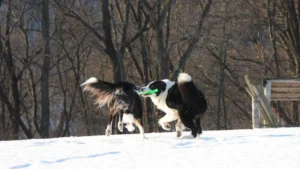
We now know, thanks to the groundwork laid by Altmann and Strum, that canine social behavior—like that of baboons—is rooted in relationships, communication, and mutual reliance. When we view "nature, light blue in heart and soul" rather than "red in tooth and claw," we see our dogs not as rivals for leadership, but as partners who value safety, predictability, and social bonding.
A Chronology of Change: Science in a Changing World
The 1970s served as a critical inflection point for both science and society. It was the era in which Goodall’s In the Shadow of Man brought intimate animal portraiture to the mainstream public, even as she faced criticism for the "unscientific" practice of naming her subjects.
This period was also one of systemic social inequality. It is a striking reminder of the progress made that the women who were revolutionizing our understanding of biology often could not open a bank account or secure credit in their own names. The marginalization of these women’s voices mirrored the marginalization of the cooperative behaviors they were studying in the wild.

By shedding light on these pioneers, we recognize that the "male-centric" focus of the early 20th century was not just a scientific preference; it was a cultural blind spot. Today, the recognition of Dr. Altmann and Dr. Strum serves as a corrective, reminding us that objective science requires us to question our own biases—especially those that favor conflict over connection.
Personal Reflections: Life on the Farm
While the history of primatology offers grand lessons in social structure, the reality of life on the farm provides daily confirmation of these theories. As spring arrives, the cycle of life continues with the annual "smack down" following sheep shearing.
When sheep lose their wool, they lose their primary method of identification—scent. Watching them navigate the social confusion of re-learning "who is who" is a masterclass in behavioral observation. The enduring, non-related friendships observed between ewes like the one currently protecting Beyonce, and the way these animals utilize cooperation to re-establish social order, echoes the findings of the primatologists discussed above.
It is a gentle, recurring reminder that social stability is not something that is "imposed" from the top down; it is something that is negotiated, practiced, and maintained through constant, cooperative interaction.
Final Thoughts: A New Perspective
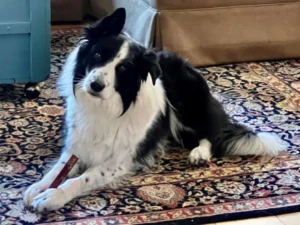
As we move forward, the legacy of these women invites us to look at the world with fresh eyes. Whether we are observing the intricate social dynamics of a troop of baboons in Kenya, the shifting friendships of a flock of sheep in Wisconsin, or the quiet companionship of a dog napping in the sun, the lesson remains the same.

Dominance is a limited, often inefficient tool for survival. Cooperation, reciprocity, and the "light blue" heart of social animals are the true building blocks of a functioning society. It is time to fully embrace this shift, not only in our scientific journals but in our daily interactions with the animals—and the people—who share our lives.
For those interested in exploring these themes further, the works of Dr. Jeanne Altmann and Dr. Shirley Strum remain essential reading for anyone seeking to understand the true nature of social intelligence. And for those looking for a different kind of story, my own novel, "Away To Me," continues to reach readers, exploring the deep bonds between humans and dogs in ways that reflect this evolving understanding of animal nature.