The pet food industry operates under a complex, often misunderstood regulatory framework in the United States. At the heart of this system is the Association of American Feed Control Officials (AAFCO), a private organization that, despite its name, holds no direct regulatory enforcement power. Instead, it serves as the architect of the laws that state and federal authorities—including the Food and Drug Administration (FDA)—ultimately adopt to govern animal feed and pet food.
During AAFCO’s recent semiannual meeting in San Diego, California, a series of discussions underscored a growing chasm between consumer expectations for transparency and the industry’s continued reliance on opaque, outdated definitions and administrative delays. From the reclassification of low-quality ingredients to the stalling of long-overdue label modernization, the meeting revealed a regulatory landscape that appears to prioritize industrial convenience over nutritional clarity.
The Ingredient Definition Dilemma: Meat and Bone Meal
A significant portion of the meeting was dedicated to the Ingredient Definitions Committee, where officials debated the technical language surrounding "Meat and Bone Meal." The discourse centered on a specific requirement: that the product must contain a minimum of 28% ash.
The debate over removing this ash-content threshold exposed a troubling reality regarding ingredient quality. Industry participants noted that the definitions for "Meat Meal" and "Meat and Bone Meal" are so closely aligned that the ash percentage acts as the primary legal differentiator. Concerns were raised that if the 28% minimum ash requirement were removed, suppliers could effectively relabel lower-quality "Meat Meal" as "Meat and Bone Meal," or vice versa, at their discretion.
This distinction is not merely academic; it is a critical matter of pet health. Historically, Meat and Bone Meal has been categorized as a lower-quality rendered ingredient. According to the current definition, it consists of rendered mammal tissues—including bones—while excluding added blood, hair, hoof, horn, and manure. However, the caveat "exclusive of added…" implies that these substances can be present if they are incidental to the processing of the raw material.
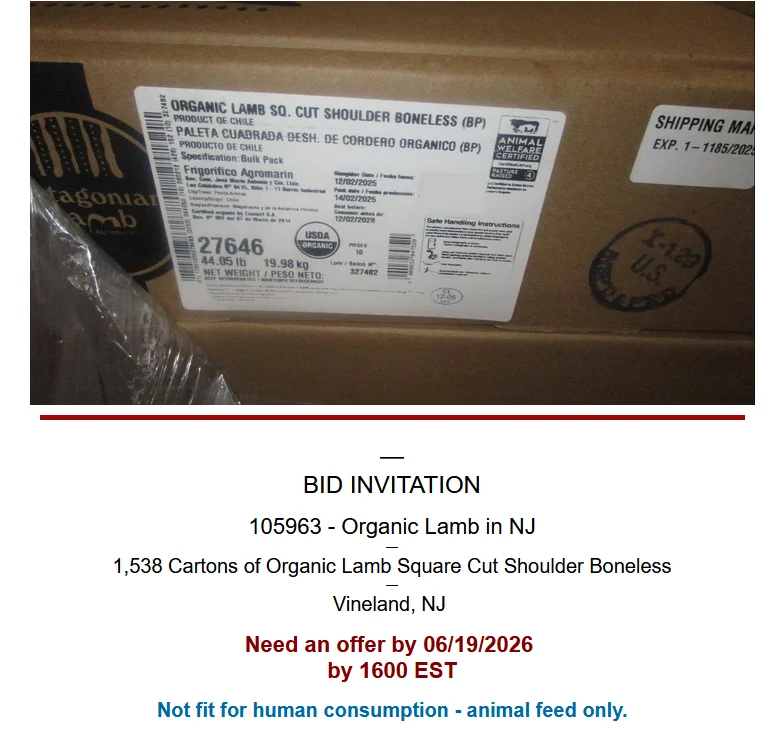
The FDA itself has previously identified these rendered ingredients as high-risk vectors for the presence of pentobarbital—a drug used for euthanasia. In an official advisory, the agency noted that Meat and Bone Meal, Beef and Bone Meal, and Animal Digest are sourced from materials that could include euthanized animals. By debating the technical definitions of these ingredients without addressing the inherent quality of the source material, critics argue that AAFCO is focusing on the semantics of labeling rather than the safety of the end product.
A Chronology of Regulatory Delay: The Labeling Modernization Saga
Perhaps the most glaring example of bureaucratic inertia discussed in San Diego was the status of the Pet Food Label Modernization (PFLM) effort. The origins of this initiative trace back to 2007, when Congress passed the Ensuring the Safety of Pet Food act, mandating that the FDA update labeling requirements to better serve consumers. The FDA was given a two-year deadline, which would have seen these updates implemented by 2009.
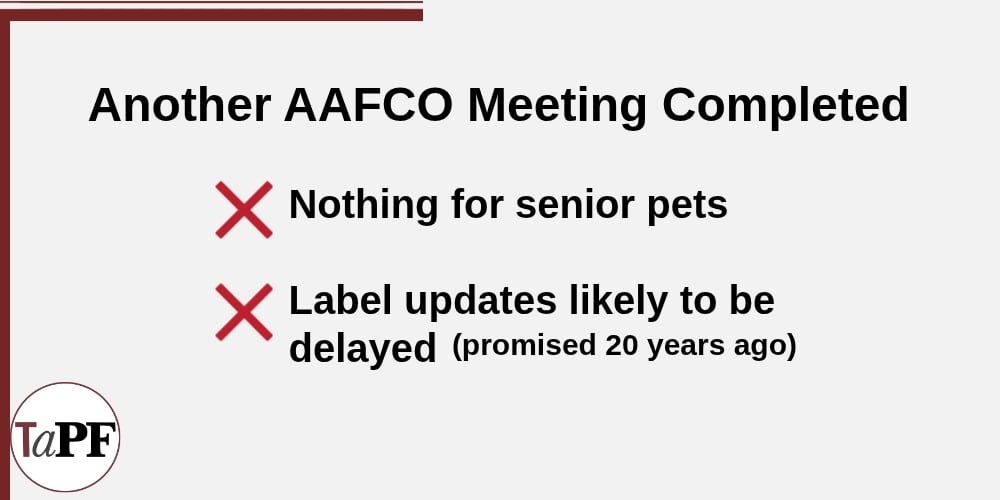
Seventeen years later, those updates remain in limbo. The FDA effectively offloaded the responsibility to AAFCO, which spent over a decade drafting changes. While AAFCO finally completed the framework in July 2023, the implementation date has been pushed to 2030.
During the Current Issues and Outreach Committee meeting, the timeline for these updates faced further scrutiny. Officials cited technical challenges regarding the disclosure of dietary fiber percentages, claiming that lab testing is currently inconsistent and unreliable for high-moisture products like canned, fresh, or raw pet foods. Industry representatives used these technical hurdles as a platform to suggest further delays to the 2030 implementation. For consumer advocates, this is a familiar tactic: identifying "unsolvable" technical problems only after years of deliberation to justify pushing off reforms that have been required by federal law for nearly two decades.
The Illusion of Senior Nutrition
The Pet Food Committee also hosted a concerning discussion regarding the nutritional needs of aging pets. An FDA representative acknowledged that many veterinarians are instructing owners to feed senior dogs less food to combat obesity—a common strategy for less active animals. However, because current pet food formulations for seniors are often not nutritionally distinct from adult maintenance formulas, reducing the portion size can lead to significant nutrient deficiencies.
Despite the FDA acknowledging this as a known problem, no specific mandate was proposed to create a distinct "Senior" nutritional profile. Instead, the current system allows manufacturers to market products as "senior" even when they offer no physiological advantage or specialized nutrient density for aging systems. This leaves consumers to pay a premium for marketing, while potentially putting their senior pets at risk of long-term health decline due to under-nutrition.
The Looming Threat of Litigation: Ingredient Imagery
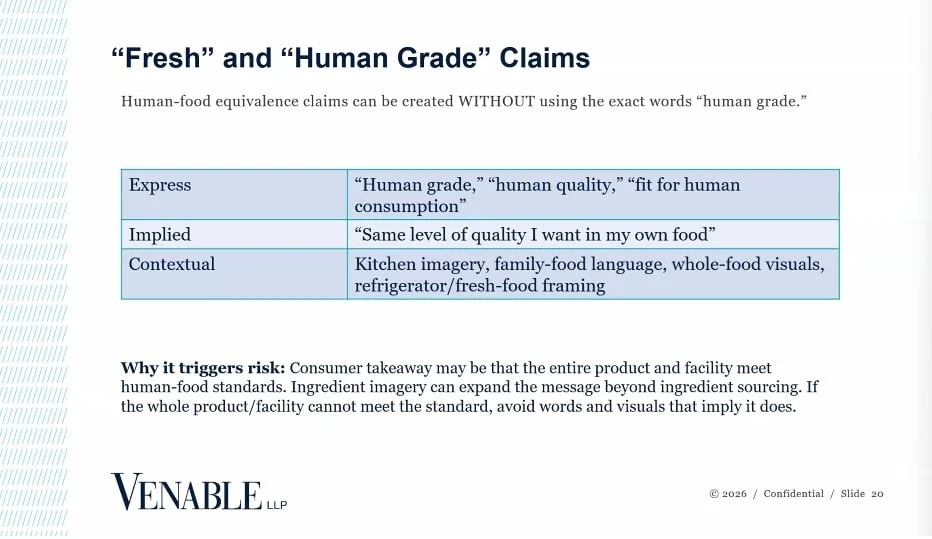
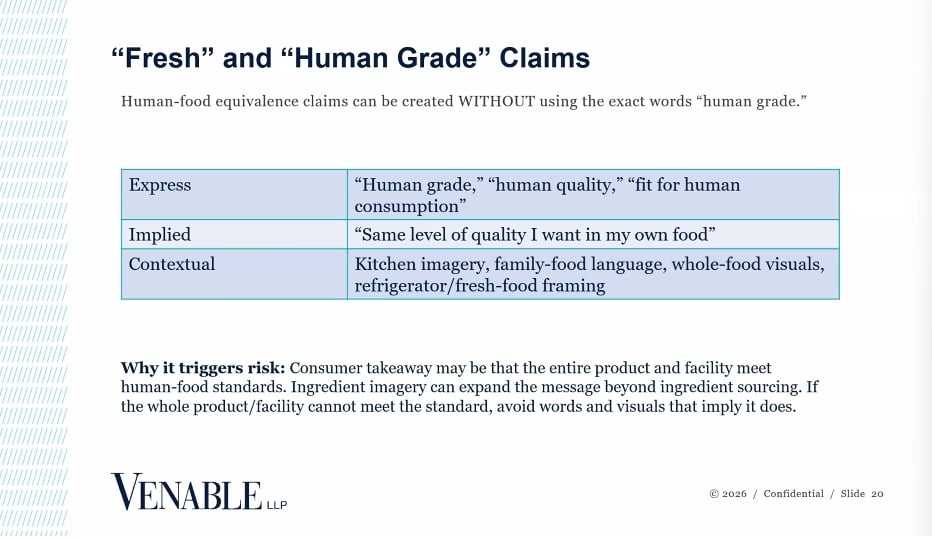
Not all discussions were focused on administrative delay. Todd Harrison, an attorney from the firm Venable, provided a stark warning to the industry regarding "ingredient imagery." Many pet food labels and websites feature high-definition photos of fresh, roasted chicken, grilled steaks, or vibrant vegetables, regardless of whether those ingredients are present in significant, recognizable quantities within the bag.

Harrison cautioned that these misleading images are creating significant legal exposure for manufacturers. As consumer litigation regarding false advertising in the pet food sector increases, manufacturers who lean heavily on "appetizing" imagery that fails to match the ingredient list are finding themselves in the crosshairs of class-action lawsuits. The message was clear: if the product is not made from the ingredients depicted on the packaging, the manufacturer is assuming a substantial and growing legal risk.
Implications for the Future
The San Diego meeting served as a microcosm of the current state of pet food regulation in the United States. Several key implications emerge from these proceedings:
- Regulatory Capture vs. Consumer Protection: The reliance on AAFCO—a private body that allows industry to have a seat at the table—continues to result in policies that prioritize ease of manufacturing over rigorous safety and nutritional transparency.
- The "Slow-Walk" Strategy: By allowing for indefinite timelines and constantly shifting the goalposts for label modernization, the industry has successfully stalled federal mandates from 2007 into the 2030s.
- The Transparency Gap: Consumers are increasingly being forced to navigate a marketplace where "Senior" diets may be nutritionally inadequate and "Meat and Bone Meal" remains a category that inherently allows for questionable source materials.
- Legal Liability as the New Regulator: With administrative bodies failing to enforce stringent standards, the burden of holding the industry accountable is shifting toward the court system. Legal precedents regarding misleading imagery and label claims are becoming the primary mechanism for change, rather than proactive regulatory oversight.
Conclusion: A Call for Reform
As AAFCO prepares for its next meeting in Orlando, Florida, in January, the pet food industry stands at a crossroads. The current system of "self-regulation via committee" is under intense pressure from consumer advocates who argue that the status quo is fundamentally broken.
The disconnect between the FDA’s stated goals of protecting animal health and the reality of what happens in AAFCO meetings remains a major concern. Without a move toward greater transparency—specifically regarding the sourcing of rendered proteins and the urgent adoption of modern labeling standards—the industry risks a further erosion of public trust. For pet owners, the lesson of the San Diego summit is clear: in the current regulatory environment, the label on the bag is often a marketing tool rather than a promise of quality, and the responsibility for verifying nutritional safety continues to fall squarely on the shoulders of the consumer.