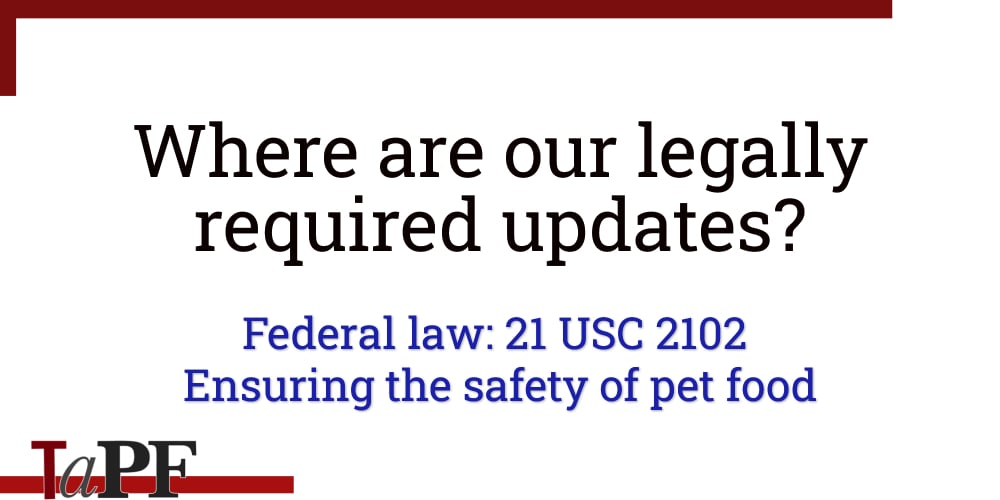
In the wake of the 2007 pet food recall—widely recognized as the deadliest in history—the United States Congress took decisive action to prevent a recurrence of such a catastrophic failure in the food supply chain. The legislative response, codified as "Ensuring the Safety of Pet Food" under 21 USC 2102, was designed to overhaul a neglected industry and provide pet owners with the transparency and safety guarantees they lacked. However, nearly two decades later, a significant portion of these federal mandates remains unfulfilled.
While the law demanded comprehensive updates to pet food safety within a two-year window, the Food and Drug Administration (FDA) has been characterized by a pattern of missed deadlines, regulatory stagnation, and the eventual deletion of key safety requirements through legislative maneuvering.
Main Facts: The Three Pillars of the 2007 Mandate
The 2007 legislation was not a mere suggestion; it was a statutory requirement that the Secretary of Health and Human Services, through the FDA, establish three critical components to safeguard the health of the nation’s companion animals:
- Pet Food Ingredient Standards: The establishment of clear, enforceable definitions and quality standards for what can legally be included in pet food.
- Pet Food Processing Standards: The creation of rigorous safety protocols for the manufacturing and handling of pet food products.
- Updated Labeling Standards: A comprehensive modernization of pet food labels to include detailed "nutritional and ingredient information" that would allow consumers to make informed health decisions for their pets.
Congress established a firm deadline for the completion of these requirements: September 2009. As of June 2026, the FDA has only partially completed one of these three mandates, while the others have either been ignored or systematically dismantled.
Chronology of Regulatory Failure: 2007–2026
The timeline of pet food regulation in the United States is a study in administrative delay and the erosion of legislative intent.
2007: The Catalyst and the Law
Following the melamine contamination crisis that resulted in the deaths and illnesses of thousands of dogs and cats, Congress passed the "Ensuring the Safety of Pet Food" act. The law was intended to bring pet food oversight into the 21st century, moving away from a "reactionary" model toward a "preventative" one.
2009: The First Missed Deadline
The statutory deadline for the FDA to implement ingredient standards, processing standards, and labeling updates passed without the agency meeting any of the requirements.
2015: Delayed Processing Standards
Six years past the original deadline, the FDA finally established pet food processing standards. These were developed as part of the broader Food Safety Modernization Act (FSMA). While a positive step, it addressed only one-third of the 2007 mandate and arrived more than half a decade late.
2017: Labeling Updates Enter "Limbo"
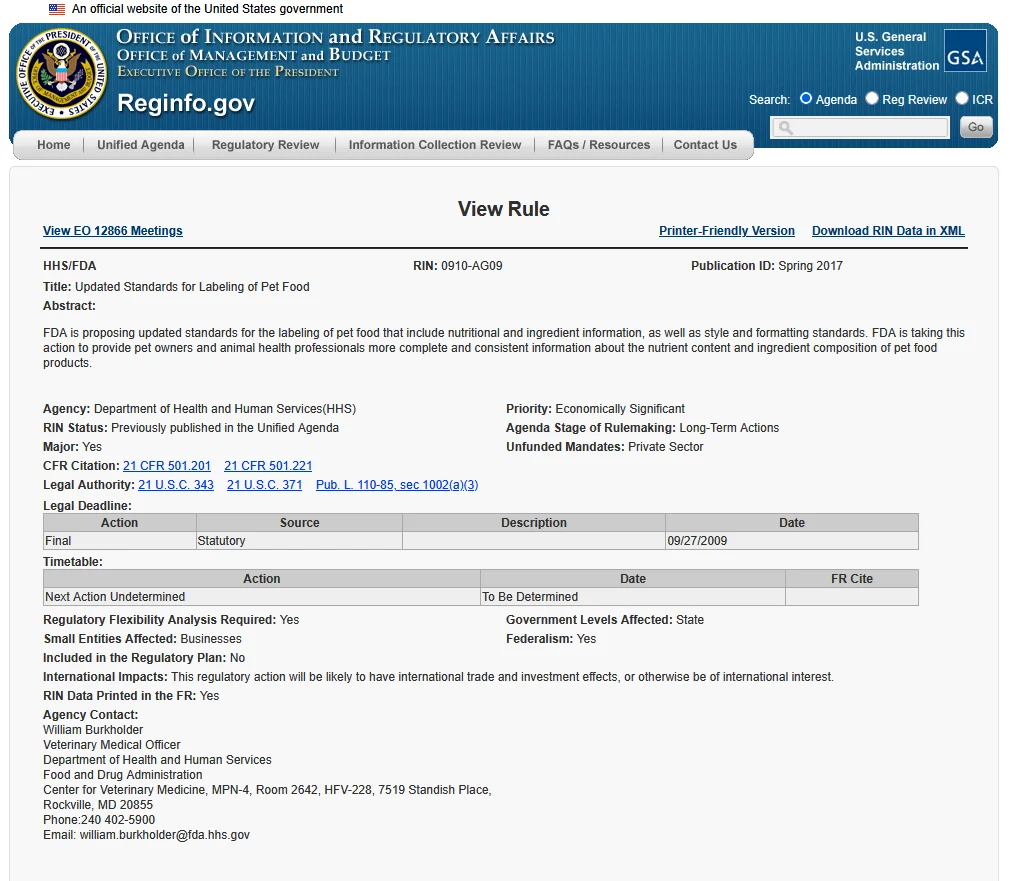
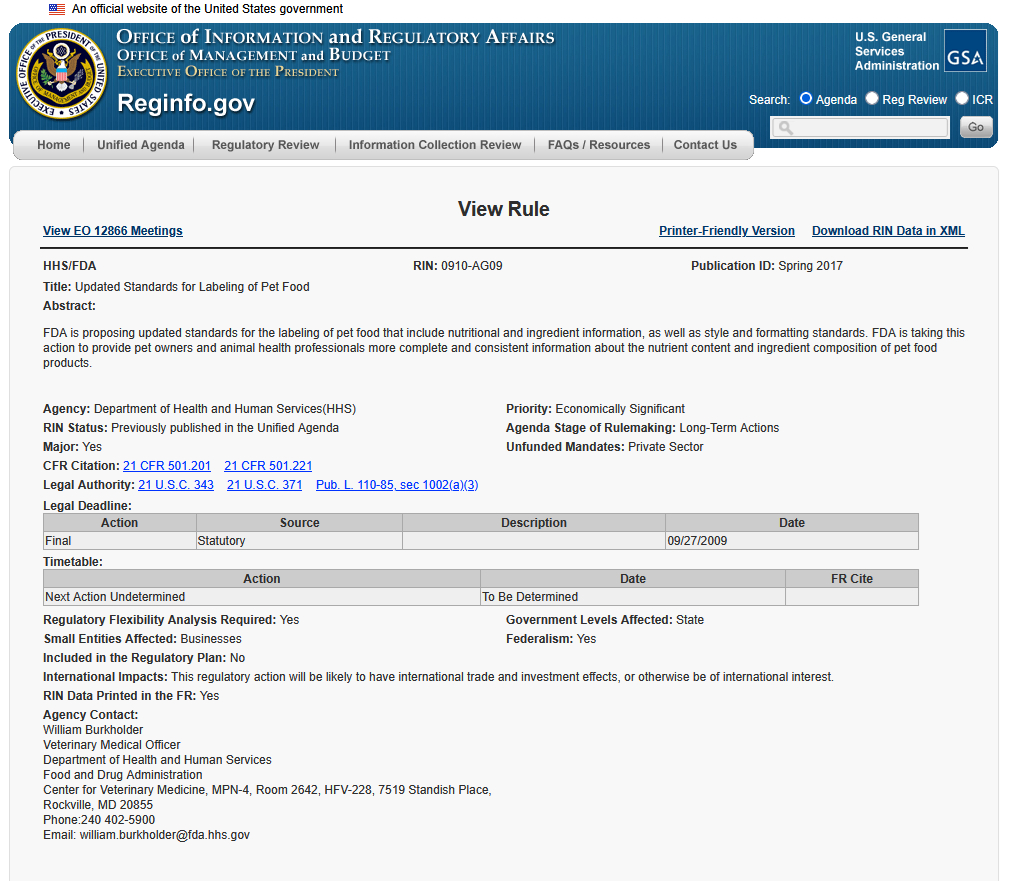
The Office of Information and Regulatory Affairs (OIRA), a federal entity that tracks the progress of regulations, provided its last public update on pet food labeling. The status of the labeling update was listed as "Next Action Undetermined," signaling a total halt in the agency’s progress on consumer transparency.
2018: The Deletion of Ingredient Standards
In a move that stunned consumer advocates, Senator Rand Paul of Kentucky introduced an addendum to an unrelated bill that effectively deleted the federal requirement for pet food ingredient standards. This legislative "stealth" move removed the FDA’s obligation to define exactly what constitutes safe and acceptable ingredients in animal feed, a requirement that had been in place for 11 years without being fulfilled.
2024–2030: The AAFCO Pivot
As the FDA remained stagnant, the Association of American Feed Control Officials (AAFCO) began its own "Pet Food Label Modernization" (PFLM) project. However, these updates are not federal law; they are suggestions for state-level adoption. Furthermore, the implementation timeline for these state-level changes has been pushed to 2030—21 years past the original Congressional deadline.
Supporting Data: Lobbying and the Deletion of Standards
The failure to implement ingredient standards is not merely a matter of bureaucratic slow-walking; it appears to be the result of active industry resistance. Documents acquired via the Freedom of Information Act (FOIA) by filmmaker Kohl Harrington (director of Pet Fooled) reveal a troubling collaboration between regulatory bodies and the industry they oversee.
The FOIA documents indicate that the FDA, the American Feed Industry Association (AFIA)—a powerful trade group—and multiple members of AAFCO collaborated on the specific language of the addendum submitted to Senator Rand Paul. This addendum successfully removed the 2007 requirement for ingredient standards, effectively allowing the industry to continue operating under a patchwork of vague definitions rather than strict federal safety standards.
By deleting the requirement for ingredient standards, the industry avoided the potential for stricter oversight regarding the quality of protein sources, the use of "4-D" meats (Dead, Dying, Diseased, or Disabled animals), and the inclusion of various fillers and by-products that consumers have long questioned.
Official Responses: Silence from the CVM
In an effort to gain clarity on the current status of these 17-year-old mandates, consumer advocates reached out to the FDA’s Center for Veterinary Medicine (CVM) on June 17, 2026. The inquiry specifically cited 21 USC 2102 and asked for details on what "updated standards for the labeling of pet food" the FDA has completed to date.

As of the publication of this report, the FDA Center for Veterinary Medicine has failed to provide a response. This silence is consistent with the agency’s behavior over the last decade, characterized by a refusal to provide timelines or substantive updates on pet food labeling.
The only existing public record of the FDA’s intent remains the 2017 OIRA filing, which explicitly states that the "Next Action" is "Undetermined." This classification suggests that within the internal halls of the FDA, the project of modernizing pet food labels for the benefit of consumers is essentially dead.
Implications for Pet Owners and the Industry
The consequences of this regulatory vacuum are significant for the millions of pet owners in the United States.
1. The Transparency Gap
Without federal labeling updates, pet food labels remain notoriously difficult to decipher. Consumers are often unable to determine the actual quality of ingredients, the caloric density of the food, or the presence of specific nutrients without significant effort. The promised "nutritional and ingredient information" that Congress mandated in 2007 would have bridged this gap.
2. State-Level Inconsistency
Because the FDA has failed to act, the responsibility has fallen to AAFCO and individual states. This creates a fragmented regulatory landscape where a pet food label in one state may follow different standards than a label in another. Furthermore, reports suggest that several states are currently refusing to implement the AAFCO PFLM updates, leading to further confusion and a lack of uniformity.
3. The Erosion of Democratic Oversight
The most profound implication is the apparent ease with which federal law can be ignored by an agency and then quietly dismantled by industry lobbyists. When Congress passes a law to protect public (and animal) health, and that law is ignored for 17 years before being deleted in an unrelated bill, it suggests a breakdown in the system of checks and balances.
4. Continued Safety Risks
While the 2015 processing standards improved manufacturing safety, the lack of ingredient standards means the "raw materials" entering the pet food supply remain poorly regulated. Without federal standards, the risk of another contamination event—similar to the 2007 recall—remains higher than it would be under the full protections intended by Congress.
Conclusion: A Call for Congressional Accountability
The history of 21 USC 2102 is a cautionary tale of regulatory capture and administrative neglect. For 17 years, the FDA has bypassed the deadlines established by the highest legislative body in the country. For 17 years, Congress has largely failed to exercise its oversight authority to hold the FDA accountable for this inaction.
Pet owners are encouraged to contact their Congressional representatives to demand an inquiry into why the FDA has ignored the requirements of "Ensuring the Safety of Pet Food." The demand is simple: the FDA must promptly establish pet food labeling updates that include the nutrition and ingredient information required by law.
The health of the nation’s pets and the trust of the American consumer depend on the transition from "Undetermined" action to immediate, transparent regulation. Until the FDA is forced to comply with its original 2007 mandate, the pet food industry will continue to operate in a shadow of its own making, at the expense of the animals it serves.