

Every cat owner has likely paused during a grooming session to admire the intricate details of their feline companion’s anatomy. Among the most intriguing features are the wispy, delicate hairs sprouting from the inner ear and the dramatic, upright bristles crowning the tips of the ear flaps. While these characteristics—known as "ear furnishings" and "ear tufts"—contribute to the undeniably charming, somewhat wild aesthetic of the domestic cat, they are far more than mere decorative flourishes. These specialized structures are marvels of evolutionary engineering, designed to protect the ear canal, enhance sensory perception, and maintain the hygiene of one of the animal kingdom’s most sophisticated auditory systems.
Main Facts: Decoding the Specialized Hairs of the Feline Ear
To understand feline anatomy, one must first distinguish between the two primary types of specialized ear hair. The first, ear furnishings, refers to the dense, often lengthy hairs that grow from the inner portion of the pinna (the external ear). These hairs vary significantly between breeds and individual cats; some display a thick, protective "muff" of hair, while others exhibit only subtle, sparse strands.
The second feature, ear tufts—often colloquially referred to as "lynx tips"—are the prominent hairs that sprout directly from the apex of the ear. These are characteristic of certain breeds, such as the Maine Coon, the Norwegian Forest Cat, and, most famously, the wild Lynx.
While both serve to protect the ear, their primary functions differ slightly. Furnishings act as a physical barricade against external contaminants, whereas tufts are believed to play a more active role in the mechanical funneling of sound waves. Together, these features represent a legacy of the cat’s evolutionary history as a predator that relies on extreme auditory precision to survive.
Chronology and Evolutionary Context: From Wild Ancestors to Domestic Companions
The presence of ear tufts and furnishings is not a product of modern selective breeding, but rather a vestigial trait inherited from the cat’s wild progenitors. Long before the domestic cat (Felis catus) shared our sofas, its ancestors roamed diverse environments ranging from dense forests to arid plains.
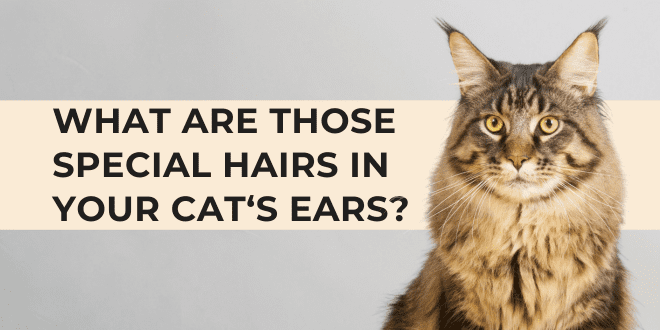
In the wild, the ability to detect the rustle of a mouse or the movement of a predator from a great distance was a matter of life and death. Evolutionary pressure favored cats with highly sensitive, protected ears. Over thousands of years, these specialized hair structures became standardized in species like the Lynx and the Caracal. As humans began the process of domesticating cats, these traits persisted. In some breeds, such as the Maine Coon, these traits were intentionally preserved and amplified through selective breeding to maintain the "wild" look, while in others, they remained a natural variation of the species.
This chronology of development underscores the fact that when we look at our house cats, we are seeing the same anatomical tools that helped their ancestors thrive in the harsh, competitive environments of the ancient world.
Supporting Data: The Mechanics of Protection and Perception
The feline ear is a biological masterpiece, capable of rotating 180 degrees and detecting sounds at frequencies as high as 64,000 Hz—well beyond the range of human hearing. To protect this sensitive instrument, nature provided a multi-layered defense system.
The Barrier Effect: Preventing Infection
The ear canal of a cat is L-shaped, making it prone to trapping moisture and debris if not properly managed. Ear furnishings serve as a critical first line of defense. By creating a dense web of hair at the entrance to the canal, they prevent airborne dust, mites, and organic debris from migrating deep into the delicate structures of the inner ear.
Furthermore, cats are fastidious groomers, yet they lack the dexterity to clean inside the canal itself. The furnishings act as a "sieve," catching dirt and foreign particles so that the cat can easily swipe them away with their paws during their regular cleaning routine. By keeping the entrance to the canal clear of buildup, these hairs significantly reduce the incidence of otitis externa (ear infections), which can be debilitating for cats.

The Auditory Filter: The Physics of Sound
Ear tufts provide a different, yet equally vital, service. By extending the surface area of the ear, these tufts function as directional filters. They capture sound vibrations from the environment and guide them downward into the ear canal, effectively increasing the sensitivity of the cat’s hearing. For a hunter, this means being able to pinpoint the location of prey with higher accuracy. This "funneling" effect allows the cat to isolate specific frequencies, filtering out background noise to focus on the high-pitched squeaks of rodents or the movement of insects.
Official Responses and Veterinary Perspectives: Hygiene and Maintenance
Veterinary professionals often emphasize that while ear furnishings are a natural and healthy feature, they require periodic observation. In some breeds, excessive growth of inner-ear hair can occasionally trap too much moisture or waxy buildup, leading to irritation.
"It is important for owners to differentiate between normal, healthy furnishings and an overgrowth that might be trapping discharge," notes Dr. Pam Johnson-Bennett, a noted expert in cat behavior and wellness. "While these hairs are designed to protect the ear, if you notice your cat shaking their head frequently, pawing at their ears, or if you detect a foul odor, it is a sign that the barrier function has been overwhelmed by either an infection or an infestation of ear mites."
Veterinary advice generally dictates that owners should not attempt to trim these hairs unless specifically instructed by a professional. The hairs are naturally shed and replaced; aggressive grooming or trimming can compromise the very protection they are meant to provide. Instead, routine ear inspections—lifting the flap and checking for redness, heat, or dark, coffee-ground-like debris—are the best ways to ensure the ear remains healthy.
Implications: The "Wild" Aesthetic vs. Functional Reality
The fascination with ear tufts and furnishings has significant implications for the world of cat fancy and ethical breeding. As the popularity of breeds like the Maine Coon grows, there is a tendency to favor more dramatic, "exaggerated" ear tufts. However, experts warn that anatomical features should always be assessed through the lens of function rather than just form.

The "wild" look, while aesthetically pleasing to humans, is fundamentally an expression of feline efficiency. When we admire the tufted ears of a cat, we are appreciating a biological adaptation that has been perfected over millions of years. Understanding these features fosters a deeper appreciation for the cat as an apex predator, even when that predator is curled up on a living room rug.
Beyond the Tufts: The Mystery of Henry’s Pocket
No discussion of feline ear anatomy is complete without mentioning the cutaneous marginal pouch, more commonly known as "Henry’s Pocket." Located at the lower outer base of the ear, this small, skin-covered slit is a source of constant curiosity for owners.
While its exact purpose remains a subject of debate among zoologists, prevailing theories suggest that it assists in the cat’s ability to articulate the ear with greater range of motion, or perhaps acts as a resonator for high-frequency sounds. Whatever its true purpose, it serves as a reminder that the feline ear is not a simple structure, but a complex, multi-functional organ that remains one of the most sophisticated pieces of biological machinery in the animal kingdom.
Conclusion: A Testament to Evolutionary Success
Whether your cat is a sleek domestic shorthair with subtle ear furnishings or a fluffy, lynx-tipped giant, their ears are a testament to millions of years of evolutionary refinement. These hairs are not merely cosmetic; they are protective barriers, sensory amplifiers, and essential components of a cat’s ability to interact with the world.
As cat owners, recognizing the purpose of these "special hairs" allows us to better monitor our pets’ health and appreciate the wild, predatory history that lingers just beneath the surface of their domestic persona. By understanding the role of ear furnishings and tufts, we gain more than just knowledge—we gain a renewed respect for the incredible, efficient, and endlessly fascinating design of the feline.

For those seeking to deepen their understanding of feline behavior and the nuances of cat care, the works of Pam Johnson-Bennett offer comprehensive insights into the world of our feline companions. Understanding your cat’s anatomy is the first step toward providing the best possible care for a lifetime of health and happiness.