
To the casual observer, the tufts of hair sprouting from a cat’s ears—or the delicate fringe lining the inner ear canal—are simply adorable features that contribute to their expressive faces. However, beneath this charming exterior lies a sophisticated evolutionary mechanism. These structures, known as ear furnishings and ear tufts, are not merely cosmetic; they are high-performance biological tools that have allowed the domestic cat (Felis catus) to remain a apex predator in miniature.
Main Facts: Decoding the Anatomy of the Feline Ear
The feline ear is a marvel of acoustic engineering. When examining the inner ear, owners often notice a cluster of hairs, varying in density and length depending on the breed and individual genetics. These are scientifically categorized as ear furnishings.
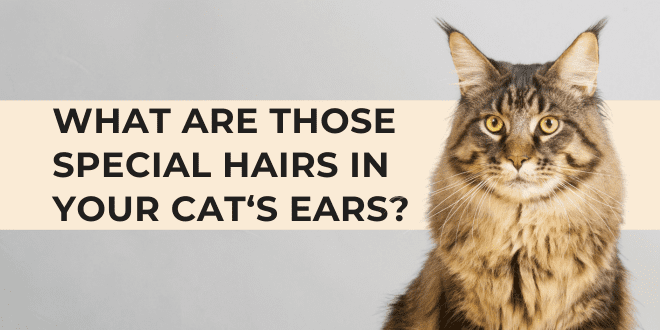
Conversely, the prominent hairs found on the very tips of the ears, which give certain breeds like the Maine Coon or the Norwegian Forest Cat a regal, wild appearance, are referred to as ear tufts or, more colloquially, "lynx tips." While both serve to protect the ear, their specific anatomical purposes differ, functioning in tandem to heighten a cat’s sensory awareness.
The Mechanism of Protection
The primary function of ear furnishings is defensive. The delicate ear canal of a cat is susceptible to foreign objects, including dust, pollen, and microscopic debris that could lead to inflammation or infection. The furnishings act as a physical filter—a "gated entry" that catches unwanted particles before they reach the deeper, more sensitive structures of the ear.
Because cats are fastidious groomers, these trapped particles are easily snagged by the cat’s rough tongue or paws during a cleaning session. By preventing the accumulation of foreign matter, these hairs significantly reduce the risk of otitis externa (outer ear infections), a condition that can be debilitating for domestic felines.
Chronology of Evolutionary Adaptation
The development of these features can be traced back to the wild ancestors of the domestic cat. Evolutionary biologists suggest that these traits were refined over thousands of years as cats adapted to diverse environments ranging from dense forests to arid plains.
The Ancestral Advantage
In the wild, the ancestors of modern cats required acute sensory input to detect both prey and predators. The ear tufts, in particular, are believed to have evolved as a sound-gathering tool. By acting as a funnel, these tufts direct high-frequency sound waves—such as the rustling of small rodents—directly into the ear canal. This evolutionary "tuning" allows cats to pinpoint the exact location of a noise with surgical precision.
As cats moved from the wild into human homes, these features were maintained through natural selection. While a house cat does not necessarily need to track a field mouse to survive, the anatomy that allowed its ancestors to thrive remains an integral part of its physiology.

Supporting Data: Acoustic Sensitivity and Sensory Processing
The feline ear is capable of detecting sounds at frequencies as high as 64,000 Hz, which is significantly higher than the human threshold of approximately 20,000 Hz. This ability is directly supported by the structural integrity of the ear.
How Furnishings Facilitate Hearing
Recent studies into feline behavioral biology have highlighted that ear furnishings act as receptors for sound vibrations. Just as whiskers on the face detect changes in air currents, the furnishings within the ear provide a tactile-acoustic feedback loop. When sound waves hit these hairs, they cause micro-vibrations that alert the cat’s nervous system to the presence of movement or sound in the immediate environment.
Comparative Anatomy: Lynx vs. House Cat
In the wild, the Lynx (Lynx lynx) utilizes massive, prominent ear tufts to navigate environments where sound carries differently. Observations have shown that these tufts help the lynx "filter" wind noise, allowing the cat to focus on specific frequencies. In domestic cats, while the tufts are generally smaller, they perform a similar role, acting as a secondary sensory array that augments the cat’s primary auditory organs.
Official Perspectives and Veterinary Insight
Veterinarians and animal behaviorists, including noted experts like Pam Johnson-Bennett, often emphasize that while these features are normal, they serve as a diagnostic indicator of ear health.

The "Henry’s Pocket" Anomaly
Beyond furnishings and tufts, the feline ear houses another mysterious structure: the cutaneous marginal pouch, commonly known as Henry’s Pocket. This tiny, triangular slit at the base of the ear is a hallmark of feline anatomy. While its exact evolutionary purpose remains a subject of debate, many experts believe it helps in folding the ear and further refining the detection of high-frequency sounds by allowing for a greater range of ear mobility.
Implications for Owners
For the average pet owner, understanding these anatomical structures is vital for proper grooming. Veterinarians advise against plucking or trimming these hairs unless specifically instructed to do so for medical reasons.
- Hygiene: If the furnishings become matted with wax or debris, a gentle wipe with a damp cloth is preferred over removal.
- Monitoring: Owners should inspect the ears regularly. If the furnishings are holding an excessive amount of dark, coffee-ground-like debris, it may indicate ear mites rather than a simple accumulation of dust.
Implications: The Intersection of Form and Function
The study of ear furnishings and tufts provides a window into the broader philosophy of feline biology: optimization. Every component of a cat’s body, from the tip of its tail to the tufts on its ears, is optimized for efficiency and survival.
Preservation of Wild Traits
The presence of prominent ear tufts in specific breeds—such as the Maine Coon—is a reminder of the cat’s heritage. Breeders often select for these traits not only for their aesthetic appeal but because they represent the "rugged" health and vitality associated with natural, unimpeded evolution.

The Holistic View of Feline Wellness
Understanding these subtle features encourages owners to view their pets with a greater appreciation for their complexity. When we look at a cat, we are looking at a highly tuned survival machine that has been honed by millions of years of environmental pressure. Recognizing that these hairs are not just "cute" but are essential sensors and filters allows for better care and a deeper bond between human and cat.
Conclusion
Whether your cat possesses a subtle fringe of hair or dramatic, sweeping lynx tips, it is important to recognize that these features are a testament to the cat’s status as a marvel of evolutionary design. They serve as silent protectors, sound amplifiers, and sensory receptors, all working in concert to keep the cat alert, healthy, and responsive to its environment.
As we continue to learn more about the intricacies of feline behavior and physiology, it becomes clear that even the smallest physical details—like a tuft of hair—are critical to the cat’s overall well-being. By observing and respecting these features, we can better provide for our feline companions, ensuring they live long, healthy, and highly attuned lives.
For those interested in delving deeper into the nuances of feline behavior, training, and the biological mysteries that make our cats so fascinating, resources provided by experts in the field—such as the works of Pam Johnson-Bennett—offer invaluable insights for any dedicated cat owner. Through continued education, we can ensure that our appreciation for our cats remains as sophisticated as the animals themselves.