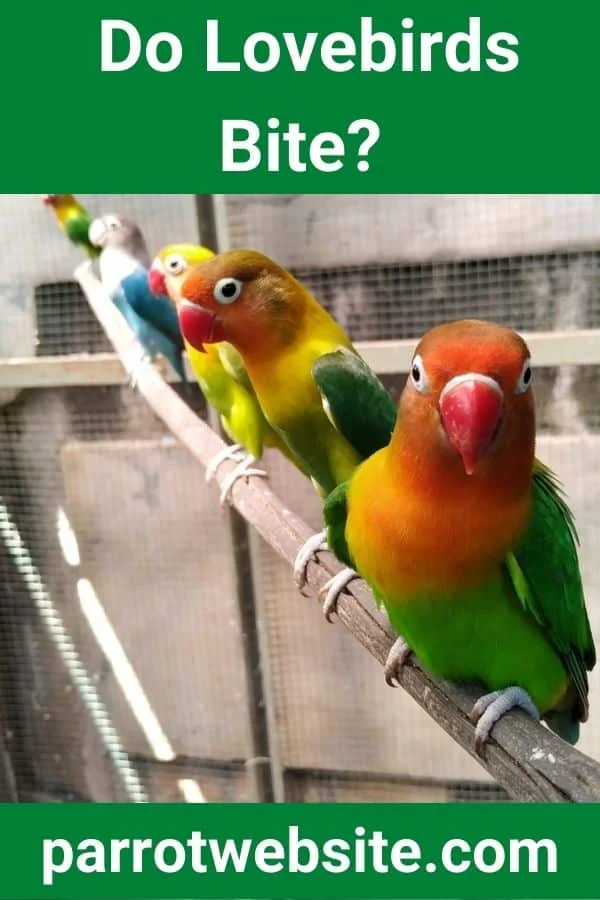
When a friend recently visited my home with her children, the excitement was palpable. My parrots, known for their vibrant plumage and even more vibrant personalities, were the center of attention. However, amidst the laughter and the fluttering wings, my friend pulled me aside with a look of genuine concern. Her children had been begging for a pet of their own, and she had been considering a lovebird. Her question was simple, yet laden with parental anxiety: "Do they bite?"
It is a question I hear often, and it sits at the heart of responsible avian guardianship. To understand the lovebird—a species often misunderstood due to its poetic name—one must look past the romanticized image of these birds and delve into the complexities of their behavior, biology, and social needs.
The Reality of Avian Aggression: Main Facts
At the core of the discussion is a fundamental truth: lovebirds are not merely decorative ornaments; they are highly intelligent, complex, and emotionally driven creatures. While the name "lovebird" suggests a docile, affectionate companion, these birds are essentially tiny, feathered dynamos with a strong capacity for territorial behavior.
To put it bluntly: yes, lovebirds can and do bite. However, labeling them as "aggressive" is a simplification that ignores the underlying reasons for such behavior. Biting is rarely an act of malice; rather, it is a form of communication. When a lovebird bites, it is often expressing frustration, fear, jealousy, or a simple request for space that has been ignored by their human companion.
The Role of Genetics and Early Development
The propensity for biting begins long before a bird reaches its new home. The foundational temperament of a lovebird is established during its formative weeks. Hand-raised birds, which have been socialized by humans from a young age, are significantly less likely to exhibit defensive biting compared to parent-reared birds that have not been acclimated to human interaction.
Furthermore, sexual dimorphism plays a measurable role in behavioral temperament. Female lovebirds are notoriously more territorial than their male counterparts. This is rooted in their biological drive to protect nesting sites. A female in a cage or a home environment may treat that space as her "territory," leading to heightened defensive aggression. Prospective owners who are particularly concerned about biting often find that males tend to be more even-tempered and less prone to territorial displays.
Chronology: From Hatchling to Household Companion
The trajectory of a lovebird’s temperament can be traced through several critical stages of development. Understanding this timeline is essential for any owner aiming to foster a healthy, bite-free relationship.
1. The Breeder Stage (Weeks 0–8)
The most critical window for development occurs in the nest. A reputable breeder who invests time in "socializing" the hatchlings—introducing them to gentle handling and human voices—provides the bird with the emotional scaffolding needed for a life with humans. Birds that bypass this stage are often skittish and prone to "fear-biting," a defense mechanism triggered by a lack of socialization.
2. The Adolescent Phase (Months 4–12)
Much like human teenagers, young lovebirds go through a hormonal "bluffing" phase. During this time, they may become uncharacteristically nippy or aggressive as they assert their independence and test their boundaries. Owners who mistake this natural hormonal spike for permanent aggression often make the mistake of isolating the bird, which only exacerbates the behavior.
3. Mature Social Integration (Year 1+)
Once a lovebird has matured, its personality is largely set. At this stage, biting is almost exclusively a reactive behavior. It is a sign that the bird is unhappy with its environment, its diet, or its level of social stimulation.
Supporting Data: Why They Bite
To effectively manage biting, one must treat it as a symptom rather than a character flaw. Data from avian behavioral experts suggests that the vast majority of "problematic" bites stem from three primary categories:
The Jealousy Factor
Lovebirds are pair-bonded animals. In the wild, they select a mate for life. In a domestic setting, they often view their favorite human as their "flock member." When that human interacts with other people, pets, or even objects, the bird may perceive a threat to its primary bond. This "jealousy" can manifest as a sharp nip directed at the perceived rival or even the human themselves.
Sensory Overload and Frustration
Lovebirds require high levels of mental stimulation. A bored lovebird is a destructive and frustrated lovebird. If a bird is kept in a cage for the majority of the day without toys, foraging opportunities, or social interaction, it will likely develop behavioral issues, including feather-plucking and biting.
The "Body Language" Failure
Often, a bite is the final act in a sequence of ignored warnings. Before a lovebird bites, it usually communicates its discomfort through body language: pinned eyes, flared tail feathers, a lowered head, or a specific "warning" chirp. When humans fail to interpret these subtle cues and continue to reach into the cage or attempt to handle the bird, the lovebird is forced to escalate to a bite to maintain its boundaries.
Professional Perspectives and Behavioral Intervention
The consensus among avian veterinarians is clear: prevention is superior to correction. Dr. Elena Vance, an avian behavioral consultant, notes, "Many owners treat the bird like a toy. When the bird sets a boundary, the owner feels slighted. The key to ending the biting cycle is to respect the bird’s autonomy and work on positive reinforcement."
Training Techniques for Success
If you find yourself dealing with a biting habit, experts recommend the following protocol:
- The "Pause" Method: If a bird bites, immediately but calmly withdraw your attention. Do not yell, as the bird may interpret a loud reaction as an exciting game or a sign of weakness. Simply place the bird back in its cage or on its perch and walk away for a few minutes. This teaches the bird that biting results in the loss of social interaction.
- Positive Reinforcement: Reward desired behavior with treats or verbal praise. When the bird allows itself to be handled without nipping, acknowledge it immediately.
- Consulting the Experts: If biting persists, a veterinary check-up is non-negotiable. Chronic aggression can sometimes be linked to underlying medical issues, such as nutritional deficiencies or hormonal imbalances that require professional intervention.
Implications: The Responsibility of Ownership
The decision to bring a lovebird into a family with children carries significant weight. While lovebirds can be wonderful, intelligent pets, they are not "starter pets." They require a commitment to education, daily engagement, and a high tolerance for their individual quirks.
The Question of Pain
It is a common misconception that small birds cannot inflict damage. Lovebirds possess sharp, powerful beaks capable of exerting significant pressure. While a bite is rarely life-threatening, it can easily break the skin and cause bleeding—especially on the sensitive, thinner skin of children. Parents should supervise all interactions between young children and parrots strictly. A child may not understand the warning signs of a bird in distress, leading to a cycle of accidental provocation and biting.
Conclusion: A Rewarding Commitment
Owning a lovebird is a complex, long-term commitment that yields deep rewards for those who put in the work. They are not merely "biters"—they are social beings with complex needs. If you approach ownership with the intent to learn their language, respect their boundaries, and provide them with the stimulation they require, the "biting" issue often disappears entirely.
If you are prepared to invest the time, energy, and patience required to raise a well-adjusted bird, a lovebird can be one of the most rewarding companions in the animal kingdom. But remember: your relationship with your bird is a reflection of the effort you put into understanding its world. Do the research, find a reputable breeder, and be prepared to treat your feathered friend as a member of the family—one that deserves the same respect and consideration you would give to any other intelligent being.