
For many cat owners, the vision of a "happy cat" involves a well-stocked room of plush toys, a comfortable perch, and a bowl of high-quality kibble. However, animal behaviorists are increasingly emphasizing a missing link in feline care: interactive, human-led play. Far from being a luxury or an occasional pastime, structured, interactive play is a biological imperative for the domestic cat.
When cats are denied this outlet, the results are rarely benign. Instead, households often become centers for behavioral dysfunction, ranging from midnight "zoomies" and destructive furniture scratching to chronic anxiety and redirected aggression. To truly understand why your cat behaves the way they do, we must look back to their ancestral roots and the predatory cycle that still governs their psychological needs today.
Main Facts: The Biological Imperative
At the heart of the issue is a fundamental misunderstanding of the feline psyche. Many owners operate under the assumption that cats are solitary, self-sufficient creatures who prefer to play alone. While cats do exhibit independent play, this is distinct from the high-stakes, predatory stimulation they crave.
Interactive play is defined by the active, intentional participation of the human caretaker. It is the bridge between the cat’s natural instincts and their indoor reality. In the wild, a cat’s day is dominated by the "hunting sequence": stalk, chase, catch, eat, and rest.
When you engage in interactive play, you are essentially facilitating a controlled, simulated hunt. This process provides a necessary release for pent-up energy and, more importantly, offers the mental stimulation required to keep a cat’s brain sharp and their stress levels low. Without this structured outlet, the cat’s natural drive to hunt does not simply vanish; it is redirected toward undesirable targets—such as your ankles, the curtains, or the houseplants.
Chronology of a Successful Session
To maximize the benefits of play, the session must be viewed as a narrative with a clear beginning, middle, and end.
1. The Preparation (The Stalk)
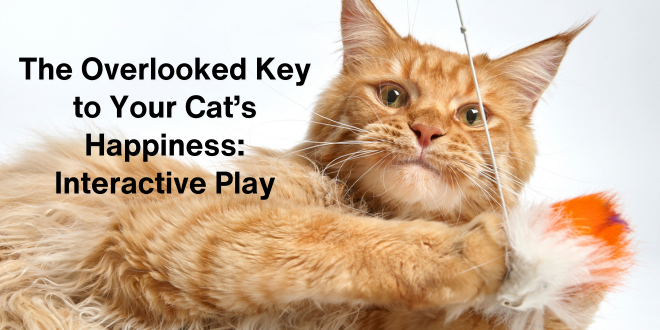
The session should begin with a low-energy, observational phase. Do not immediately whip the toy in front of the cat’s face. Instead, use a wand toy to mimic the movement of a mouse or bird. Move the toy along the ground, incorporate pauses, and hide it behind furniture. This phase is crucial for the cat’s mental engagement; it allows them to calculate distance and formulate a strategy.
2. The Climax (The Chase and Catch)
Once the cat has committed to the hunt, increase the intensity of the movement. This is the "chase" phase. Ensure the cat is moving—jumping, running, and crouching. The climax of the hunt is the "catch." This is why interactive wand toys are superior to laser pointers. A cat needs tactile feedback; they need to feel the prey beneath their paws to register a "win." If they never catch the target, they remain in a state of high physiological arousal, which leads to frustration rather than satisfaction.
3. The Resolution (Eat and Rest)
Never stop the play abruptly. An abrupt end leaves the cat’s nervous system in a state of high alert. To properly complete the cycle, "wind down" the prey. Make the movements slower and weaker, as if the prey is becoming injured or tired. Once the cat makes the final catch, the hunt is complete. Following this, the cat should be rewarded with a meal or a high-value treat. This mimics the natural sequence of eating after a successful hunt, naturally triggering the "rest" phase—resulting in a calm, content, and sleepy cat.
Supporting Data: Why "Alone Time" Isn’t Enough
Behavioral data consistently shows that indoor cats often suffer from "environmental enrichment deficiency." In a typical household, a cat’s environment is static. They know the location of every object, every scent, and every shadow. This leads to profound boredom.
Studies in feline psychology suggest that cats kept in environments without regular, high-intensity play are significantly more likely to develop:
- Nocturnal Hyperactivity: A cat that has not burned off its predatory energy during the day will inevitably seek to do so at 3:00 AM.
- Attention-Seeking Aggression: If a cat feels ignored, they may resort to biting or pouncing on their owners to elicit a reaction. Any reaction, even a negative one, confirms the cat’s attempt at engagement.
- Compulsive Behaviors: Chronic boredom can manifest as over-grooming or tail chasing, which are often symptoms of an under-stimulated brain.
By implementing just two 15-minute sessions of interactive play per day, owners can drastically alter the behavioral landscape of their home. This is not merely about exercise; it is about providing the mental "work" that a cat is genetically programmed to perform.

Expert Perspectives: The Philosophy of Pam Johnson-Bennett
Renowned cat behaviorist and best-selling author Pam Johnson-Bennett has long championed the idea that we must "think like a cat." According to her methodologies, the human’s role is that of a facilitator, not just an observer.
Johnson-Bennett emphasizes that the quality of the movement is more important than the quantity of toys. A dozen stationary toys left on the floor will never replace the dynamic movement of a wand toy operated by a human who understands the cat’s prey-drive. Her approach focuses on the "why" behind the behavior—arguing that many so-called "problem cats" are actually just "bored cats" living in a world that fails to challenge them. Her extensive library of work serves as a cornerstone for modern, humane, and science-based feline training.
Implications for the Modern Cat Owner
The implications of adopting a structured play regimen are profound. For the owner, it means a more predictable, less destructive, and more affectionate companion. For the cat, it means a life of fulfillment.
Improving the Human-Animal Bond
Perhaps the most significant, yet intangible, benefit of interactive play is the strengthening of the bond between human and feline. When you participate in the hunt, you are communicating with your cat in their primary language. This builds trust, especially in shy or anxious cats who may be hesitant to interact. By becoming the source of their "successful hunt," you transition from a roommate to a partner.
Long-term Health Outcomes
Beyond behavior, the physical health implications are clear. Obesity is a leading health crisis in domestic cats, leading to diabetes, joint pain, and reduced life expectancy. Interactive play is a low-impact, highly effective way to manage weight. It keeps muscles toned, joints lubricated, and the metabolism functioning at an optimal rate.
A Holistic Approach to Enrichment
Ultimately, interactive play is a form of behavior training. When you teach a cat how to play appropriately—focusing their energy on toys rather than your hands or feet—you are setting boundaries that will persist throughout their life.

It is important to remember that this is not a temporary fix or a chore to be completed. It is a long-term commitment to the animal’s well-being. As our understanding of animal cognition evolves, so too must our care practices. We are moving away from the era of treating cats as "low-maintenance" pets and toward a future where we recognize their need for intellectual and physical engagement.
If you find yourself struggling with a cat that seems restless, anxious, or difficult to live with, the solution may not be found in a new diet or a visit to the veterinarian—though those are always important—but rather in the simple, ancient rhythm of the hunt. Pick up a wand toy, find a quiet space, and engage your cat’s instincts. The result will be a healthier, happier, and more harmonious household for everyone involved.
For those looking to dive deeper into the science of feline behavior, the resources provided by experts like Pam Johnson-Bennett offer a comprehensive roadmap to mastering the art of the hunt and transforming your relationship with your cat. The key to their happiness is already in your hands—all you have to do is start the game.