In the complex and often opaque world of pet nutrition, a significant regulatory gray area has emerged, allowing manufacturers to market products with names that imply medical benefits without meeting the stringent requirements of therapeutic drugs. At the heart of this controversy is a sophisticated linguistic maneuver: using a product’s name to suggest health outcomes—such as "Perfect Digestion" or "Life Protection"—that would otherwise trigger federal oversight if framed as a formal health claim.
While the Food and Drug Administration (FDA) maintains strict boundaries between "food" and "drugs," pet food advocates and industry watchdogs are raising alarms. They argue that by embedding health promises within the branding itself, companies like Hill’s Pet Nutrition, Purina, and Blue Buffalo may be misleading consumers and circumventing the scientific substantiation required for veterinary diets.
Main Facts: The Intersection of Food, Drugs, and Branding
Under the Federal Food, Drug, and Cosmetic Act (FD&C Act), the distinction between a food and a drug is determined by its "intended use." According to Section 201(g)(1)(B), a product is classified as a drug if it is intended for use in the diagnosis, cure, mitigation, treatment, or prevention of disease.
For over half a century, the pet food industry has operated under a specific enforcement discretion policy regarding "therapeutic diets." These are foods formulated to manage specific medical conditions, such as kidney disease, urinary stones, or gastrointestinal distress. Because these products make explicit health claims, the FDA technically classifies them as unapproved new drugs. However, the agency generally allows their sale provided they meet two criteria: they must be sold exclusively through licensed veterinarians, and the manufacturer must possess scientific data to substantiate their efficacy.
The current controversy arises from "over-the-counter" (OTC) products sold in big-box retail stores and supermarkets. Unlike veterinary diets, these products are not supposed to make disease-related claims. Yet, a survey of modern pet food aisles reveals a trend of "suggestive naming." By naming a product "Digestive Health" rather than claiming the food "treats digestive upset," manufacturers utilize the product name as a billboard that functions as a health claim in the mind of the consumer while remaining, technically, a title in the eyes of the law.
Chronology: The Evolution of Therapeutic Marketing
The tension between marketing and medicine in the pet food industry has evolved over several decades:
1. The Rise of the Prescription Diet (1940s–1980s)
The concept of clinical nutrition began in earnest with Dr. Mark Morris Sr., who formulated the first "Prescription Diet" to treat kidney failure in a guide dog. By the mid-20th century, Hill’s Pet Nutrition had established a dominant market position by partnering with veterinarians. For decades, the line was clear: "Science Diet" was for healthy pets (OTC), and "Prescription Diet" was for sick pets (Veterinary).
2. The 2016 FDA Compliance Policy Guide (CPG) 690.150
Recognizing the proliferation of health claims, the FDA issued a formal Compliance Policy Guide (CPG) 690.150. This document clarified that any pet food label or communication intended to "treat or prevent disease" makes that product a drug. The FDA explicitly stated that a therapeutic claim not scientifically substantiated would render the product "misbranded."
3. The "Suggestive Naming" Era (2010s–Present)
As the pet "humanization" trend took hold, consumers began seeking functional benefits from their everyday pet food. Manufacturers responded by moving health-adjacent language from the fine print of the "guaranteed analysis" to the primary display panel. Instead of making a sentence-based claim (e.g., "This food cures diarrhea"), companies began naming the products themselves after the desired outcome (e.g., "Perfect Digestion"). This shift allowed products to appear therapeutic while remaining in the retail (non-veterinary) channel.
Supporting Data: A Comparative Analysis of Branding
To understand the scale of this practice, one must look at the specific products currently occupying retail shelves. The distinction between a "claim" and a "name" is often invisible to the average pet owner.
The Hill’s Case Study
Hill’s Pet Nutrition provides the most striking example of this dual-track marketing.
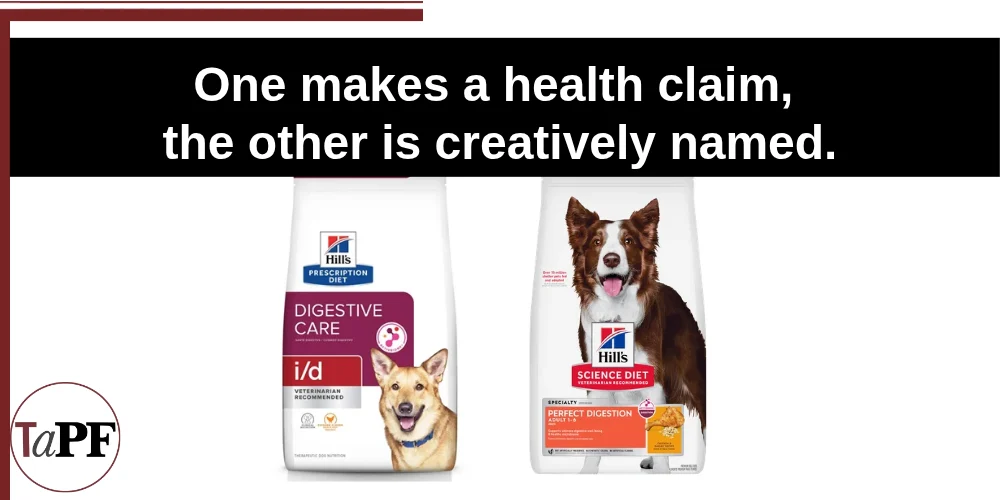
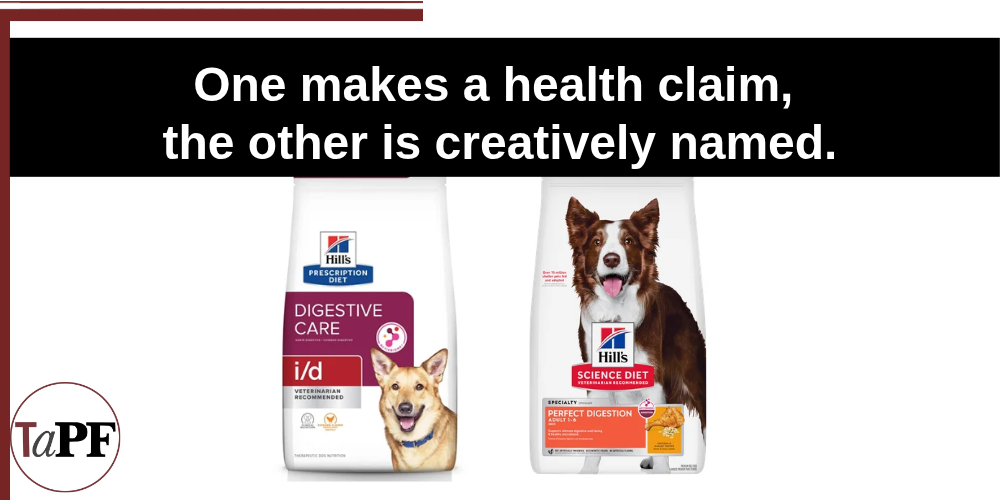
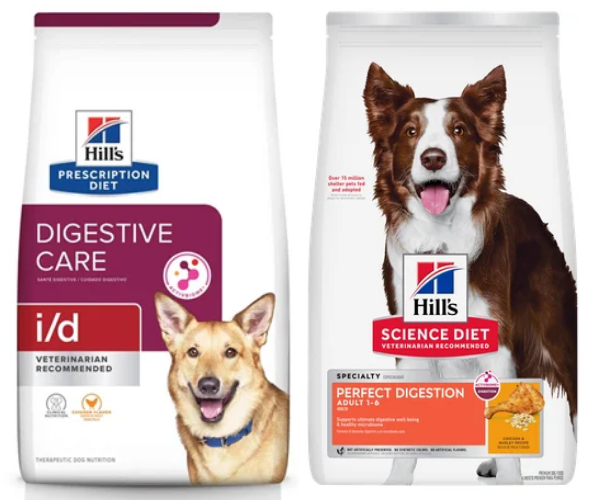
- The Veterinary Product: Hill’s Prescription Diet i/d Digestive Care. This product is sold only through vets. Its label makes a therapeutic claim: "to help manage digestive upsets."
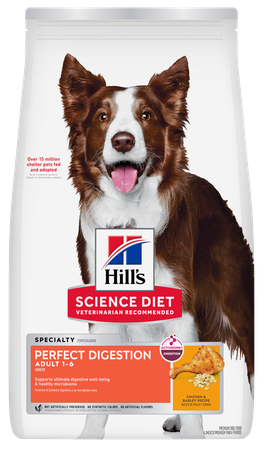
- The OTC Product: Hill’s Science Diet Adult Perfect Digestion. This product is sold in standard pet stores.
While the veterinary version uses the phrase "Digestive Care" as a descriptor of its therapeutic intent, the retail version uses "Perfect Digestion" as the actual name of the food. From a regulatory standpoint, Hill’s is not "claiming" the food produces perfect digestion; they have simply named the product "Perfect Digestion." This nuance allows the product to sit on a Petco shelf without a veterinarian’s oversight, even though the consumer takeaway—that the food will fix digestive issues—is virtually identical.
Purina and the "Support" Strategy
Nestlé Purina PetCare utilizes similar tactics with its Pro Plan and Purina ONE lines.
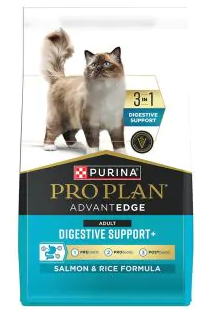
- AdvantEDGE Adult Digestive Support+: By including "Digestive Support" in the name, the brand signals a functional benefit.
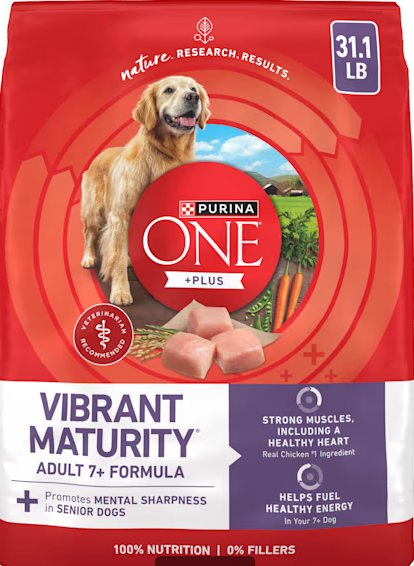
- Vibrant Maturity Adult 7+: This name implies a reversal or mitigation of the aging process, a claim that would typically require clinical proof if phrased as "This food restores vibrancy in senior dogs."
The "Life Protection" Umbrella
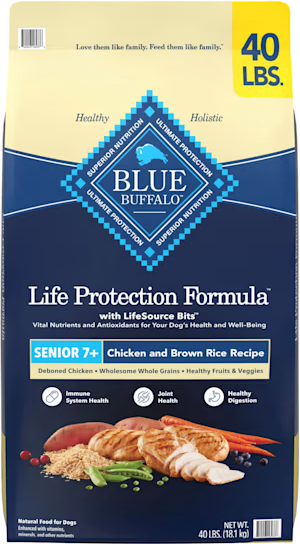
Blue Buffalo, one of the largest players in the natural pet food space, markets its flagship line as "Life Protection Formula." While "Life Protection" is a broad and somewhat vague term, it implies a preventative health benefit that borders on the FDA’s definition of a drug (preventing disease). However, because it is the brand name, it bypasses the scrutiny applied to specific health claims.
Official Responses and the Regulatory Gap
The FDA’s stance on this issue remains a point of contention for consumer advocates. In various communications, the agency has maintained that it evaluates labels based on the "total context" of the manufacturer’s communications.
In the CPG 690.150, the FDA notes: "FDA will consider whether the product is responsibly marketed in other respects as well… a therapeutic claim that is not scientifically substantiated would be considered false or misleading."
However, the agency has historically been slow to act against product names unless they make an explicit reference to a specific disease (e.g., naming a food "Cancer Cure"). The industry’s defense typically rests on two pillars:
- Puffery: In marketing law, "puffery" refers to exaggerated or vague statements that no reasonable consumer would take as a factual health claim (e.g., "World’s Best Coffee"). Manufacturers argue that names like "Perfect Digestion" or "Vibrant Maturity" fall under this category.
- Structure/Function vs. Disease Claims: Under the Dietary Supplement Health and Education Act (DSHEA)—which applies to humans but influences pet food logic—there is a distinction between supporting a "structure or function" of the body (e.g., "supports bone health") and treating a disease (e.g., "treats osteoporosis"). Manufacturers argue their OTC names merely describe the "function" the food is designed to support.
Consumer advocacy groups, such as the Association for Truth in Pet Food, led by Susan Thixton, argue this is a distinction without a difference for the average consumer. They contend that when a pet owner sees "Digestive Health" in bold letters on a bag, they are being led to believe the food has a medicinal quality that has been vetted by regulators.
Implications: The Impact on Pet Owners and the Industry
The proliferation of health-suggestive naming has several far-reaching implications for the veterinary community and the public.
Consumer Confusion and Safety
The primary concern is that pet owners may attempt to "self-treat" serious medical conditions with OTC foods that have catchy, health-oriented names. If a dog has chronic inflammatory bowel disease (IBD), a bag of "Perfect Digestion" from a local grocery store may not contain the hydrolyzed proteins or specific fiber balances necessary to manage the condition. This can lead to a delay in proper veterinary diagnosis and treatment, potentially worsening the pet’s health.
The Erosion of Veterinary Authority
The "Prescription Diet" model relies on the expertise of veterinarians to match a specific nutritional profile to a diagnosed disease. When OTC products use nearly identical language in their names, it devalues the importance of the veterinary consultation. It creates an environment where the consumer believes they are buying a clinical-grade product without the "inconvenience" of a prescription.
Economic Advantages for Major Manufacturers
The ability to use health-suggestive names provides a massive marketing advantage to large conglomerates. Developing a true therapeutic diet requires years of clinical trials and significant R&D investment. By using clever naming conventions for standard formulations, companies can capture the "wellness" market share without the overhead of clinical validation. This creates an uneven playing field for smaller manufacturers who may not have the legal teams to navigate the "gray zone" of FDA labeling.
Future Regulatory Shifts
The FDA is currently under pressure to modernize pet food labeling. There are ongoing discussions within the Association of American Feed Control Officials (AAFCO) regarding how "functional" ingredients and claims are presented. If the FDA decides to crack down on "suggestive naming," it could force a massive rebranding effort across the industry, potentially costing companies millions in packaging and marketing updates.
Conclusion
The pet food industry stands at a crossroads. As science continues to prove the link between nutrition and disease management, the demand for "functional" pet foods will only grow. However, the current practice of using product names to bypass drug classifications creates a marketplace where marketing often outpaces medicine.
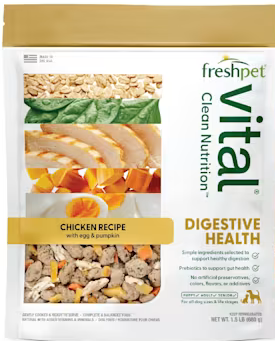
For the pet owner, the message is clear: a name on a bag is not a medical diagnosis. While a food named "Life Protection" or "Digestive Support" may contain quality ingredients, it does not carry the same regulatory weight or scientific requirement as a product intended to treat a disease. As the FDA continues to monitor the "total context" of pet food marketing, the industry may soon find that a name, no matter how clever, is no longer a shield against the rigorous standards of federal law.