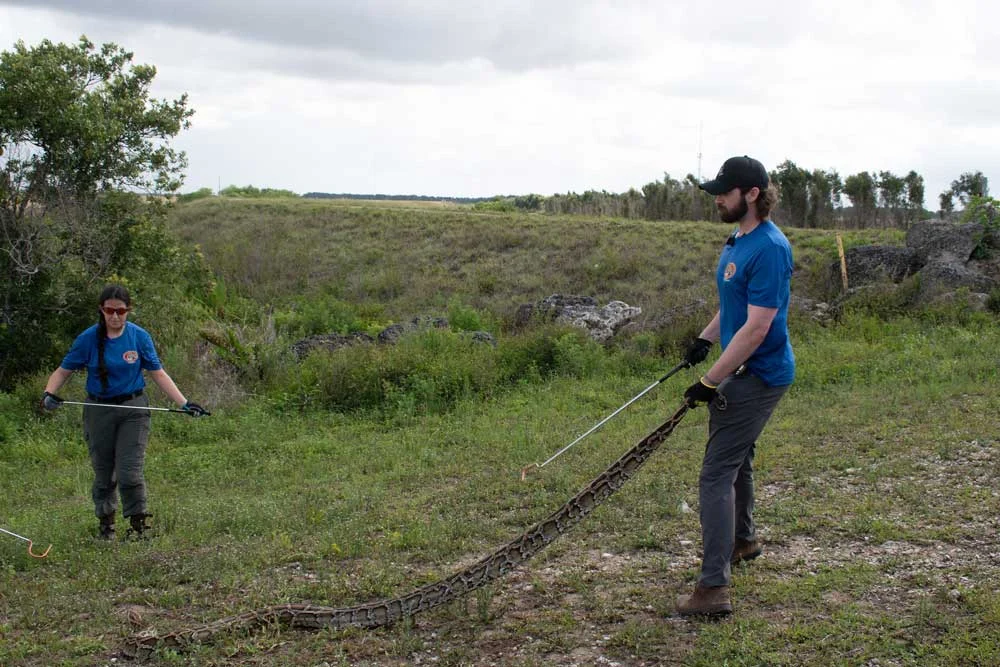
The Florida Everglades, a sprawling, unique wetland ecosystem of global ecological significance, faces an existential threat. For decades, the encroachment of the invasive Burmese python (Python bivittatus) has decimated native wildlife populations, turning the "River of Grass" into a hunting ground for an apex predator that has no natural enemies in the region. As the 2026 Florida Python Challenge approaches—running from July 10 through July 19—the state is once again calling upon citizen scientists, professional hunters, and military personnel to take up arms against this invasive scourge.
The 2026 Florida Python Challenge: What You Need to Know
Registration for the 2026 iteration of this high-stakes conservation effort is officially open. The event is more than just a hunt; it is a meticulously organized management strategy designed to mitigate the damage caused by these constrictors. Participants can register by visiting flpythonchallenge.org.
The challenge offers a substantial incentive structure, with a total prize pool of $25,000. The ultimate grand prize—a $10,000 reward—will be awarded to the individual who successfully removes the highest number of Burmese pythons. To ensure fair competition and broad participation, the state has categorized entries into three distinct tiers:
- Professional Category: Reserved for experienced contractors and those with advanced field knowledge.
- Novice Category: Designed for enthusiasts and the general public looking to contribute to conservation.
- Military Category: A dedicated division honoring service members who participate in the protection of Florida’s natural resources.
The event is a collaborative effort between the Florida Fish and Wildlife Conservation Commission (FWC), the South Florida Water Management District (SFWMD), and Everglades National Park. By incentivizing the removal of these invasive reptiles, officials hope to provide a necessary check on a population that has proven exceptionally difficult to control.
A Chronology of Conflict: The Rise of the Invasive Constrictor
The presence of the Burmese python in Florida is a relatively recent, albeit catastrophic, development in the state’s environmental history. Originally imported as exotic pets, the snakes gained a foothold in the Everglades—either through accidental escape or intentional release—during the late 20th century. By the early 2000s, it became clear that the species was not only surviving but thriving in the subtropical climate.
Since the state launched the inaugural Python Challenge in 2013, the event has become a cornerstone of public awareness and invasive species management.
- 2013: The inaugural event set the stage for public involvement.
- 2022: A milestone year that saw the removal of 231 pythons during the challenge, demonstrating the efficacy of organized public participation.
- 2025: The most recent event prior to 2026, which helped contribute to a total of 1,406 snakes removed across recent operational cycles.
Data suggests that since the year 2000, roughly 27,000 pythons have been removed from the Florida wild through a combination of state-sanctioned challenges, commercial hunting, and ongoing eradication efforts by federal and state agencies.
Supporting Data: The Magnitude of the Invasion
The scale of the Burmese python invasion is difficult to overstate. Scientists estimate that the weight of the snakes removed in recent cycles alone totals between 14 and 17.5 tons. This biomass represents a significant disruption to the natural food web.
The Burmese python is a generalist predator. It feeds on everything from marsh rabbits and raccoons to endangered birds and even white-tailed deer. Because the Everglades lacks natural predators for the pythons—which can grow to lengths exceeding 18 feet—the snakes have effectively displaced native species. The sheer density of these animals in certain sectors of the Everglades has led to a documented decline in native mammal populations, with some studies showing a reduction of up to 90% in specific areas.
Official Perspectives: A Call for Stewardship
Government officials have been vocal about the necessity of the Python Challenge as part of a larger, broader strategy for Everglades restoration.
"We continue to advance Everglades restoration efforts thanks to the support of Governor Ron DeSantis, and we’ll keep doing everything we can to protect this important ecosystem," said South Florida Water Management District Governing Board Member "Alligator Ron" Bergeron in a recent statement. "Removing Burmese pythons from this ecosystem is critical to the survival of the native species that call this area home."
Bergeron, a long-time advocate for the Everglades, emphasized that the battle against invasive species is a collective responsibility. "We appreciate our partners at the Florida Fish and Wildlife Conservation Commission and Everglades National Park as we continue to work together to raise awareness about invasive species. This is a great way for the public to get involved in the protection of the Everglades and I want to thank everyone who is participating in the 2026 Florida Python Challenge. Long live the Everglades!"
Implications: Can Natural Predation Help?
While the Python Challenge is a vital tool, researchers are also looking at how the local ecosystem is beginning to adapt. One of the most fascinating developments in recent years has been the observed predation of juvenile Burmese pythons by native species.
The Role of Native Predators
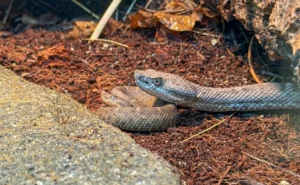
Recent biological surveys and anecdotal reports have confirmed that the Florida cottonmouth (Agkistrodon piscivorus) has begun to prey on baby pythons. While this will not stop the invasion—as a single adult python can lay dozens of eggs at a time—it serves as a symbolic, if small, pushback by the native ecosystem.
Other predators have also been identified as occasional consumers of the invasive snakes:
- The American Alligator (Alligator mississippiensis): As the true apex predator of the Everglades, alligators are the only creatures capable of taking on mid-to-large-sized pythons. These encounters are often lethal for both parties, depending on the size of the contestants.
- The Gulf Coast Indigo Snake (Drymarchon couperi): A large, non-venomous native snake that has been observed consuming young pythons.
- The Bobcat (Lynx rufus): A highly adaptable predator that occasionally targets smaller, younger pythons found on land.
- The Florida Black Bear (Ursus americanus floridanus): Though rarely documented, there is growing suspicion among biologists that bears may be opportunistic hunters of the python, particularly when the snakes are moving through nesting grounds.
The Future of the Everglades: Beyond the Challenge
The Florida Python Challenge is a temporary tactical operation, but the war for the Everglades is a long-term strategic mission. While removing thousands of snakes is a commendable feat, experts argue that the ultimate goal is to restore the "balance" of the ecosystem.
The implications of failing to control the python population are severe. If left unchecked, the pythons could continue to spread further north, potentially reaching areas outside of the Everglades that share similar temperate and subtropical conditions. Furthermore, the loss of biodiversity threatens the health of the entire water management system. A degraded ecosystem is less resilient to storms, pollution, and climate change.
For those participating in the July 10-19 event, the mission is clear: every python removed is a small victory for the survival of the Everglades. As registration remains open, the state anticipates a high turnout of participants eager to contribute to one of the most critical environmental conservation initiatives in the United States.
By combining the rigor of scientific data, the power of government policy, and the passion of the Florida public, the 2026 Python Challenge stands as a testament to the state’s refusal to concede one of the world’s most beautiful natural treasures to an invasive invader. The success of this year’s challenge will not only be measured in dollars and prizes but in the measurable reduction of a threat that has cast a long, cold shadow over the Florida Everglades for far too long.
To join the fight, visit the official registration portal and prepare for a week of intensive field work. The future of the Everglades depends on the vigilance of those willing to step into the swamp and protect its native inhabitants.