Main Facts
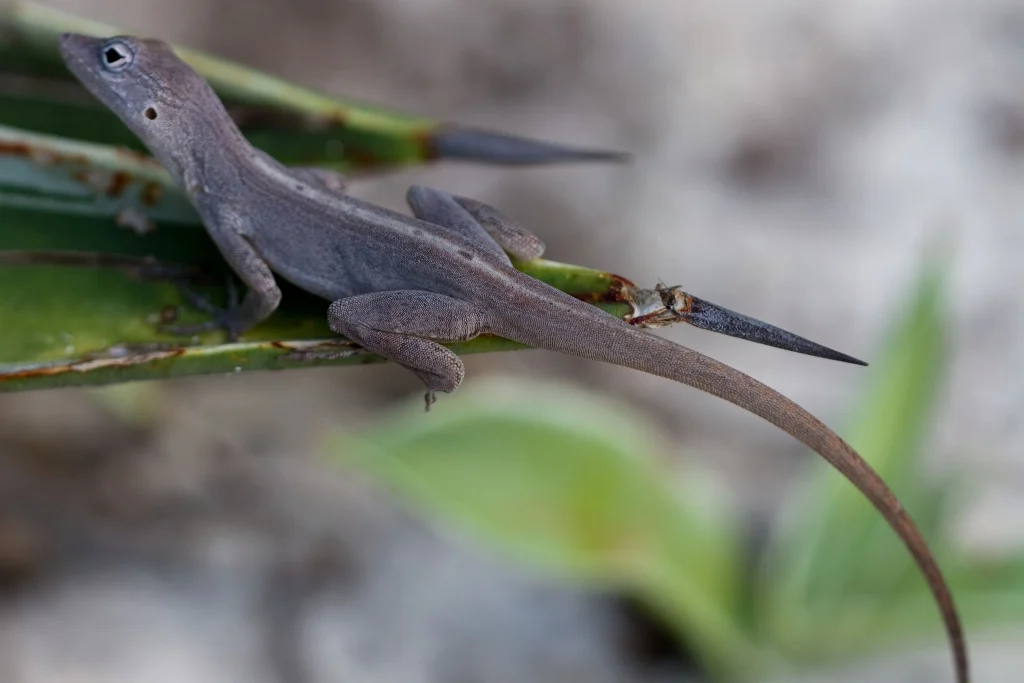
In the autumn of 2017, the Caribbean was subjected to a relentless onslaught of hyper-intense meteorological events, chief among them Hurricanes Irma and Maria. While human displacement, infrastructural devastation, and economic collapse dominated the immediate news cycles, a quieter, profound drama was unfolding in the natural world. According to a landmark study published in the journal Current Biology, these unprecedented category-5 storms served as extreme agents of natural selection for populations of the Silver Key anole (Anolis scriptus) inhabiting the Turks and Caicos Islands.
The core finding of the research is striking: Silver Key anoles possessing shorter fourth hind toes enjoyed a significantly higher survival rate during the tempests than their longer-toed counterparts. By examining lizard populations on two distinct islands before and after the hurricanes swept through the region, evolutionary biologists captured a rare, real-time snapshot of natural selection in action.
The implications of the study extend far beyond a simple lesson in functional morphology. Through rigorous genomic analysis, researchers identified five candidate genetic loci that displayed parallel selection across both isolated populations. Chief among these was the hs6st1 gene, which exhibited a clear signature of selection and showed a direct association with the length of the longest hind toe. By using gene-editing techniques on a related species, brown anoles, scientists experimentally confirmed that manipulating this specific gene leads directly to the development of shorter hind toes.
This research bridges a historical gap in evolutionary biology. While Charles Darwin and Alfred Russel Wallace theorized about natural selection acting on wild populations over vast expanses of geological time, modern scientists are increasingly documenting how singular, catastrophic climate events can rapidly prune phenotypes, alter gene frequencies, and drive rapid evolutionary shifts in a matter of hours.
Chronology
To understand how scientists arrived at these conclusions, it is necessary to retrace the timeline of the research—a timeline punctuated by meteorological fury, meticulous field biology, and cutting-edge genetic inquiry.
Years Preceding 2017: Baseline Data Collection
Long before Hurricanes Irma and Maria formed in the Atlantic basin, evolutionary biologists had established monitoring sites across the Turks and Caicos archipelago. As part of ongoing investigations into island biogeography and phenotypic variation, researchers had already captured, measured, and genetically cataloged numerous populations of Anolis scriptus. These baseline surveys measured various morphological traits, including limb length, pad scales, and toe proportions, creating an invaluable reservoir of pre-storm data. Little did the research team know that this baseline would soon serve as the "before" picture in a natural experiment of staggering proportions.
September 2017: The Cataclysm
In September 2017, the Atlantic hurricane season reached a fever pitch. Hurricane Irma, a sprawling and catastrophically powerful Category 5 storm packing sustained winds well in excess of 150 miles per hour, tore through the Caribbean, closely followed by Hurricane Maria. The Turks and Caicos Islands, low-lying carbonate platforms exposed to the full fury of the open ocean, took a direct hit. Sustained hurricane-force winds, torrential rains, and storm surges battered the local habitats, stripping vegetation and subjecting the resident fauna to extreme physical stress.
Post-Storm Assessments: The Survival Census
In the immediate aftermath of the storms, once field conditions allowed for safe travel, the research teams returned to their established study sites on the two islands. They set out to census the surviving Anolis scriptus populations. By comparing the morphological measurements of the post-hurricane survivors against the pre-hurricane baseline data, a clear and statistically significant pattern emerged. The lizards that weathered the ferocious winds were not a random cross-section of the population; they were disproportionately individuals characterized by shorter fourth hind toes.
Laboratory Analysis and Gene Editing
With the ecological pattern established, the focus shifted from the field to the laboratory. Researchers extracted DNA from both pre- and post-hurricane cohorts to conduct whole-genome sequencing and scans. They sought to determine whether the morphological shift was merely phenotypic plasticity or the result of hard genetic selection.
Following the identification of the hs6st1 gene as a primary candidate linked to toe length, the scientific team devised an experimental validation phase. Utilizing CRISPR-like gene-editing technologies on brown anole (Anolis sagrei) embryos, they disrupted the function of the hs6st1 gene. As the embryos developed, the resulting hatchlings exhibited noticeably shorter hind toes, providing definitive functional proof that the genetic pathway identified in the wild anoles directly controlled the physical trait favored by the hurricanes.
Supporting Data
The scientific rigor underpinning the Current Biology study rests on extensive quantitative measurements, biophysical principles, and genomic mapping.
Morphological Metrics and Clinging Performance
To comprehend why shorter toes are advantageous during a hurricane, one must understand how anoles navigate their arboreal environments. Anoles rely heavily on specialized toe pads covered in microscopic, hair-like structures called setae, which allow them to adhere to smooth surfaces like tree trunks and branches under normal conditions.
However, when wind speeds reach hurricane force, the aerodynamic drag forces exerted on a tiny lizard multiply exponentially. Wind tunnel experiments conducted in previous related studies have demonstrated that anoles cling to perches by pressing their bodies flat and gripping with their digits. Lizards with longer toes experience a larger mechanical moment arm—essentially acting as a longer lever—which can create leverage forces that peel the toe pads away from the substrate under extreme wind buffeting. Shorter toes reduce this leverage, enhancing structural integrity and maximizing clinging tenacity. The post-hurricane census data confirmed this biophysical principle: survivors across both island sites possessed significantly reduced fourth hind toe lengths compared to the pre-storm populations.
Genomic Signatures and Parallel Evolution
Genomic analysis of the surviving Anolis scriptus populations revealed fascinating insights into the molecular architecture of the adaptation. By scanning the genomes of lizards sampled before and after the storms, researchers identified five candidate loci that showed strong evidence of parallel selection.
Parallel selection is an evolutionary phenomenon wherein distinct, isolated populations subjected to the exact same environmental pressure independently evolve similar genetic and phenotypic solutions. In this case, the two island populations of Anolis scriptus were genetically somewhat distinct prior to the storms, yet both populations underwent directional selection at the same genomic hotspots.
The hs6st1 Pathway
At the center of this genomic convergence was the hs6st1 gene. This gene encodes heparan sulfate 6-O-sulfotransferase 1, an essential enzyme responsible for modifying heparan sulfate molecules located on the surfaces of cells. Heparan sulfate plays a critical role in intercellular signaling pathways during embryogenesis, specifically orchestrating the complex cascades of cell division, migration, and differentiation that shape developing limbs and digits.
The statistical association between sequence variation near hs6st1 and the length of the longest hind toe was robust across the sampled cohorts. When researchers experimentally disrupted this gene in brown anole embryos, the targeted downregulation of the pathway reliably produced the expected developmental phenotype: shortened digits. This closed the loop between macro-scale ecological observation (hurricane survival), organismal performance (clinging ability), morphological variation (toe length), and molecular genetics (hs6st1 expression).
Official Responses
The publication of the study has generated widespread commentary and analysis within the global ecological and evolutionary biology communities, drawing praise for its methodological precision and its rare capture of evolution in real time.
Dr. Colin Donihue, a leading evolutionary biologist and co-author of the research, emphasized the rarity of documenting selection events as they unfold. "For a long time, evolutionary biology has relied heavily on historical inference—looking at patterns in nature today and trying to reverse-engineer the historical pressures that created them," Dr. Donihue noted in post-publication statements. "Studies like this allow us to witness natural selection operating in real time, connecting the dots from extreme weather all the way down to the specific nucleotides in the genome."
Other prominent figures in the field of functional morphology and island ecology have lauded the study for bridging the often-wide gap between field ecology and molecular genetics. Dr. Jonathan Losos, a renowned expert on anole evolution and biodiversity who was not directly involved in the study, remarked that the research provides a textbook example of how sudden ecological crises can sculpt the evolutionary trajectories of wild species. "It is one thing to hypothesize that storms act as selective filters; it is an entirely different level of scientific achievement to track the survivors, identify the genes responsible, and experimentally validate the developmental mechanism in a laboratory setting," Dr. Losos stated.
Conservationists and climate scientists have also weighed in on the broader implications of the findings. As global climate change intensifies both the frequency and severity of extreme weather events—including more powerful hurricanes fueled by rising sea surface temperatures—the pressures on native island fauna are mounting. Institutional stakeholders and environmental management agencies in the Caribbean view these findings not merely as academic curiosities, but as vital baseline data for understanding how endemic species may respond, adapt, or succumb to a rapidly changing global climate.
Implications
The documentation of hurricane-induced directional selection in Silver Key anoles carries profound implications across multiple scientific disciplines, touching upon evolutionary theory, climate change biology, and conservation management.
Rewriting the Speed of Evolution
Historically, evolutionary change was widely perceived as an exceedingly slow, gradual process requiring thousands or millions of years to yield noticeable adaptations. However, a growing body of contemporary research—cemented by this anole study—demonstrates that strong, episodic environmental pressures can trigger rapid, micro-evolutionary shifts in a matter of generations or even single events. When a catastrophic storm wipes out a substantial portion of a population based on specific functional traits, the surviving gene pool is immediately and drastically altered. This "episodes-of-crisis" model of evolution highlights the potency of extreme weather events as major drivers of biodiversity and morphological diversification.
Climate Change and Resilience in the Anthropocene
As anthropogenic greenhouse gas emissions continue to warm the planet’s oceans and atmosphere, extreme weather is no longer a rare anomaly; it is the new normal. Hurricanes are projected to become wetter, slower, and more intense. The ability of wild populations to withstand these intensifying disturbances will dictate their long-term survival.
While the Silver Key anoles demonstrated a remarkable capacity for rapid adaptation via standing genetic variation, not all species possess such resilient genetic architectures or short generation times. Long-lived species with slow reproductive rates—such as many endemic reptiles, birds, and mammals—may lack the capacity to adapt quickly enough to keep pace with the escalating frequency of climatic shocks. Understanding the genomic targets of selection, such as the hs6st1 pathway identified in this study, provides conservationists with a more sophisticated framework for assessing the vulnerability of native species facing climate-stressed habitats.
Future Research Directions
The methodology pioneered in this research—combining longitudinal field studies of extreme weather survivors with high-throughput genomics and embryonic gene-editing validation—paves the way for exciting new avenues of scientific inquiry. Future research will likely explore whether similar genetic mechanisms underlie responses to other extreme weather anomalies, such as prolonged droughts, unprecedented heatwaves, or severe freezes across different taxonomic groups.
Furthermore, as genomic tools become increasingly portable and affordable, scientists hope to expand these investigations to a broader array of island ecosystems. Islands have long served as the natural laboratories of evolutionary biology, from Darwin’s finches in the Galapagos to the anoles of the Caribbean. By continuing to monitor these vulnerable ecosystems, researchers can better predict how life on Earth will respond to the mounting pressures of an uncertain climatic future, revealing the hidden genetic threads that allow species to weather the storm.