By Environmental Science Correspondent
Updated: September 2026
Main Facts
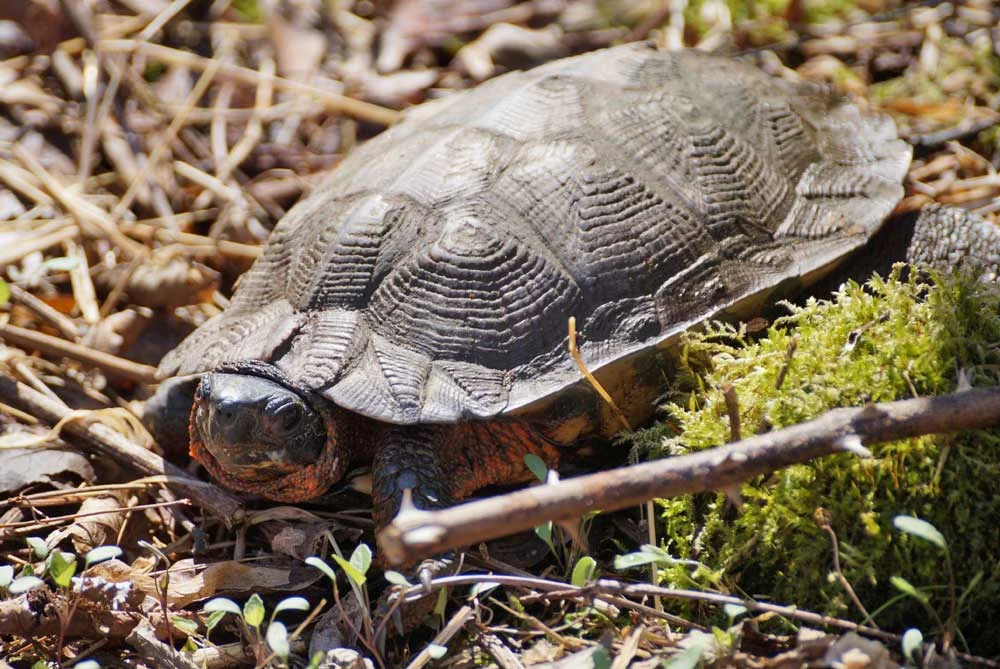
As global temperatures continue to rise and traditional lowland ecosystems face unprecedented ecological stress, conservationists and herpetologists are racing to understand how vulnerable wildlife species will adapt. A groundbreaking study conducted by researchers affiliated with the Great Hollow Nature Preserve and Ecological Research Center in Connecticut has shed new light on this pressing issue. Focusing on the wood turtle (Glyptemys insculpta) in New York’s rugged Catskill Mountains, the research team has concluded that these semi-aquatic reptiles may be able to successfully persist, and even thrive, at significantly higher elevations as the planet warms.
The study, which surveyed 28 distinct one-kilometer stream segments across the mountainous landscape, documented wood turtle populations thriving at some of the highest elevations ever officially recorded for the species. Remarkably, these high-altitude turtles were found occupying habitats that share many of the key structural and ecological features found in the lowland ecosystems where wood turtles have historically flourished.
These findings point to a critical paradigm shift in regional conservation planning. As climate change projects the widespread degradation and destruction of traditional lowland wood turtle habitats across the northeastern United States, high-elevation montane stream systems are emerging as indispensable climate refuges. However, these upland populations have historically been overlooked by policymakers and conservation strategists. The research underscores an urgent need to pivot conservation frameworks toward protecting these high-altitude sanctuaries before warming trends outpace the animals’ natural adaptive capabilities.
Chronology of the Research
The path toward understanding how wood turtles interact with changing altitudinal zones began years ago as field biologists noticed shifting thermal baselines across the northeastern United States. Habitat-suitability models predicted that as lowland temperatures crossed physiological thresholds, optimal conditions for Glyptemys insculpta would increasingly become restricted to cooler, high-elevation topographies.
To test these theoretical models against empirical reality, researchers from the Great Hollow Nature Preserve and Ecological Research Center launched a comprehensive field study in the Catskill Mountains.
- Phase One (Site Selection and Survey Design): Scientists mapped out 28 one-kilometer stream segments throughout the Catskills, targeting watersheds that exhibited a diverse range of elevations, canopy covers, and hydrological characteristics.
- Phase Two (Field Surveys and Data Collection): Over successive field seasons, researchers meticulously surveyed these designated stream corridors. They documented turtle presence, population demographics, and microhabitat characteristics—such as substrate composition, basking sites, and adjacent terrestrial foraging zones.
- Phase Three (Analysis and Modeling): Upon compiling the field data, the team cross-referenced their findings with broader habitat-suitability models for the northeastern United States. They evaluated how these high-elevation ecosystems aligned with historical habitat requirements and assessed the physiological viability of mountain-dwelling turtles.
- Phase Four (Publication): The culmination of this multi-year effort resulted in a comprehensive scientific paper titled "High-Elevation Habitat Associations of Wood Turtles (Glyptemys insculpta) in New York’s Catskill Mountains: Conservation Implications in a Changing Climate," published in the Journal of Herpetology and made publicly accessible via the BioOne Digital Library.
Supporting Data and Ecological Findings
The data gathered during the Catskills survey challenge long-held assumptions about the altitudinal limits of wood turtles. Historically categorized primarily as inhabitants of low-lying floodplains, slow-moving rivers, and adjacent agricultural or forested wetlands, the discovery of viable populations at record-high elevations demonstrates a remarkable degree of ecological plasticity.
Key metrics from the research reveal:
- Elevational Range: Wood turtles were successfully documented at elevations substantially higher than standard historical records for the region, proving that montane stream networks can meet their complex biological needs.
- Habitat Parimacy: Despite the shift in altitude, the occupied high-elevation sites maintained critical environmental signatures found in lowland strongholds, including accessible sandy or gravelly nesting banks, slow-flowing pool-riffle-run stream sequences, and diverse terrestrial understories for summer foraging.
- Regional Modeling: Habitat-suitability modeling for the northeastern U.S. confirms that the Catskill mountain range, alongside other high-elevation zones in the region, will transform into critical climatic strongholds. As lowland zones experience prolonged droughts, elevated summer temperatures, and catastrophic flooding events linked to climate instability, these upland environments will buffer populations against thermal extremes.
Official Responses and Scientific Perspective
The implications of the study have reverberated throughout the herpetological and conservation communities. Researchers emphasize that while the discovery of high-elevation wood turtles offers a beacon of hope, it also highlights deep vulnerabilities elsewhere in the species’ range.
"Wood turtles already established at higher elevations have a significantly higher probability of long-term persistence than their lowland counterparts," study authors noted in their published findings. Because mountain streams naturally offer cooler water temperatures and shaded microclimates, these populations are naturally buffered against the worst impacts of rising ambient temperatures.
However, a major scientific question remains: Can lowland wood turtle populations migrate upward to these elevated refuges at a pace that matches the rapid acceleration of climate change?
The researchers caution that natural dispersal is fraught with peril. Lowland turtles attempting to move upstream often encounter impassable anthropogenic barriers, such as major roadways, agricultural developments, urban sprawl, and dams. Without active human intervention—potentially including managed translocations or the creation of wildlife corridors—lowland populations may face localized extirpation before they can reach the safety of the mountains. Consequently, studying the behavioral ecology and movement capabilities of these high-elevation populations is no longer just of academic interest; it is a fundamental prerequisite for the species’ survival.
Broader Implications for Wildlife Conservation
The plight of the wood turtle in a warming world serves as a microcosm for broader biodiversity challenges across the globe. As climate change reshapes ecosystems, species are forced to choose between adaptation, migration, or extinction.
The Shifting Map of Biodiversity
For decades, conservation strategies have focused heavily on protecting static geographic areas based on historical species distributions. However, as climate velocities increase, static conservation models are becoming obsolete. The Catskills wood turtle study illustrates that conservation planning must become dynamic, anticipating where species will need to go rather than merely protecting where they currently live.
Interconnected Threats to Reptiles
Reptiles are particularly sensitive to environmental shifts due to their ectothermic (cold-blooded) nature and temperature-dependent sex determination systems. A parallel can be seen in other recent alarming studies—such as research documenting that a warming planet has caused 99% of Raine Island sea turtle hatchlings to be female, severely skewing sex ratios and threatening reproductive sustainability. While wood turtles do not face this exact crisis to the same degree, changing thermal regimes profoundly influence their metabolic rates, brumation periods, and reproductive output.
Policy and Action Items
To secure the future of Glyptemys insculpta, conservationists, state wildlife agencies, and private landowners must coordinate on several fronts:
- Corridor Protection: Establishing protected ecological corridors that connect low-elevation river systems to high-elevation montane streams, allowing turtles and other wildlife to migrate naturally.
- Habitat Restoration: Actively restoring degraded high-elevation stream banks and nesting sites in mountain ranges like the Catskills to maximize carrying capacity.
- Targeted Monitoring: Directing funding and survey efforts toward geographically distinct, high-elevation populations that have historically fallen outside major conservation action plans.
- Regulatory Safeguards: Enhancing legal protections against illegal pet trade collection and habitat fragmentation, which continue to threaten wood turtles across their entire range.
Ultimately, the wood turtles scaling the streams of the Catskill Mountains are pioneers of a changing world. Whether they represent the vanguard of a resilient species successfully adapting to a transformed planet—or the last stronghold of a besieged reptile fighting against the clock—will depend heavily on how quickly human conservation strategies can rise to meet them on higher ground.