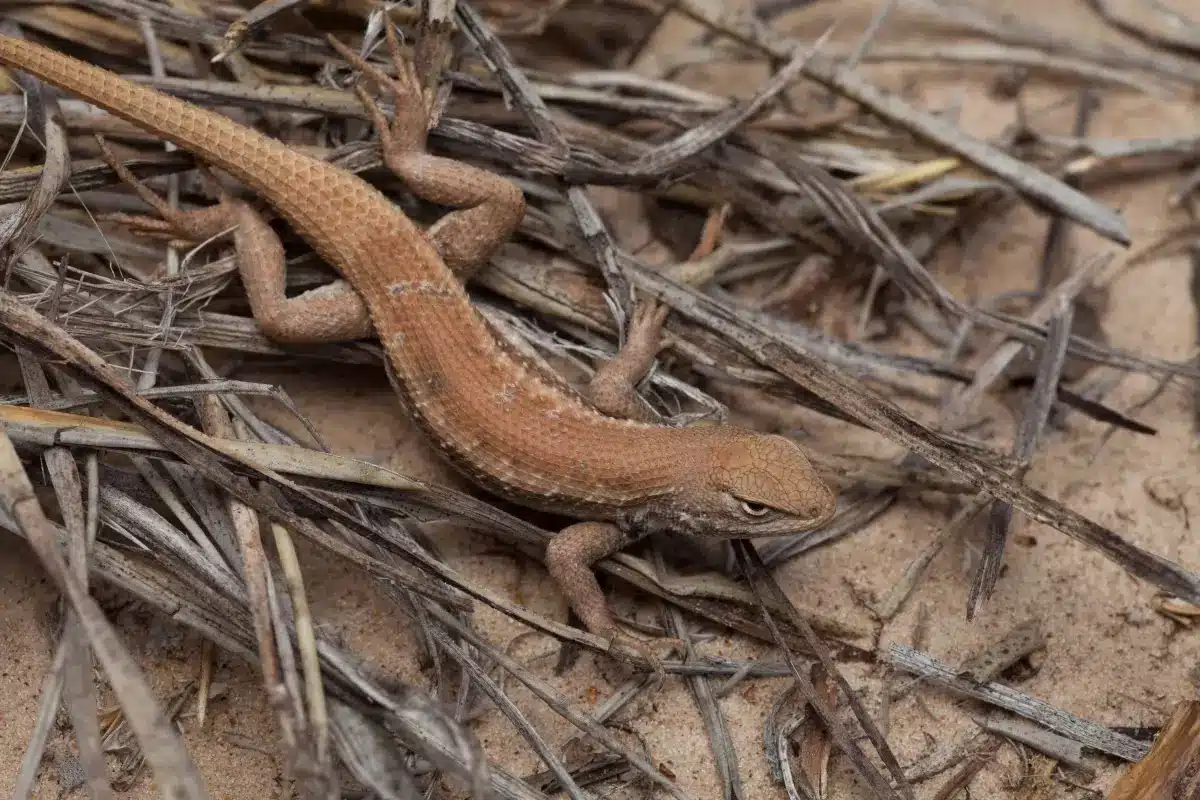
AUSTIN, Texas — In a sweeping development that marks the latest chapter in a protracted, decades-long environmental and economic tug-of-war, federal protections for the dunes sagebrush lizard (Sceloporus arenicolus) have officially come to an end. The decision stems from a landmark legal settlement reached between Texas Attorney General Ken Paxton and the federal government, temporarily halting a designation that had only recently elevated the tiny reptile to endangered status under the Biden administration.
While the immediate outcome of the agreement strips away crucial federal safeguards for the lizard, the settlement mandates that the U.S. Fish and Wildlife Service (USFWS) conduct a comprehensive reassessment of the species’ conservation status. The resolution underscores a deeply polarized intersection of wildlife management, state sovereignty, and the multi-billion-dollar oil and gas sector operating in the Permian Basin.
Main Facts
The core of the controversy centers on the dunes sagebrush lizard, a charismatic micro-reptile measuring only a few inches in length, native exclusively to the fragile shinnery oak sand dune ecosystems of West Texas and southeastern New Mexico. This specific geographic footprint happens to overlap significantly with one of the most prolific and lucrative oil and gas production regions in the United States, as well as intensive industrial sand-mining operations.
- The Endangered Listing and Reversal: After lingering in administrative limbo for over 15 years, the dunes sagebrush lizard was formally designated as an endangered species in 2024 by the Biden administration, a move intended to curb habitat degradation. However, that protection has now been dismantled via a legal settlement following a lawsuit filed by Texas Attorney General Ken Paxton.
- The Legal Mechanism: Paxton’s lawsuit argued that the federal government’s scientific data justifying the endangered status was incomplete and legally flawed, despite more than a decade of research, biological surveys, and data collection by federal scientists.
- The Settlement Terms: Under the terms of the agreement brokered between Texas and the federal government, current endangered species protections are rescinded. In exchange, the USFWS is legally required to initiate a fresh, thorough review of the lizard’s population status and ecological standing.
- The Industrial Landscape: The lizard’s natural habitat is restricted to sand dune environments characterized by shinnery oak trees (Quercus havardii). Because this exact terrain sits atop rich petroleum deposits, any federal restriction on the land triggers fierce economic pushback from energy developers who view environmental protections as a direct threat to regional drilling and employment.
Chronology of a Decades-Long Battle
The road to the removal of federal protections is paved with more than 15 years of bureaucratic delays, contentious litigation, legislative maneuvers, and shifting political landscapes.
Early Warnings and Initial Petitions (Late 2000s – 2010s)
Environmental organizations first petitioned the U.S. Fish and Wildlife Service to grant the dunes sagebrush lizard protection under the Endangered Species Act (ESA) in the late 2000s, citing severe habitat fragmentation caused by oil and gas exploration, clear-clearing of shinnery oak, and industrial road construction. The USFWS initially proposed listing the species in 2012, sparking immediate panic among West Texas landowners and energy executives who feared sweeping federal land-use restrictions.
The Voluntary Conservation Era (2013 – 2020)
To fend off a federal endangered listing, state officials and industry stakeholders championed a voluntary conservation model. In 2013, the Texas Habitat Conservation Foundation (THCF) was established, ostensibly to monitor and enforce voluntary conservation agreements made by oil and gas operators to protect the lizard’s habitat. However, critics and investigative reports later revealed that the agency charged with safeguarding the reptile was largely staffed by oil industry lobbyists. Years later, the Texas Comptroller formally terminated the foundation amid questions regarding its efficacy and transparency.
Legislative Interventions (2023)
As federal pressure mounted toward a mandatory listing under the Biden administration, federal lawmakers representing the region stepped in. In 2023, U.S. Representative August Pfluger (R-San Angelo) introduced a targeted bill aimed at kneecapping the federal government’s regulatory authority. Dubbed the "Limiting Incredulous Zealots Against Restricting Drilling Act"—or simply the LIZARD Act—Pfluger’s legislation sought to halt federal oversight entirely, delegating species preservation efforts to voluntary, localized industry and state initiatives. While the LIZARD Act did not successfully pass into law, it laid the ideological groundwork for subsequent legal challenges.
The 2024 Listing and Paxton’s Lawsuit
Ignoring industry pushback, the USFWS formally listed the dunes sagebrush lizard as an endangered species in 2024, citing worsening habitat loss and climate pressures. Within weeks, Texas Attorney General Ken Paxton struck back, filing a federal lawsuit against the Biden administration. Paxton’s legal team argued that the agency relied on incomplete data and ignored voluntary state-led conservation frameworks.
The 2026 Settlement and Present Day
Rather than heading toward a protracted and costly trial that could have set sweeping national precedents regarding executive branch authority under the ESA, the federal government and the State of Texas reached a settlement. This agreement effectively short-circuited the 2024 listing, achieving through litigation what Representative Pfluger’s LIZARD Act had failed to accomplish legislatively: the immediate cessation of federal endangered species protections for the reptile.
Supporting Data and Ecological Context
Understanding the gravity of the dunes sagebrush lizard controversy requires examining the unique biological niche it occupies and the intense industrial pressures bearing down upon it.
Habitat Specificity
The dunes sagebrush lizard is a habitat specialist. It is not found anywhere else on Earth outside of the shinnery oak sand dunes located in a handful of West Texas counties (such as Andrews, Crane, Ward, and Winkler) and southeastern New Mexico. The lizard relies heavily on the loose sand dunes for burrowing to escape extreme desert temperatures and predators, and depends on shinnery oak root systems and leaf litter for food and cover. Because the species cannot easily migrate across unsuitable terrain, any disruption or bulldozing of these localized sand dune systems poses an existential threat to isolated populations.
Energy Production and Land Use
The geographic range of Sceloporus arenicolus directly overlaps with the Permian Basin, one of the most productive oil and natural gas reservoirs in the world. Over the past two decades, the region has experienced unprecedented industrial booms marked by hydraulic fracturing (fracking), the construction of thousands of miles of pipelines, heavy truck traffic, and the establishment of sand-mining operations designed to harvest the very type of silica sand utilized in well completions.
According to economic impact studies, imposing strict federal ESA regulations on this region could potentially encumber billions of dollars in oil and gas infrastructure development, compel costly rerouting of pipelines, and restrict surface usage across hundreds of thousands of acres of private and public land. Industry advocates have consistently maintained that these economic stakes dwarf the ecological necessity of federal intervention, pointing instead to voluntary conservation frameworks implemented by landowners and energy operators.
Official Responses
The decision to strip federal protections from the dunes sagebrush lizard has drawn sharp, polarized reactions from political figures, industry representatives, and environmental conservation organizations alike.
State Officials and Industry Advocates
Texas leadership hailed the settlement as a major victory for state rights, private property owners, and the regional economy.
"For years, federal overreach has threatened to penalize Texas workers and cripple our energy independence based on flawed, incomplete science," representatives of state legal teams have argued throughout the proceedings.
Proponents of the settlement maintain that state-level oversight, combined with cooperative agreements involving local landowners and energy firms, provides a far more efficient and flexible approach to wildlife conservation than heavy-handed mandates from Washington, D.C. Supporters of the legal challenge point out that Texas has previously demonstrated an ability to manage regional species without federal interference, arguing that voluntary stewardship avoids the economic paralysis associated with full ESA listings.
Federal Agencies and Environmentalists
Conversely, conservation groups and federal biologists have expressed profound disappointment over the outcome of the settlement, warning that political litigation has subverted the integrity of the nation’s environmental laws.
Wildlife advocates argue that removing protections leaves an already vulnerable species entirely exposed to unchecked industrial degradation at a critical juncture in its survival trajectory. Environmental organizations maintain that the 2024 endangered listing was grounded in rigorous, peer-reviewed scientific assessments showing measurable declines in lizard populations and continued fragmentation of the shinnery oak ecosystem.
Critics of the settlement have also raised concerns regarding the mandate requiring USFWS to reassess the lizard’s status, questioning whether future evaluations will be insulated from political pressure or if administrative inertia will permanently prevent the species from receiving the emergency interventions it requires.
Implications for the Future of Wildlife Conservation
The resolution of the dunes sagebrush lizard lawsuit carries profound implications that extend far beyond the borders of West Texas, signaling potential shifts in how federal environmental laws are challenged, enforced, and interpreted nationwide.
A Blueprint for Challenging the Endangered Species Act
Legal scholars note that Attorney General Paxton’s successful strategy—leveraging claims of incomplete scientific data to force federal settlements—could serve as a blueprint for other states seeking to block ESA listings. As energy-producing states increasingly push back against federal oversight of flora and fauna found in resource-rich areas, settlements like this one may become a preferred mechanism to dilute or dismantle federal conservation rules without necessitating explicit acts of Congress.
The Viability of Voluntary Conservation Models
The dismantling of the original Texas Habitat Conservation Foundation, paired with the recent legal maneuvers, places a renewed spotlight on the effectiveness of voluntary, industry-backed conservation. Critics argue that voluntary programs lack the teeth, transparency, and independent oversight necessary to ensure genuine species recovery, often serving as paper tigers designed merely to stave off stricter federal controls. Conversely, proponents argue that collaborative, non-punitive approaches foster better cooperation from private landowners who might otherwise destroy habitat out of fear of heavy-handed government restrictions.
The Outlook for Sceloporus arenicolus
As the U.S. Fish and Wildlife Service begins its mandated reassessment of the dunes sagebrush lizard, the ultimate fate of the reptile remains shrouded in uncertainty. Biologists stress that the biological pressures facing the species—including ongoing habitat loss, industrial footprint expansion, and the compounding effects of regional climate change—have not abated simply because a legal settlement was reached.
Whether the upcoming federal review will yield a renewed push for protections or cement a deregulatory status quo will depend heavily on the incoming scientific data, ongoing political dynamics, and the willingness of state and industry partners to implement meaningful, verifiable habitat preservation on the ground. For now, the dunes sagebrush lizard remains a tiny symbol of a monumental clash between the relentless march of industrial energy production and the fragile persistence of native wildlife in the American Southwest.