Main Facts
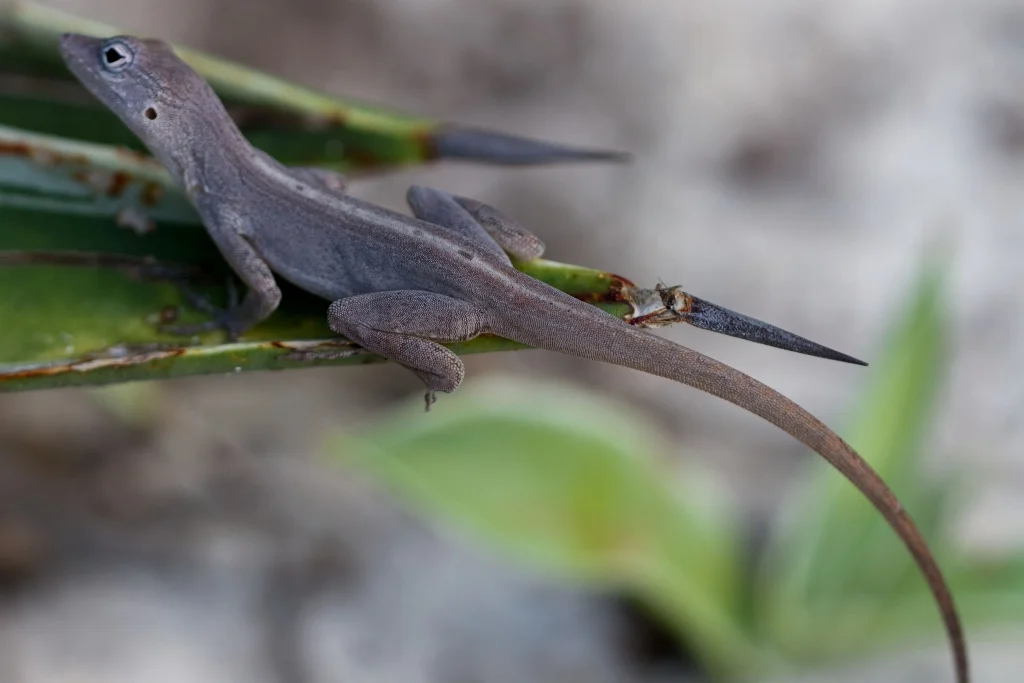
In the devastating wake of the catastrophic 2017 Atlantic hurricane season, a team of evolutionary biologists uncovered a striking example of natural selection acting in real-time. According to a landmark study published in the journal Current Biology, populations of the Silver Key anole (Anolis scriptus) inhabiting the Turks and Caicos Islands underwent rapid, hurricane-driven physical transformation. Lizards equipped with shorter fourth hind toes possessed a distinct survival advantage during the ferocious winds of Hurricanes Irma and Maria, vastly outliving their longer-toed counterparts.
The research goes far beyond documenting a mere shift in physical measurements. By combining rigorous field ecology with cutting-edge genomics and embryonic gene editing, the scientific team traced this evolutionary bottleneck down to the molecular level. Their genomic analyses revealed five candidate loci that showed parallel selection across two distinct island populations, pointing directly to the hs6st1 gene as a primary genetic driver of toe length.
When researchers experimentally disrupted the hs6st1 gene in brown anole embryos, the resulting hatchlings developed noticeably shorter hind toes. This convergence of field survival data, genomic mapping, and functional embryological testing provides a rare, holistic look at how extreme weather events can steer the trajectory of wild vertebrate populations. The findings offer profound insights into the mechanisms of contemporary evolution, illustrating how catastrophic climate events can rapidly prune phenotypes and alter underlying gene frequencies in a matter of hours.
Chronology of the Research
Phase 1: Pre-Hurricane Baseline Monitoring (Pre-2017)
Long before Hurricanes Irma and Maria materialized in the tropical Atlantic, evolutionary biologists were actively studying anole lizard populations across various Caribbean islands to understand baseline morphological variation and clinging performance. On two specific islands within the Turks and Caicos archipelago, researchers had cataloged detailed physical measurements—including body mass, limb lengths, and specifically, the dimensions of the fourth hind toes—of numerous individual Silver Key anoles. Little did the scientific community know that these baseline surveys would inadvertently establish a priceless "before" picture for an unprecedented natural experiment.
Phase 2: The Cataclysmic September 2017 Storms
In September 2017, the Caribbean basin was battered by two consecutive Category 5 hurricanes of historic proportions. Hurricane Irma, followed closely by Hurricane Maria, unleashed sustained winds, torrential rainfall, and catastrophic storm surges across the region. The Turks and Caicos Islands took direct hits from these meteorological monsters, enduring wind speeds that stripped vegetation, devastated local infrastructure, and subjected native wildlife to severe environmental stress. For the Silver Key anoles clinging to branches and foliage, the winds represented an existential trial by hurricane force.
Phase 3: Post-Storm Assessment and Surviving Populations (Late 2017)
In the immediate aftermath of the storms, the research team returned to the study sites in the Turks and Caicos to assess the damage and survey the surviving fauna. By capturing and measuring the surviving Silver Key anoles, the scientists immediately noticed a stark demographic shift. Compared to the pre-hurricane baseline data, the surviving lizards were not a random cross-section of the population; instead, survivors systematically possessed significantly shorter fourth hind toes relative to their body size.
Phase 4: Genomic Sequencing and Candidate Loci Identification (2018–2022)
To understand whether this physical filter had a genetic basis, the researchers extracted DNA from both pre-hurricane populations and post-hurricane survivors. Genome-wide scans were performed to look for signatures of directional selection. The analysis identified five candidate loci that showed parallel selection across the two separate islands. Most notably, a specific region containing the hs6st1 gene exhibited strong signatures of being weeded out or selected for, directly correlating with the variation observed in the longest hind toes of the lizards.
Phase 5: Experimental Validation and Publication (2023–Present)
Seeking to prove causality rather than mere correlation, the research team conducted a functional experiment using brown anoles (Anolis sagrei). Utilizing gene-editing tools on embryonic anoles, they disrupted the expression of the hs6st1 gene. The resulting hatchlings developed shorter hind toes, confirming the gene’s functional role in limb development. With the complete biochemical and ecological puzzle pieces assembled, the study was finalized and published in Current Biology under the title, "Genomic targets of hurricane-induced selection on clinging performance in an island lizard."
Supporting Data and Methodological Insights
Morphological Metrics and Clinging Physics
To comprehend why shorter toes proved advantageous during a hurricane, one must examine the biomechanics of anole locomotion and perching. Anoles are arboreal lizards that rely heavily on specialized toe pads covered in microscopic hair-like structures called setae. These structures allow them to adhere to vertical surfaces and smooth bark through van der Waals forces.
During a hurricane, wind speeds can exceed 150 miles per hour, creating immense aerodynamic drag on small arboreal animals. Biomechanical models and empirical observations indicate that lizards with longer toes experience greater leverage forces that can peel their feet away from the substrate under extreme wind loading. Conversely, shorter fourth hind toes reduce the moment arm, enhancing grip stability and overall clinging performance. The data showed a statistically significant directional shift: post-hurricane populations demonstrated a heavily skewed distribution toward shorter digits, confirming that physical grip was a matter of life and death.
Genomic Signatures of Parallel Selection
Parallel selection occurs when identical environmental pressures drive separate, isolated populations to evolve similar phenotypic adaptations through shared or overlapping genetic pathways. In this study, researchers analyzed genomic data from Silver Key anoles on two geographically distinct islands within the Turks and Caicos. Despite being isolated from one another, both island populations faced the exact same meteorological crisis.
Genome scans revealed that both populations independently selected for the same genetic variants. Out of the entire genome, five specific candidate loci emerged with high statistical confidence. The convergence of these genomic signatures on two separate islands virtually eliminated the possibility of random genetic drift, confirming that the hurricanes acted as a precise, deterministic filter on the lizards’ gene pools.
The Role of the hs6st1 Gene
At the center of this genomic convergence is the hs6st1 gene. This gene encodes an essential enzyme responsible for modifying heparan sulfate, a complex polysaccharide found on the surfaces of cells throughout the body. Heparan sulfate plays a critical role in intercellular signaling pathways, particularly during embryonic development, where it helps orchestrate tissue growth, patterning, and the formation of digits.
Because variation near the hs6st1 gene tracked closely with differences in hind toe length among the wild anoles, researchers hypothesized that differences in heparan sulfate modification could alter limb skeletal development. This molecular link bridged the gap between macro-level ecological survival and micro-level molecular biology, offering a concrete genetic mechanism for how an animal’s physical form can be rapidly shaped by environmental catastrophe.
Embryonic Gene Editing in Brown Anoles
Proving that a gene directly influences a physical trait in wild reptiles is notoriously difficult, but the research team surmounted this hurdle through experimental embryology. While the Silver Key anole is challenging to breed and manipulate in a laboratory setting, the closely related brown anole serves as an established model organism for reptilian developmental biology.
By employing gene-editing techniques on brown anole embryos, the scientists targeted the hs6st1 pathway. The experimental intervention successfully disrupted normal gene expression, and the resulting hatchlings consistently developed shorter hind toes compared to control groups. This empirical milestone provided vital functional evidence that modifications to hs6st1 are sufficient to produce the exact morphological phenotype favored by the hurricane winds.
Official Responses and Scientific Perspectives
The publication of "Genomic targets of hurricane-induced selection on clinging performance in an island lizard" has generated widespread discussion within the fields of evolutionary biology, ecology, and climate science. Prominent scientists have lauded the research for seamlessly bridging the traditionally separate disciplines of field ecology and molecular genomics.
Dr. Colin Donihue, a leading researcher associated with the study, emphasized the unprecedented nature of observing natural selection unfold across multiple biological scales. In official commentary regarding the findings, Donihue noted:
"What makes this study remarkable is that we were able to follow a wild population through a catastrophic bottleneck and document the consequences all the way from ecological performance down to the individual genes that build a better foot."
Other evolutionary biologists have highlighted the implications of the study for understanding how ecosystems respond to rapid environmental changes. Dr. Shane Campbell-Staton, an evolutionary physiologist not directly involved in the primary research team, remarked on the growing body of evidence surrounding storm-driven evolution:
"Historically, evolutionary biology has often focused on slow, incremental changes over vast expanses of geological time. Studies like this remind us that extreme, episodic events—what we might call ‘black swan’ ecological pressures—can act as high-speed evolutionary accelerators, drastically reshaping life forms in a single afternoon."
Conservation geneticists have also weighed in, pointing out that while these adaptive responses demonstrate the remarkable resilience of wildlife, they also underscore the mounting pressures facing island ecosystems in an era of intensifying climate change. As severe weather events become more frequent and powerful due to global temperature increases, species may face relentless evolutionary sieges that test the limits of their genetic diversity.
Implications for Evolution and Climate Change
Contemporary Evolution in a Changing Climate
For decades, evolutionary biology textbooks taught that natural selection is an imperceptible process, requiring thousands or millions of years to produce noticeable adaptations in complex organisms. However, a growing body of contemporary research—anchored heavily by studies on island anoles—demonstrates that evolution can happen at lightning speed.
When extreme weather events act as intense selective filters, they can alter the genetic and physical makeup of a population in a single generation. This phenomenon, known as contemporary or rapid evolution, forces a reevaluation of how species persist in dynamic environments. Rather than simply going extinct or shifting their geographic ranges, some organisms possess the underlying phenotypic and genetic plasticity to adapt on the fly.
The Threat of Intensifying Tropical Storms
While the Silver Key anoles successfully navigated the trials of Hurricanes Irma and Maria, scientists caution against viewing extreme weather as an unalloyed positive for biodiversity. The capacity of a population to adapt depends heavily on its existing genetic variation. If storms become too frequent, too severe, or if habitat fragmentation prevents populations from recovering their numbers between catastrophes, even the most resilient species can experience catastrophic demographic collapse.
Furthermore, hurricanes do not act in a vacuum. They are frequently accompanied by habitat destruction, sea-level rise, and the introduction of invasive species. An anole population with shorter toes optimized for high winds may still perish if the forest canopy it depends upon is entirely obliterated by storm surges or defoliation.
Broader Impacts on Conservation and Biodiversity Management
The integration of genomics into ecological field studies—often referred to as ecological genomics—presents powerful new tools for conservation biologists. By identifying specific genetic markers associated with survival traits, such as the hs6st1 gene in anoles, researchers can better assess the vulnerability of isolated populations to environmental stressors.
Understanding which genes underpin resilience can help conservationists map out genetic diversity hotspots and prioritize populations that harbor adaptive traits. As climate change continues to intensify weather patterns across the globe, incorporating evolutionary principles into conservation planning will be vital for safeguarding vulnerable island ecosystems and preserving the intricate tapestries of biodiversity that inhabit them.