For anyone entering the world of avian companionship, the sheer volume of terminology can be overwhelming. From "psittacine" to "hookbill," the lexicon of bird keeping is as dense as it is diverse. Among the most popular, yet frequently misunderstood, members of the household menagerie is the conure. A common question echoes through pet stores and online forums: Are these vibrant, high-energy birds truly parrots, or is there a distinction to be made?
The short answer is an unequivocal yes: conures are parrots. However, the nuance lies in the complex intersection of taxonomy, common nomenclature, and the evolving culture of aviculture. To understand the conure is to understand a bridge between wild, biological classification and the affectionate, domestic reality of the living room bird.
Main Facts: Defining the Conure
At their core, conures represent a large, diverse group of small-to-medium-sized parrots native to the Americas. Typically ranging from ten to twenty inches in length, they are characterized by their slender bodies and long, tapered tail feathers.
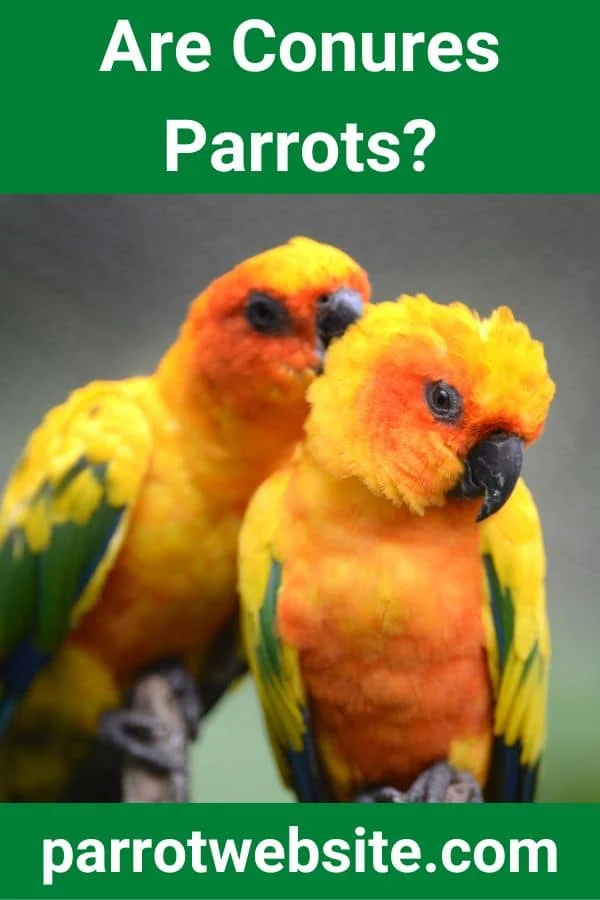
While the term "conure" is a staple in the bird-keeping community, it is notably absent from rigid scientific discourse. In biology, there is no single genus called "Conure." Instead, the birds we identify by this name belong to the subfamily Arinae, which encompasses the neotropical parrots. This subfamily is a massive group containing roughly 150 species. Because "conure" acts as a loose, descriptive umbrella term rather than a formal taxonomic rank, it can encompass a wide variety of behaviors, colorations, and temperaments, ranging from the petite Green-cheeked Conure to the flamboyant, golden-yellow Queen of Bavaria Conure.
The Taxonomy of Confusion: Parrot vs. Parakeet
To clear the air, we must address the linguistic divide between the United States and the global scientific community.
In the American pet industry, the word "parakeet" is almost exclusively reserved for the Budgerigar (Melopsittacus undulatus), or the common "budgie." To an American hobbyist, a conure and a parakeet are two distinct entities. However, in international scientific journals and among ornithologists, the term "parakeet" is a much broader category. It refers to a wide array of small-to-medium long-tailed parrots—a definition that includes, and indeed often categorizes, the very birds we call conures.
Historically, these birds were once grouped under the scientific genus Conurus, a classification that has long since fallen out of favor as genetic mapping and advanced study have shifted our understanding of avian evolution. Today, these birds are firmly situated within the order Psittaciformes, which includes nearly 400 species worldwide. Whether you call them conures, parakeets, or simply "new world parrots," the biological reality remains: they are, without question, members of the parrot family.
Chronology: From Wild Skies to Domestic Living
The journey of the conure from the dense, tropical canopies of Central and South America to the modern living room is a story of human fascination. For centuries, indigenous populations lived alongside these birds, observing their intelligence and social complexity.
- Pre-20th Century: Conures were largely documented by early European explorers as colorful curiosities of the "New World."
- Mid-20th Century: As the global pet trade expanded, certain species—notably the Sun Conure and the Nanday Conure—became highly sought after for their striking plumage and active, clown-like personalities.
- Late 20th Century to Present: A paradigm shift occurred. Instead of viewing these birds as mere decorative ornaments, the public began to understand them as high-maintenance, intelligent, and emotionally complex companions. Modern aviculture now emphasizes captive breeding, behavioral enrichment, and a deeper understanding of their lifespan and psychological needs.
Supporting Data: The Reality of Ownership
If you are considering bringing a conure into your home, it is essential to move beyond the aesthetic appeal and look at the data regarding their needs.
Temperament and Socialization
Conures are prized for their "big bird in a small body" personality. They are inquisitive, playful, and deeply affectionate. However, they are not solitary creatures. They are highly social, meaning they thrive on interaction. Unlike some pets that are content to sit in a cage while you are at work, a conure requires dedicated out-of-cage time, mental stimulation through puzzles, and direct social engagement.
Cognitive Recognition
Scientific observation confirms that conures possess high levels of intelligence, particularly regarding facial recognition. Because they lack a keen sense of smell, they rely heavily on their visual acuity. They can distinguish between the faces of different humans, a trait that allows them to form strong, individual bonds with family members. A conure that feels secure will quickly learn to identify its owners, not just by their faces, but even by their clothing or their daily routines.
Lifespan Considerations
Perhaps the most significant statistic for prospective owners is their longevity. A well-cared-for conure is a multi-decade commitment. While 20 to 30 years is the average lifespan in captivity, some individuals have been known to live even longer. This is not a "starter pet" in the way a goldfish or a hamster might be viewed; it is a life partner that will grow and change alongside you.
Official Perspectives: The Expert Consensus
Veterinarians and avian behaviorists consistently highlight a "cautionary optimism" regarding conures as pets. The consensus is that they are fantastic for the right person, but disastrous for the unprepared.
According to the Association of Avian Veterinarians, the primary cause of health issues in captive parrots is poor nutrition and lack of flight exercise. Because conures are incredibly active, they are prone to obesity if kept in small cages without adequate stimulation. Official advice from experts is clear:
- Dietary Diversity: Move beyond a seed-only diet, which is nutritionally inadequate, toward a balanced regimen of high-quality pellets, fresh vegetables, and limited fruit.
- Environmental Enrichment: A cage is a home, not a prison. It must be outfitted with rotating toys, foraging opportunities, and natural wood perches to maintain foot health.
- The "Talking" Expectation: Professionals warn against buying a conure solely for its speech potential. While they can learn to mimic, they are not the "chatterboxes" of the parrot world. They are far more likely to mimic whistles, alarm clocks, or the beeping of a microwave than they are to hold a conversation. If speech is your priority, experts suggest looking toward the African Grey or the Amazon parrot.
Implications: The Moral Commitment of Ownership
The decision to own a conure has profound implications for the owner’s lifestyle. Because they are "family birds," they often bond with multiple people in a household. This social adaptability is a strength, but it also means that if you are gone for long periods, the bird will suffer from isolation-induced stress, which often manifests as self-mutilation or feather plucking.
There is a long-standing debate regarding whether one should keep a single conure or a pair. While a pair can provide companionship in your absence, it is notoriously difficult to introduce mature, territorial birds to one another. The consensus among breeders is that if you intend to have a pair, they should be introduced when young and allowed to naturalize. If you choose to keep a single bird, you must accept the role of the "flock member," filling the void of their missing social partners with your own presence.
Conclusion: A Vibrant Companion for the Dedicated
Conures are a testament to the diversity of the parrot family. They challenge our desire for neat, binary categories, forcing us to look past simple labels like "parrot" or "parakeet" and appreciate the individual spirit of the bird itself.
They are, in every sense of the word, parrots—intelligent, long-lived, and intensely social beings that demand as much as they give. For those willing to put in the time to learn their language, respect their cognitive needs, and commit to their long lives, the conure is one of the most rewarding companions in the animal kingdom. However, the "conure conundrum" serves as a necessary reminder: before bringing such a vibrant life into yours, you must be prepared for the lifelong journey that follows.