By Investigative Desk
In a disturbing case of animal cruelty that has sparked outrage among wildlife advocates and local authorities, investigators in Pennsylvania are seeking the public’s assistance in identifying the individual or individuals responsible for the abandonment of seven ball pythons. The snakes, which appeared to be part of a private breeding operation, were discovered deceased, left to perish inside plastic containers near a highway in Bradford County.
The Pennsylvania State Police (PSP) Troop P – Towanda Barracks, in conjunction with the Northeast Region Office of the Pennsylvania Fish and Boat Commission, have launched a formal investigation into the incident. To expedite the identification of those responsible, a $5,000 reward has been authorized for information leading to an arrest and conviction.
The Grim Discovery: A Scene of Neglect
The tragedy came to light on June 8, when the remains of the seven reptiles were discovered near Route 14, just north of Canton, Pennsylvania. The scene described by authorities suggests a calculated, yet callous, disposal of living creatures.
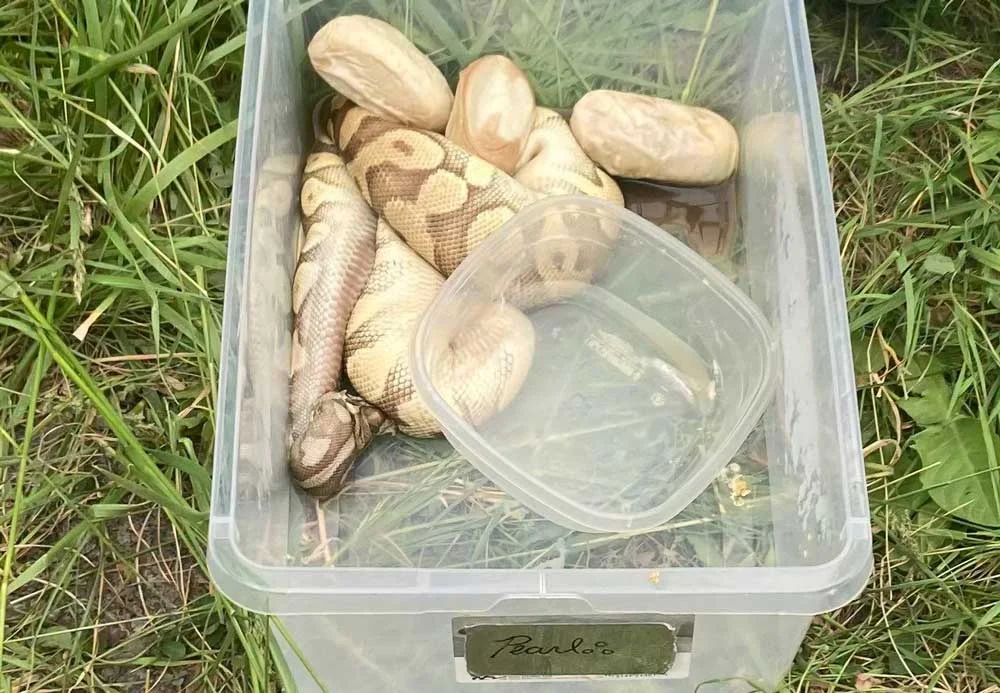
Each of the seven ball pythons was housed in an individual plastic container. Heartbreakingly, some of the containers still held the eggs the snakes had been brooding, indicating that the animals were likely in the midst of a reproductive cycle when they were discarded. The personal nature of the abandonment was made even more poignant by the labels affixed to each container. The snakes were identified by name: Blaze, Martin, Mr. Green, Samantha, Pearl, Larry, and SpongeBob.
For those in the herpetological community, the names suggest that these animals were not merely inventory, but creatures that had been under the daily care and observation of a breeder. The juxtaposition of these affectionate names against the horrific circumstances of their deaths has left the community searching for answers regarding what could have led a keeper to abandon them so heartlessly.
Chronology of the Investigation
The investigation is currently in its early stages, with law enforcement working to retrace the timeline of events leading up to the discovery on June 8.
- Pre-June 8: Investigators believe the snakes were likely abandoned in the days leading up to the discovery. Forensic analysis is being conducted to determine the cause of death and how long the snakes had been deceased before they were located.
- June 8: The discovery of the containers near Route 14. Local law enforcement was notified, and the scene was processed by the Pennsylvania State Police.
- Post-June 8: The case was escalated to the Animal Cruelty division. The public appeal for information was issued, and the $5,000 reward was established to encourage witnesses to come forward.
- Present: Authorities are cross-referencing breeder registries, local pet shop records, and reptile enthusiast networks to identify potential owners who may have had access to this specific group of snakes.
Supporting Data: The Rise of Ball Python Breeding
Ball pythons (Python regius) are among the most popular reptiles in the exotic pet trade, largely due to their relatively docile temperament and the stunning array of color and pattern mutations—known as "morphs"—that can be bred in captivity.
While the majority of reptile keepers are responsible and dedicated, the hobby has faced criticism regarding the "over-production" of morphs. In some instances, the market becomes saturated, leading to a devaluation of the animals. When breeders find themselves unable to sell their stock or are overwhelmed by the costs associated with maintaining a large collection, incidents of abandonment or neglect can occur.
This incident in Canton is not an isolated one. In recent years, there has been a recurring pattern of exotic pets being discarded. For example, similar cases have seen dozens of ball python morphs abandoned in unconventional containers, such as children’s pillowcases. These incidents highlight a dark side of the exotic animal trade, where the welfare of the living animal is sometimes sidelined in favor of the commercial pursuit of rare genetics.
Official Responses and Agency Involvement
The Pennsylvania State Police have made it clear that this is a priority case. Cpl. Spada, the designated Animal Cruelty Officer for the Troop P Barracks, is leading the effort to track down the perpetrator.
"The abandonment of any animal is a criminal offense," a spokesperson for the PSP stated. "When you factor in the sheer callousness of leaving these creatures to die in containers on the side of the road, it is a matter we take very seriously. We are asking anyone who recognizes these names, or who may have had dealings with a breeder in the Northern Pennsylvania area who recently ‘downsized’ or vanished, to contact us immediately."
The involvement of the Pennsylvania Fish and Boat Commission underscores the legal implications of the case, as the state maintains strict regulations regarding the possession and welfare of non-native species. Authorities are urging the public not to attempt to investigate the matter independently, but rather to report any tips through official channels.
How to Report Information
Law enforcement is emphasizing that all tips can remain anonymous. If you have information that could help solve this case, please utilize the following contact methods:
- Direct Contact: Cpl. Spada (PSP Animal Cruelty Officer) at 717-772-5112 or via email at [email protected].
- Towanda Barracks: 570-265-2186.
- PSP Tips (Toll-Free): 1-800-472-8477.
- Online Portal: P3 Tips.
Implications for the Herpetological Community
The incident has sent shockwaves through the reptile-keeping community, prompting discussions about ethics, regulation, and the responsibilities of ownership. Many reputable breeders and organizations, such as the United States Association of Reptile Keepers (USARK), often stress the importance of finding humane rehoming solutions if a keeper is no longer able to care for their collection.
The "Over-Breeding" Crisis
The incident raises difficult questions about the ethics of mass-producing exotic animals. Critics argue that when the profit motive outweighs the biological needs of the animals, the risk of neglect increases exponentially. When a breeder can no longer turn a profit, the animals often become a liability rather than a passion project, leading to "dumping" incidents like the one seen in Canton.
The Need for Better Oversight
Advocates are calling for stricter enforcement of existing animal cruelty laws as they pertain to exotic species. In many states, legislation regarding reptiles is less robust than that for dogs and cats. This case serves as a grim reminder that "non-traditional" pets require the same legal protections and ethical considerations as more common household companions.
A Call for Accountability
The $5,000 reward serves as a testament to the severity with which the community views this crime. It is not just about the loss of life—which is tragic in itself—but about the moral failure of the individual who held these animals’ lives in their hands and chose to discard them in a state of suffering.
As the investigation continues, the names "Blaze, Martin, Mr. Green, Samantha, Pearl, Larry, and SpongeBob" remain at the center of the inquiry. They serve as a haunting reminder of the lives lost and the urgent need for justice. The PSP and the Fish and Boat Commission are hopeful that someone in the community knows who was responsible and will come forward to ensure that the individual is held accountable for this act of cruelty.
For those who keep and love reptiles, the incident is a painful reminder that the fight for animal welfare is constant. It serves as a call to action for the hobby to foster a culture of transparency and accountability, ensuring that such a tragedy is never repeated. Anyone with even the smallest piece of information is encouraged to come forward, as it may be the key to closing the case and providing a measure of justice for the seven ball pythons that deserved a far better fate.